
Mata Mata Turtle (Chelus fimbriata) is one of the most unique turtles in the world. Mostly called the Amazon Leaf Turtle or Leaf-looking Turtle, this species is famous for its strange flat head, wide mouth, and body that looks like a piece of tree skin or dead leaves.
This natural hiding ability helps it blend perfectly into its environment. If you’re thinking of keeping a Mata Mata Turtle as a pet, this guide covers everything.
Mata Mata Turtle Origin in South America
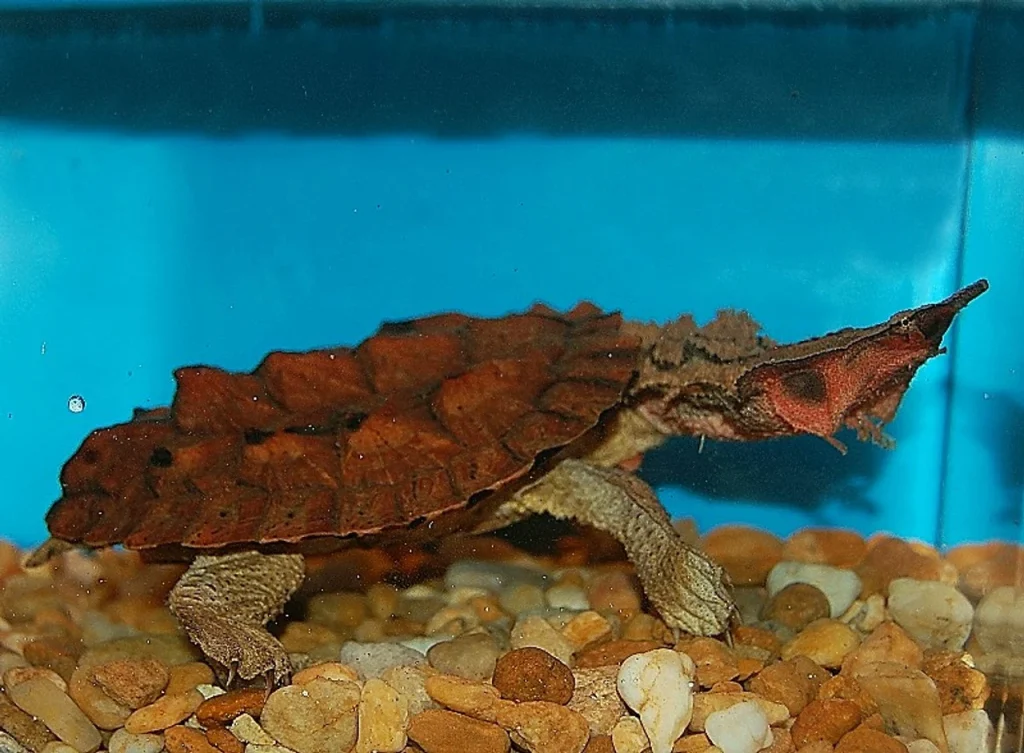 The Mata Turtle (Chelus fimbriata) originates from South America, mainly in countries like Brazil, Venezuela, Colombia, Peru, and Ecuador. It is most commonly found in the Amazon River Basin and the Orinoco River Basin.
This freshwater turtle is well known for its leaf-like appearance, which helps it hide in slow-moving waters filled with leaves, mud, and plants. Many people often call it the Amazon Leaf Turtle or Leaf-looking Turtle because its flat head, rough shell, and body look almost like wood or fallen leaves.
Where Do Mata Mata Turtles Live?
In nature, Mata Mata Turtles prefer shallow, slow-moving rivers, lakes, streams, and muddy areas. They don’t usually live in fast rivers because their body are perfect for waiting quietly and catching fish in calm waters.
They spend most of their time underwater, staying almost motionless. Thanks to their nose shaped like a small pipe, they can breathe without coming out of the water.
Amazon Mata Turtle Habitat
The Amazon Mata Mata habitat is full of aquatic plants, fallen branches, muddy bottoms, and leaf litter. These surroundings not only provide hiding spots but also help them remain undetected by both predators and prey.
When kept as pets, it’s important to recreate this environment. A large tank with lots of plants, wood pieces, and hiding spaces will make them feel safe. This is why many guides mention the Mata Mata Turtle tank needs as one of the most important parts of their care.
How Long Do Mata Mata Live?
Mata Mata Turtle lifespan in captivity is usually around 30–35 years with proper care. Some well-cared-for turtles can even live close to 40 years. Their long life depends on:
- Clean tank and good water filtration
- Proper diet of live fish
- Stress-free environment
- Stable water temperature and quality
Mata Mata Turtles Lifespan in the Wild
In the wild, Mata Mata Turtles usually live 15–20 years. Harsh living conditions, predators, and natural diseases reduce their lifespan compared to captive turtles.
Age and Size
When you buy a pet Mata Mata Turtle, most available for sale are juveniles between 1–2 years old, usually around 4–6 inches in size.
As they grow, adult Mata Matas can reach up to 18 inches long and weigh nearly 30 pounds.
How big do Mata Mata Turtles get?
Owning one is a long-term responsibility. Since they can live for decades, keeping a Mata Turtle means committing to their care for a lifetime.
Mata Turtle Diet
In nature, Mata Turtles eat meat and are called suction feeders. Instead of chewing, they quickly open their big mouth and pull in small fish like a vacuum.
Turtle Diet in the Wild
- Small live fish
- Aquatic insects
- Worms
- Crustaceans
Best food for a Turtle in captivity
In captivity, they should be fed a diet similar to their natural food. Best food options include:
- Live fish (guppies, minnows, small goldfish)
- Worms
- Crustaceans
- Aquatic insects
❌ Avoid pellets or processed turtle foods because Mata Mata Turtles usually reject them.
Mata Mata Turtles Tank Setup & Requirements
If you want your turtle to stay healthy, the tank setup must closely match their natural environment.
Tank Requirements:
Tank size
At least 100–120 gallons for one adult
Water depth
8–12 inches (not too deep, they prefer shallow water)
Substrate
Sand or smooth gravel
Decorations
Logs, driftwood, aquatic plants for hiding
Filter
A strong water filter to keep water clean
Heating
Maintain water temperature between 75–85°F
Lighting
UVB lighting, if kept indoors
Pro tip: Adding leaf litter and plants reduces stress and provides a more natural look.
Is the Mata Turtle a Good Pet?
Many people ask: “Can you keep a Mata Mata Turtle as a pet?” The answer is yes—but it’s not for beginners.
Pros:
- Unique dinosaur-like appearance
- Long lifespan in captivity
- Fascinating feeding behavior
Cons:
- Requires live food only
- Needs a very large tank
- Not interactive or cuddly
- Sensitive to poor water quality
If you have experience with reptiles or water pets, the Mata Mata Turtle can be a special and interesting pet to keep.
Mata Mata Turtles vs Other Turtles
One thing that makes this turtle special is how different it looks compared to other freshwater turtles.
- Appearance: Unlike turtles with smooth shells, Mata Mata Turtles have a flat, rough shell with bumps and a shape that looks like a leaf.
- Feeding style: Most turtles bite their food, but Mata Mata Turtles suck in their food and swallow it whole.
- Behavior: They hide most of the time, unlike other turtles that sit in the sun or move around often.
This shows why the Mata Mata Turtle is unique among turtles.
Fun Facts
They look like fallen leaves, which makes them one of the best hiding turtles in the world.
- They don’t chew food; they just swallow it in one big gulp.
- Their flat head and skin folds give them an ancient look.
- Many people can’t believe they are real when they see them for the first time.
FAQs
Q1: How much does a Mata Mata Turtle cost?
Prices usually range between $200–$500, depending on age and size.
Q2: Can Mata Turtles live with other fish?
Not recommended. Since they eat fish, tankmates will likely become food.
Q3: Do Mata Turtles bite humans?
No. They are not aggressive toward humans, but they can strongly suck in fish.
Q4: Do Mata Mata Turtles need land areas in the tank?
No. They are fully aquatic and rarely leave the water.
Q5: What makes the Mata Turtle unique?
Its strange leaf-like body, suction-feeding style, and excellent camouflage make it one of the most unusual turtles in the world.
Conclusion
The Mata Mata Turtle is one of the most fascinating reptiles on Earth. With its leaf-like appearance, ancient look, and unusual feeding style, it truly stands out among turtles.
While not the best pet for beginners, experienced keepers who provide the right tank setup, water quality, and live diet can enjoy the company of this amazing creature for many years.