
Taking care of axolotls is essential for both first-time exotic pet owners and experienced fish keepers. With the right tank setup, feeding routine, and consistent maintenance, your axolotl can thrive for many years to come. This comprehensive guide walks you through every step, from “axolotl tank setup guide for beginners” to “common axolotl diseases and treatments.
Understanding Axolotl’s Nature, Behaviour, and Taking Care of Axolotls
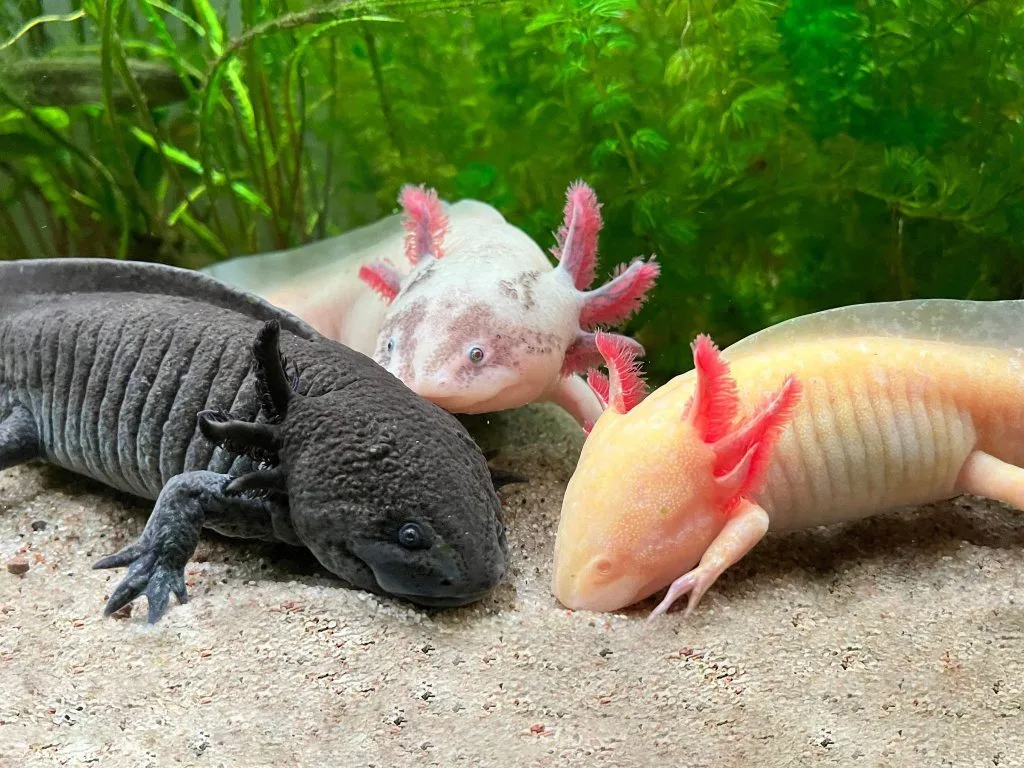
The creature commonly referred to as a “Mexican walking fish” is, in fact, the species Axolotl (scientific name: Ambystoma mexicanum). They are neotenic salamanders, meaning they retain larval traits (feathery external gills, aquatic lifestyle) throughout life.
Key fact
- Native to the freshwater systems of Mexico, especially around Lake Xochimilco.
- They are aquatic throughout life and have remarkable regenerative capabilities (can regrow limbs, etc).
- Their skin and gills are very sensitive because of their amphibian nature — this means tank water and environment must be carefully maintained.
Understanding this background helps you appreciate why specific care steps matter — not just what they are.
Axolotl Tank Setup for Beginners and Taking Care of Axolotls
Setting up the right habitat is foundational when taking care of axolotls. A good setup reduces stress, illness, and maintenance headaches.
Tank Size & Shape
- Minimum for one adult: around a 20-gallon long aquarium(or equivalent footage). A longer and wider footprint is better than a tall, narrow tank because axolotls stay near the bottom.
- If you plan for two or more, increase volume accordingly (e.g., 30-40 gallon minimum, or longer length).
- Ensure the tank has a secure lid because axolotls can sometimes jump.
Substrate & Floor Layout
- Avoid gravel or small stones: axolotls may ingest them, causing impaction.
- Ideal options: bare bottom, slate/tile, or very fine sand (< 1 mm) for larger individuals.
- Provide hiding spots: caves, PVC pipes, driftwood, smooth rocks. Keep décor smooth and free of sharp edges.
Filtration & Water Flow
- Axolotls prefer calm water; strong currents cause stress and gill damage.
- Use sponge filters or canister filters with adjustable low-flow output.
- Cycle the tank (establish beneficial bacteria) before introducing your axolotl.
Lighting & Plants
- They do not require bright lighting and often prefer subdued light.
- Live plants can be added (if they tolerate cool temperatures), like Anubias, Java fern, and Marimo moss balls. They add a natural feel and help water quality.
Water Parameters
Proper water conditions are one of the most important parts of taking care of axolotls.
| Parameter | Ideal / Acceptable Range |
| Temperature | ~60-68 °F (16-20 °C); never exceed ~72-75 °F. |
| pH | ~6.5-8.0 (optimum often ~7.4-7.6) |
| Ammonia | 0 ppm |
| Nitrite | 0 ppm |
| Nitrate | Ideally < 20 ppm; below 40 ppm acceptable. |
Always dechlorinate tap water (chlorine/chloramines are harmful).
Maintenance Checklist
- Weekly or bi-weekly partial water changes (20-30%) depending on tank size & bioload.
- Routine water testing (temperature, ammonia, nitrite, nitrate, pH).
- Remove any uneaten food or debris promptly to avoid water quality issues.
- Make sure the tank is placed in a low-traffic, quiet area (reduces stress).
Best Diet for Pet Axolotls
Feeding correctly is a major part of providing proper axolotl care.
What They Eat
Axolotls are carnivorous. Recommended diet items include:
- Earthworms/nightcrawlers — considered the most complete.
- Frozen/thawed bloodworms, blackworms, brine shrimp (especially for juveniles).
- Sinking pellets formulated for axolotls or carnivorous fish.
- Occasional treats: waxworms, hornworms, etc. (In moderation.)
Feeding Schedule
- Juveniles (less than ~6–8 months): feed once daily.
- Adults: feed every 2–3 days (depending on appetite and metabolism).
- Provide what they can finish in ~5-10 minutes, then remove leftovers.
What to Avoid
- Feeder fish (often carry parasites, may have wrong temperature/habitat needs).
- Insects with hard exoskeletons (chitin n difficult to digest).
- Human food or processed items.
Monitoring Body Condition
- Keep an eye on your axolotl’s body shape — not too thin, not overly fat.
- Loss of appetite, floating or strange posture can signal issues (linking into health section).
Temperature, Cooling & Climate Tips (For Warm Regions)
Since you are in Karachi, Sindh (Pakistan), warmer ambient temperatures may present an extra challenge for taking care of axolotls.
Why Temperature Matters
Axolotls are cold‐water adapted. Warm water increases metabolism, reduces oxygen solubility, and increases disease risk. Temperatures beyond ~72–75 °F (22–24 °C) are dangerous.
Cooling Strategies (Especially in Warm Climates)
 Use an aquarium chiller if the budget permits.
- Position the tank away from direct sunlight, windows, and heat sources.
- Use fans to blow over the water surface (evaporative cooling effect).
- Float sealed plastic bottles of frozen water in a bowl inside the tank for short‐term relief (monitor very carefully).
- Use light coloured lids or covers to reduce heat absorption.
- Keep the room temperature as low as feasible.
- If ambient room temp reaches ~30 °C (86 °F), you’ll need active cooling.
Maintenance & Cleaning Routine
Regular maintenance supports health and longevity.
Weekly Routine
- Change ~20-30% of water.
- Use a siphon/trash removal to clear debris.
- Check filter, clean or rinse in tank water (not tap water) to preserve beneficial bacteria.
- Test water parameters and record them (in a logbook) for trend tracking.
Monthly or As Needed
- Clean décor/hideouts if algae or detritus accumulates.
- Check for signs of wear on tank seals, lids, filtration system.
- Review temperature trends and equipment performance.
Record Keeping
Maintain a simple log: date, water temperature, pH, ammonia, nitrite, nitrate, % water change. This helps you spot issues early.
Recognising Common Health Issues & Prevention
Even with excellent care, issues can arise. Knowing what to look for and how to respond is part of advanced axolotl care.
Common Problems & Signs
| Issue | Signs to Watch For | Common Causes | Preventive Measures |
| Fungal infections | White cotton‐like patches on skin/gills | Warm water, poor water quality | Keep the temperature low, maintain clean water |
| Gill damage/shrinkage | Gills become thin or recede | Strong water flow, stress | Use gentle flow, provide hiding spots |
| Impaction | Bloated, loss of appetite, constipation | Ingested gravel or large prey | Use a safe substrate, feed appropriate-sized food |
| Ammonia/nitrite poisoning | Red gills, lethargic, gasping at the surface | Uncycled tank or poor filtration | Ensure cycling, keep zero ammonia/nitrite |
| Floating or upside‐down behavior | Swimming abnormally | Build‐up of gases, illness, and buoyancy issues | Water checks, ask vet |
| Heat stress | Loss of appetite, “fired up” colour, gills redden, frequent air gulping | High temperature | Immediate cooling steps |
When to Contact a Vet
If your axolotl stops eating entirely for more than ~5 days, develops large ulcers or lesions, or shows sustained erratic behaviour — consult an exotic‐animal vet. Early action improves outcomes.
Behavior, Handling & Tank Mates
Behavior
Axolotls are generally calm and spend much time near the bottom of the tank. They are not active swimmers like many fish species.
Handling
- Handle as little as possible. Their skin is delicate, and they can be stressed or injured.
- If you must move them, use a soft net or a container filled with tank water. Avoid bare‐hand transfers.
- After handling, make sure your hands are free of soap, lotions, and contaminants.
Tank Mates
- Generally best kept alone for simplicity and safety.
- If you keep more than one axolotl, ensure the same size, have plenty of space, and hidden zones to avoid aggression or cannibalism.
- Avoid housing with fish: fish may nip at gills/tails, may carry parasites, different temperature preferences.
- Shrimp/snails: possible only if the axolotl is large enough and conditions are checked carefully.
Advanced Step of Breeding Axolotls(Only for Experienced Keepers)
If you’ve mastered the steps above, you may explore “axolotl breeding guide for new owners”. But ethically and responsibly.
Basics of Breeding
- Sexing: Males tend to have a larger/cloaca area. Females are often plumper.
- Triggering spawn: Often, a drop in temperature and increased feeding can stimulate breeding behaviour.
- Eggs: Females can lay 100-1500 eggs on plants/decor. Adults may eat eggs if not separated.
- Raising juveniles: Use a separate rearing tank, feed small live foods, and manage high bioload.
Important note:
Do not breed unless you can commit to the care of offspring, and avoid unethical breeding of low-quality genetics.
Frequently Asked Questions (FAQ)
Q1. How much care does an axolotl need?
Axolotls need moderate but consistent care. Once their tank is properly set up with clean, cool water, routine maintenance is simple — feeding every 2–3 days, checking temperature, and weekly partial water changes. They don’t require constant interaction, but stable water quality and temperature are crucial.
Q2. What do you need to take care of an axolotl?
To take care of an axolotl properly, you’ll need:
- A 20-gallon (or larger) aquarium with a secure lid.
- Dechlorinated water and a gentle filtration system (sponge or low-flow filter).
- A cool environment(60-68 °F / 16-20 °C).
- Safe substrates, such as fine sand or bare bottom (no gravel).
- Hiding spots(caves, pipes, plants).
- A reliable water test kit for ammonia, nitrite, and nitrate levels.
- A protein-rich diet— earthworms, bloodworms, or axolotl pellets.
Once these essentials are ready, maintaining their habitat becomes easy, and your axolotl can thrive for years.
Q3. Can I keep two axolotls together in one tank?
Yes, but only if they are of similar size and have plenty of space. Always monitor for nipping or aggressive behavior.
Q4. How long do axolotls live in captivity?
With proper care, axolotls live 10–15 years or more. Clean water, a proper diet, and low stress help them stay healthy long-term.
Q5. Do axolotls need a heater?
No, they prefer cooler temperatures. A heater can overheat the tank and stress your axolotl.
Q6. What temperature is too high for an axolotl?
Anything above 72–75 °F (22–24 °C) is dangerous. Warm water leads to stress, infections, and a shorter lifespan.
Q7. What substrate is safe for axolotls?
Use bare bottom or fine sand (< 1 mm) only. Avoid gravel or small stones to prevent choking or digestive blockage.
Final Thoughts
Taking care of axolotls is both rewarding and responsible. These unique amphibians—delicate yet resilient—thrive when given the right environment, diet, and consistency. While the setup may require some investment (especially in warm climates like Karachi), the results are worth it: a healthy, active pet that brings joy and curiosity.
When you follow a structured routine (tank setup, feeding, monitoring, maintenance), you’re not just keeping a pet—you’re creating a safe, enriching habitat for a fascinating creature.