
A Children’s Python is a small Australian python that has become popular among reptile keepers because of its manageable adult size, interesting behavior, and attractive natural appearance.
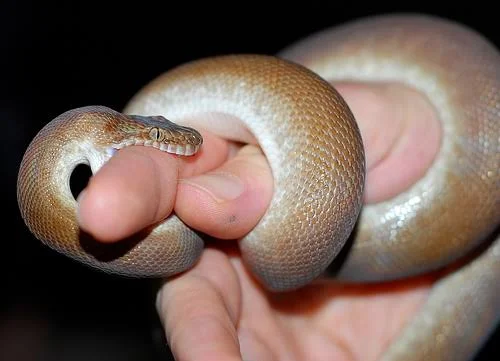 Despite its name, this snake is not specifically a pet for children. Instead, “Children’s” refers to the species name, Antaresia childreni.
Like any snake, it needs a secure enclosure, appropriate heating, suitable humidity, correct nutrition, regular cleaning, and responsible handling.
This complete Children’s Python care guide covers its origin, natural habitat, size, lifespan, diet, enclosure, temperature, humidity, substrate, handling, cleaning, enrichment, health, buying considerations, morphs, and everyday care.
Children’s Python Care and Quick Facts
The Children’s Python (Antaresia childreni) belongs to the Pythonidae family and the Antaresia genus. It is a non-venomous constrictor native to northern Australia.
It is one of several small Australian pythons within the genus Antaresia. Although it is smaller than many well-known python species, it still has the body strength and feeding behavior of a true python.
Therefore, new keepers should prepare for its needs rather than treating it like a low-maintenance reptile.
| Feature | Details |
| Common name | Children’s Python |
| Scientific name | Antaresia childreni |
| Family | Pythonidae |
| Genus | Antaresia |
| Native range | Northern Australia |
| Type | Non-venomous constrictor |
| Adult size | Generally around 3 feet, with individual variation |
| Activity | Mostly nocturnal and crepuscular |
| Diet | Carnivorous |
| Captive diet | Appropriately sized prey, commonly rodents |
| Lifespan | Potentially 20+ years with good care |
| Temperament | Often manageable with proper socialization |
| Housing | Secure terrestrial enclosure |
| Social needs | Usually housed individually |
| Main care needs | Heat, hides, water, correct feeding, hygiene and enrichment |
What Is a Children’s Python?
The Children’s Python is a relatively small-bodied python from Australia. Like other pythons, it is a constrictor rather than a venomous snake.
It relies on its senses to locate prey and uses its muscular body to restrain prey after catching it. In the wild, its diet can include small vertebrates such as mammals, reptiles, frogs, and birds.
The Australian Museum has documented Children’s Pythons feeding on frogs, reptiles, and mammals. This species is also adapted to a range of environmental conditions.
That adaptability is one reason captive husbandry can be manageable when the enclosure provides appropriate temperature variation, hiding places, ventilation, and access to water.
The name can confuse, so remember one important point:
Children’s Python does not mean a python intended specifically for children. Young children should never be the primary caregiver of a snake.
Children’s Python Origin and Natural Range
The natural range of Antaresia childreni is in northern Australia. The genus Antaresia contains several small Australian python species, including Children’s Python, Spotted Python, and Stimson’s Python.
These are related snakes, but they are not interchangeable species. In its native environment, the Children’s Python encounters changing temperatures and different types of shelter.
Rather than remaining exposed throughout the day, it can use protected locations to rest and avoid unfavorable conditions.
This natural behavior gives reptile keepers an important clue about captive care. A good enclosure should not be an empty box containing only a water dish.
Instead, it should provide places to hide, a temperature gradient, suitable substrate, and safe opportunities to move and explore.
Where Do Children’s Pythons Live?
Wild Children’s Pythons are associated with northern Australia. Their environment can include areas with rocky shelters, vegetation, crevices, and other structures that offer protection.
The exact conditions vary across their range, so a captive enclosure does not need to copy one specific Australian location. Instead, the aim is to recreate the important functions of the habitat.
These include:
- A secure place to hide
- Warm and cool areas
- Appropriate ventilation
- Access to fresh water
- Safe surfaces to move across
- Protection from excessive heat
- Environmental variety
Because this species is largely active during darker hours, it may spend much of the daytime hidden.
Therefore, a keeper should not assume that a quiet snake is automatically unhealthy.
Python Habitat and Behavior
Understanding Children’s Python habitat helps explain its behavior in captivity. This species is a predator that does not need to spend every hour actively moving around.
It may remain hidden and then become more active when conditions are suitable.
You may notice your snake:
- Exploring after dark
- Moving around the enclosure at night
- Spending time inside a hide
- Climbing onto sturdy objects
- Resting in warm areas
- Moving between temperature zones
- Becoming less active around shedding
These behaviors are not necessarily signs of a problem.
In fact, allowing the snake to choose where it spends its time is an important part of good husbandry.
Children’s Python Size
One of the biggest reasons people search for Children’s Python size is to understand whether the species is practical to keep.
An adult is generally around 3 feet long, although size varies between individuals. Some captive animals may become larger than the typical average.
Rather than focusing on one exact number, owners should monitor the snake’s growth and body condition.
Children’s Python full-grown size
A Children’s Python full-grown is still relatively compact compared with many large pythons. However, an adult should never be housed in an enclosure designed only for a baby.
As the snake grows, its habitat should provide enough space for:
- Normal movement
- Turning comfortably
- Stretching
- Hiding
- Thermoregulation
- Exploration
A healthy snake does not need an enormous empty enclosure. It does, however, need usable space.
Baby Python Care
A baby Children’s Python requires special attention during its early growth. Young snakes can sometimes feel vulnerable in an overly open environment.
Several appropriately sized hides and visual barriers can make the enclosure feel more secure. The enclosure should still have a proper warm-to-cool gradient.
Monitor:
- Feeding response
- Shedding
- Body condition
- Activity
- Weight
- Temperature
- Humidity
- Waste
Do not try to make a baby grow as quickly as possible by overfeeding. Healthy, steady growth is more important than rapid growth.
Children Pythons Lifespan
The Children’s Python lifespan can make this species a major long-term commitment. Captive Children’s Pythons may live for decades when provided with suitable husbandry.
Because individual lifespan depends on genetics, healthcare, nutrition, environment, and other factors, there is no guaranteed number of years.
This means prospective owners should think beyond the first few months.
Before purchasing one, ask yourself:
- Can I provide care for many years?
- Can I afford heating and food?
- Can I access reptile veterinary care?
- Can I maintain the enclosure properly?
- What happens if I move?
- Who will care for the snake during travel?
A long-lived reptile should never be treated as a temporary novelty.
Children Pythons Enclosure
A suitable Children’s Python enclosure should be secure, well-ventilated, easy to clean, and large enough for the snake’s current size.
The enclosure should contain:
- A warm hide
- A cool hide
- Safe substrate
- Water bowl
- Temperature monitoring
- Humidity monitoring
- Appropriate heating
- Secure furnishings
- Good ventilation
- Escape-resistant doors
ReptiFiles treats Children’s Python as its own Antaresia care category, separate from Spotted and Stimson’s Pythons, which reinforces the importance of using species-appropriate husbandry rather than simply copying advice for another snake.
Children’s Python tank size
When searching for children’s python tank size, you may find many different recommendations online.
The most useful principle is to choose an enclosure that gives the adult enough usable floor area to move and thermoregulate naturally.
Instead of asking only, “What is the minimum tank size?”
Consider: Can the snake move comfortably from one end to the other while still having separate warm and cool retreats?
For a juvenile, a smaller, well-furnished enclosure may be easier to manage. As the animal grows, upgrade its habitat.
For an adult, a practical enclosure should provide enough floor space for the snake to stretch and move comfortably, while allowing hides and environmental zones without making the enclosure crowded.
Enclosure setup checklist
A strong setup should include:
1. Secure doors
Snakes are excellent escape artists.
2. Thermostat-controlled heating
Heat sources should never operate without appropriate temperature regulation.
3. Digital thermometers
Measure different areas rather than relying on one reading.
4. Humidity monitoring
Use a digital hygrometer.
5. Two or more hides
Give the snake choices.
6. Water bowl
Keep clean water available.
7. Safe furnishings
Make sure branches and decorations cannot collapse.
8. Good ventilation
Air movement helps prevent stagnant, overly damp conditions.
Children’s Python Temperature
Temperature is one of the most important parts of Children’s Python care. Instead of keeping the entire enclosure at one temperature, create a gradient.
The warm side should provide the heat necessary for normal digestion and activity, while the opposite side should remain cooler.
This allows the snake to regulate its body temperature by moving between areas.
A practical setup generally includes a warm area in the upper 80s°F and a cooler area in the mid-to-upper 70s°F, while exact temperatures should be checked against the particular enclosure design and heating system.
Always measure temperatures with reliable equipment.
Why a thermostat matters
A thermostat helps prevent a heating device from becoming dangerously hot.
This is especially important with:
- Heat lamps
- Heat panels
- Heat mats
- Ceramic heat emitters
The heating equipment should be selected according to the enclosure and controlled appropriately.
Expert Care Tip: Never judge enclosure temperature by touching the glass or substrate with your hand. Reptiles need measured temperatures, not human-perceived warmth.
Children’s Python Humidity
Children’s Python humidity does not need to imitate a constantly wet tropical rainforest. This is a relatively adaptable Australian python, and humidity can naturally fluctuate.
However, access to a humid microclimate can be useful, particularly during shedding.
ReptiFiles’ Antaresia husbandry guidance recommends providing a humid hide and emphasizes monitoring humidity rather than allowing the enclosure to remain constantly saturated.
A humid hide can contain lightly moistened, reptile-safe material. The important point is balance.
Too little moisture can contribute to difficult shedding, while excessive moisture combined with poor ventilation can create other problems.
Humidity checklist
- Use a digital hygrometer.
- Provide a humid hide.
- Keep the water bowl clean.
- Maintain good ventilation.
- Avoid constantly soaking the substrate.
- Check for mold.
- Adjust the setup according to the snake’s condition.
Best Substrate for Python
Choosing the best substrate for children’s pythons depends on your enclosure and cleaning routine.
Potential options include:
- Aspen
- Paper-based bedding
- Suitable reptile soil mixtures
- Coconut-based substrates
- Other commercially prepared reptile substrates
The substrate should be clean, relatively low in dust, and appropriate for the enclosure’s humidity. Avoid strongly scented materials.
You should also avoid allowing wet or contaminated substrate to remain in the enclosure.
What makes a good substrate?
A good substrate should:
- Be easy to spot-clean
- Support natural movement
- Help maintain an appropriate environment
- Not produce excessive dust
- Be safe when used correctly
- Allow easy replacement when soiled
Children’s Python Diet
The Children’s Python diet is carnivorous. Wild Children’s Pythons consume vertebrate prey.
Documented prey includes frogs, reptiles, and mammals, and research observations also provide evidence of predation in northern Australia.
In captivity, appropriately sized frozen-thawed rodents are commonly used.
Children’s Python food
Depending on the snake’s size and age, suitable prey can include:
- Mice
- Rat
- Other appropriately sized feeder animals recommended by an experienced reptile veterinarian
The prey should be appropriately proportioned to the snake. Bigger food is not automatically better.
Feeding frequency
Feeding frequency changes as the snake grows. Young snakes generally require meals more frequently than adults, while adult snakes typically eat less often.
A feeding schedule should take into account:
- Age
- Size
- Body condition
- Prey size
- Activity
- Growth
- Seasonal behavior
Avoid blindly following a rigid schedule if the snake’s body condition suggests that adjustments are necessary.
Feeding Safety
Frozen-thawed prey is often convenient because it avoids many risks associated with feeding live prey.
When feeding:
- Use feeding tongs.
- Do not offer prey with your bare hand.
- Make sure the prey is appropriately sized.
- Allow the snake to eat without disturbance.
- Avoid unnecessary handling immediately after feeding.
- Keep food preparation separate from normal household food preparation.
- Wash your hands afterward.
If a snake repeatedly regurgitates meals, refuses food for an extended period, loses weight, or develops other symptoms, consult a reptile veterinarian.
Python Temperament
The temperament of a Children’s Python varies between individuals.
Many captive individuals can become accustomed to routine handling, but a snake may behave defensively when it is frightened, stressed, hungry, newly acquired, or shedding.
A calm approach usually works better than forcing interaction.
Signs of stress can include:
- Repeated defensive striking
- Excessive fleeing
- Constant hiding
- Hissing
- Rapid movements
- Refusal to settle during handling
Not every defensive response means the snake is aggressive. Often, it means the animal feels threatened.
How to Handle a Children’s Python
Handling should be calm and predictable.
Follow these basic steps:
- Wash your hands.
- Approach slowly.
- Avoid sudden movements.
- Support the snake’s body.
- Do not squeeze it.
- Keep handling sessions controlled.
- Avoid handling directly after feeding.
- Stop if the snake becomes highly stressed.
- Supervise children closely.
- Return the snake safely to its enclosure.
Never handle a snake after touching prey without washing your hands first. The smell of food can sometimes trigger a feeding response.
Is a Children’s Python a Good Pet?
For the right owner, a Children’s Python can be a rewarding pet. Its relatively compact size is attractive to people who want a python without keeping a very large species.
Its behavior can also be fascinating to observe. However, “small” does not mean “easy.”
A good owner needs to provide:
- Correct heating
- Appropriate enclosure space
- Proper feeding
- Clean water
- Suitable humidity
- Regular cleaning
- Veterinary care
- Safe handling
- Long-term commitment
It is therefore better described as a manageable python for a prepared keeper, rather than a pet that requires little care.
Is it suitable for children?
The species name can create confusion. A Children’s Python may live in a family home, but young children should not be responsible for its care.
An adult should handle:
- Feeding
- Heating
- Cleaning
- Enclosure maintenance
- Veterinary decisions
- Supervision
Older children may learn responsible reptile care under adult guidance.
Children’s Python Cleaning Routine
Cleaning is an important part of responsible reptile keeping.
Daily checks
Look for:
- Feces
- Urates
- Dirty water
- Spilled water
- Abnormal smells
- Damaged furnishings
- Temperature problems
- Escape risks
You do not need to remove every piece of substrate every day.
Instead, spot-clean whenever waste appears.
Deeper cleaning
When deeper cleaning is required:
- Place the snake in a secure temporary container.
- Remove dirty substrate.
- Remove furnishings.
- Wash the enclosure.
- Use an appropriate reptile-safe disinfectant according to its instructions.
- Rinse when required.
- Allow surfaces to dry.
- Replace clean substrate.
- Wash and refill the water bowl.
- Reinstall secure furnishings.
- Recheck temperature and humidity.
- Return the snake.
Never mix household cleaning chemicals. Also, avoid heavily scented products around the enclosure.
Children’s Python Shedding
Like other snakes, Children’s Pythons periodically shed their skin.
Before shedding, the snake may:
- Become less active
- Hide more frequently
- Develop cloudy eyes
- Appear duller
- Reduce feeding activity
These changes can be normal. Provide an appropriate humid hide and avoid unnecessary handling during this period. Do not pull off retained skin manually.
If shed repeatedly remains attached around the eyes, tail tip, or other areas, veterinary advice is appropriate.
Children’s Python Health Problems
Good husbandry is the foundation of health.
Potential problems include:
- Respiratory disease
- Parasites
- Mites
- Mouth infections
- Retained shed
- Injuries
- Obesity
- Dehydration
- Digestive problems
Warning signs
Contact a reptile veterinarian if you notice:
- Open-mouth breathing
- Wheezing
- Nasal discharge
- Persistent lethargy
- Sudden weight loss
- Repeated regurgitation
- Swelling
- Abnormal mouth tissue
- Severe shedding problems
- Persistent refusal to eat combined with weight loss
A snake hiding during the daytime is not automatically sick. Look for changes from its normal pattern rather than judging health from one behavior alone.
Children’s Python Fun Activities and Enrichment
Snakes do not play like dogs or cats, but they can benefit from environmental enrichment.
Safe enrichment can include:
- Cork bark
- Sturdy branches
- Additional hides
- Tunnels
- Different safe textures
- Elevated resting spots
- Rearranged furnishings
- Supervised exploration
However, enrichment should never compromise safety. Branches should not fall. Decorations should not create sharp edges. Openings should not allow escape.
A simple enrichment idea
Occasionally rearrange one or two safe furnishings while keeping the snake’s main hiding places familiar. This creates environmental variety without completely changing the enclosure.
You can also allow supervised exploration outside the enclosure in a secure, snake-proof area. Never leave the snake unattended.
Children’s Python Morphs and Color Variations
People searching for Children’s Python morphs may encounter different color and pattern names from breeders.
However, terminology can vary, and not every name used in advertisements represents a universally recognized genetic morph.
Potentially encountered terms can include:
| Name commonly seen in listings | What to understand |
| Normal / Wild Type | Natural-looking coloration and pattern |
| Marble | A captive-bred pattern/color description used by some breeders |
| Albino | A reduced-pigment genetic form where genuinely established and documented |
| Tarble | A breeder/trade term that should be verified with genetic information |
| Other locality or line names | May describe a breeding line rather than a separate species |
Important species distinction
Spotted Python is not a Children’s Python morph. Spotted Python is Antaresia maculosa, a separate species within the same genus.
Likewise, Stimson’s Python is Antaresia stimsoni. Current reptile references list these as separate Antaresia species. This distinction matters because online searches can sometimes mix these names.
Therefore, if a seller advertises a “Spotted Children’s Python,” ask exactly what species and genetics the animal is.
Adult Children’s Python Care
An adult Children’s Python generally needs less frequent feeding than a growing juvenile, but it still requires the same fundamental husbandry.
Adult care should include:
- Correct enclosure size
- Temperature gradient
- Humid hide
- Clean water
- Appropriate prey
- Regular cleaning
- Environmental enrichment
- Body-condition monitoring
- Routine health observation
Do not reduce care simply because the snake has reached its adult size.
Children’s Python Price
The Children’s Python price can vary considerably.
Factors that affect price may include:
- Age
- Sex
- Captive-bred status
- Genetics
- Morph
- Breeder
- Availability
- Location
A cheap snake is not necessarily a bargain if it comes with poor health or uncertain history. When comparing prices, consider the total cost of responsible ownership.
You will also need to budget for:
- Enclosure
- Heating
- Thermostat
- Thermometers
- Hygrometer
- Substrate
- Hides
- Food
- Cleaning supplies
- Veterinary care
Children’s Python for Sale Buying Guide
If you are searching for a Children’s Python for sale, take your time before purchasing.
Ask the seller:
- What is the scientific name?
- Is the snake captive-bred?
- What is its age?
- What is its sex?
- What prey is it eating?
- How regularly does it feed?
- When did it last eat?
- When did it last shed?
- Has it ever had health problems?
- What temperature is it currently kept at?
- Are the parents known?
- What genetics or morph information is available?
If someone is selling a marble Children’s Python for sale, an albino Children’s Python, or another unusual-looking animal, ask for documented genetic information instead of relying only on the advertisement title.
What a healthy snake should look like
Look for:
- Clear eyes
- Normal breathing
- Good body condition
- Clean scales
- No visible mites
- No stuck shed
- Clean vent area
- Normal movement
- Reliable feeding history
Avoid making a purchase based entirely on color or price.
Children’s Python Care Checklist
Before bringing one home, make sure everything is ready.
Before arrival
- Secure enclosure
- Thermostat
- Heating equipment
- Digital thermometers
- Hygrometer
- Warm hide
- Cool hide
- Water bowl
- Appropriate substrate
- Secure furnishings
- Feeding tongs
- Cleaning supplies
- Temporary transport container
During routine care
- Check temperatures.
- Check humidity.
- Replace dirty water.
- Spot-clean waste.
- Observe behavior.
- Monitor feeding.
- Record shedding.
- Check enclosure security.
Keeping a simple husbandry record can be extremely useful.
Common Children’s Python Care Mistakes
1. Choosing a tiny enclosure
A snake may be small, but it still needs usable space.
2. Using unregulated heating
A heat source without proper temperature control can become dangerous.
3. Ignoring the cool side
The snake needs somewhere to move away from heat.
4. Making the enclosure constantly wet
Humidity should be managed rather than maximized.
5. Providing only one hide
The snake should have options in different temperature zones.
6. Overfeeding
More food does not automatically mean better health.
7. Handling immediately after feeding
Give the snake time to digest.
8. Cleaning with strong fragrances
Reptiles can be sensitive to their environment.
9. Keeping multiple snakes together unnecessarily
Individual housing is generally simpler and safer for routine care.
10. Treating the snake as a child’s toy
A snake is a living animal with specific behavioral and environmental needs.
Expert Care Tips for Children’s Pythons
- Measure temperatures instead of guessing them.
- Use a thermostat with appropriate heating equipment.
- Give the snake choices. Multiple hides and a temperature gradient allow natural behavioral control.
- Do not chase the snake around the enclosure to handle it.
- Keep a feeding and shedding record.
- Do not assume every feeding refusal is an emergency, but investigate persistent refusal when accompanied by weight loss or other abnormal signs.
- When purchasing a morph, verify the genetics rather than trusting a color name alone.
Remember that Spotted Python and Stimson’s Python are separate species, not Children’s Python varieties.
Children’s Python vs Other Small Australian Pythons
The genus Antaresia includes several small Australian python species.
| Species | Scientific name | Key point |
| Children’s Python | Antaresia childreni | The species covered in this guide |
| Spotted Python | Antaresia maculosa | Separate species with distinctive spotting |
| Stimson’s Python | Antaresia stimsoni | Separate species with a broad inland Australian range |
| Pygmy Python | Antaresia perthensis | Another small Australian python |
This distinction is particularly important when researching children’s spotted python or similar search terms. A search phrase does not necessarily mean the animals are the same species.
Is a Children’s Python Beginner-Friendly?
A well-prepared beginner may be able to keep this species successfully, particularly if they research reptile husbandry before purchasing the snake. However, beginner-friendly does not mean effortless.
A new keeper should first understand:
- Thermostat use
- Temperature gradients
- Feeding
- Safe handling
- Enclosure cleaning
- Humidity monitoring
- Escape prevention
- Reptile health
- Veterinary care
Learning these basics before bringing the animal home makes the transition much easier.
FAQs
1. How big does a Children’s Python get?
A Children’s Python is generally a small python, with adults commonly around 3 feet long, although individual size can vary.
The enclosure should be planned around the snake’s actual growth rather than relying on one fixed length.
2. How long does a Children’s Python live?
A properly cared-for Children’s Python can live for many years and may reach or exceed two decades in captivity. This makes it a long-term commitment rather than a short-term pet.
3. Is a Children’s Python a good pet?
It can be a suitable pet for a prepared reptile keeper. However, it still requires appropriate heating, feeding, enclosure maintenance, cleaning, and veterinary care.
4. What does a Children’s Python eat?
It is carnivorous and naturally consumes small vertebrate prey. In captivity, appropriately sized frozen-thawed rodents are commonly used.
5. What is the best substrate for a Children’s Python?
Suitable options can include aspen, paper-based bedding, and other reptile-safe substrates. The best choice depends on the enclosure’s ventilation, humidity management, cleaning routine, and the individual snake.
6. What is the correct Children’s Python humidity?
The species does not require a constantly tropical environment. Humidity should be monitored, ventilation should remain good, and the snake should have access to an appropriate humid hide.
Antaresia care references emphasize that humidity should be managed rather than simply kept as high as possible.
7. What is the correct Children’s Python tank size?
The enclosure should provide enough usable space for movement, hiding, and thermoregulation. Juveniles can be housed in appropriately sized setups that are upgraded as they grow, while adults need substantially more usable space than a baby.
8. Can children handle a Children’s Python?
Children should only handle one under close adult supervision. The name “Children’s Python” does not mean the species is specifically intended for children.
9. Are Children’s Pythons aggressive?
Individual temperament varies. A well-socialized captive animal may become comfortable with routine handling, but any snake can become defensive when frightened, stressed, hungry, or disturbed.
10. Are Children’s Pythons venomous?
No. They are non-venomous constrictors. However, like other snakes, they can bite if they feel threatened or if feeding behavior is triggered. kes feeding, health monitoring, cleaning, and behavior observation easier.
Final Thoughts
The Children’s Python is a fascinating small Australian python with a manageable adult size and interesting natural behavior.
Its relatively compact body can make it attractive to reptile keepers who want a python without the space requirements of a very large species.
Nevertheless, good care requires more than simply providing a tank and food.
A successful setup combines an appropriately sized enclosure, secure hides, controlled heating, monitored humidity, clean water, suitable substrate, properly sized prey, regular cleaning, safe handling, and enrichment.
The most important lesson is to plan for the snake’s entire life rather than focusing only on its current size.
If you are considering a baby Children’s Python, prepare the enclosure before bringing it home. If you are looking for an adult Children’s Python, make sure the habitat provides enough usable space and proper environmental zones.
And if you are searching for a Children’s Python for sale, evaluate health, husbandry history, genetics, and breeder transparency instead of choosing based only on appearance or price.
With responsible care and a well-designed environment, this small Australian python can be an interesting and rewarding reptile to observe and keep.
I’ve created helpful guides in the Birds category on Petstdigo, featuring posts in Care, Cleaning, and Fun Activities. These guides share practical tips on grooming, skin and coat health, bathing routines, nutrition, playtime ideas, and calming solutions to keep your pets happy and healthy. Explore these pages for easy-to-follow advice and insights to support your pet’s overall well-being.