
The Giant Day Gecko (Phelsuma grandis) is a colorful, active, and fascinating reptile from Madagascar.
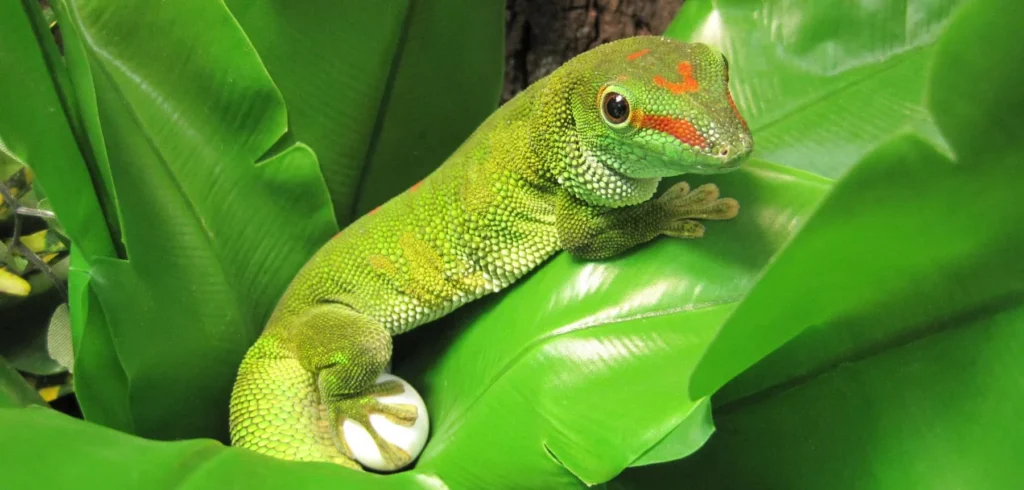 Unlike many geckos that become active after dark, this species is mainly active during the daytime, which makes it especially enjoyable to watch.
Its bright green body, red facial markings, climbing ability, and impressive adult size have made it a popular choice among reptile keepers. However, owning a Giant Day Gecko is more than simply putting a colorful lizard inside a glass tank.
It needs a tall enclosure, suitable UVB lighting, controlled temperatures, appropriate humidity, climbing branches, a nutritious diet, and regular cleaning.
Because it can live for many years, choosing this species should be considered a long-term commitment.
This complete guide explains Giant Day Gecko care, including its origin, natural habitat, size, lifespan, diet, food, enclosure, tank size, temperature, humidity, lighting, handling, cleaning, enrichment, health, buying considerations, and whether it is a good pet for beginners.
Giant Day Gecko Care and Quick Facts
The Giant Day Gecko is an arboreal and diurnal gecko belonging to the genus Phelsuma. “
Arboreal” means it spends much of its time above the ground, while “diurnal” means it is primarily active during daylight hours.
In captivity, its enclosure should therefore be designed vertically rather than simply providing a large floor area. Branches, vines, cork, foliage, and elevated resting locations allow the gecko to behave more naturally.
The species is native primarily to northern and eastern Madagascar and is associated with tropical environments.
Adults generally reach around 9–11 inches (23–28 cm), although some individuals can grow larger. Females are typically smaller than males.
Giant Day Gecko Quick Facts
| Feature | Details |
| Scientific name | Phelsuma grandis |
| Common name | Giant Day Gecko |
| Family | Gekkonidae |
| Origin | Madagascar |
| Lifestyle | Arboreal |
| Activity | Diurnal |
| Adult size | About 9–11 inches |
| Lifespan | Around 15–20 years with good care |
| Diet | Omnivorous |
| Main foods | Insects and a prepared gecko diet |
| Humidity | Approximately 40–75% average, with natural fluctuations |
| Difficulty | Moderate |
| Temperament | Active, alert, and potentially territorial |
| Handling | Limited handling is best |
| Enclosure | Tall and vertically oriented |
| Best suited for | Keepers who enjoy observing reptiles |
ReptiFiles currently describes Giant Day Gecko care as moderate difficulty and recommends a minimum enclosure of approximately 24 × 24 × 48 inches for one adult.
Giant Gecko Origin and Natural History
The Giant Day Gecko originates from Madagascar, an island known for its unique reptiles and other wildlife. Its natural environment has influenced almost every part of its captive care.
Instead of spending most of its life on the ground, this gecko uses trees, branches, vegetation, and other elevated surfaces. Its specialized toe pads help it climb and grip surfaces.
The species is also active during daylight.
During the day, it may bask under sunlight, search for insects, move through vegetation, drink water droplets, or defend its preferred areas.
Its bright green coloration is one of its most recognizable characteristics. Many individuals also have strong red markings around the head and face.
Depending on locality and lineage, some may show additional orange or blue coloration.
Because the Giant Day Gecko is naturally active and exposed to sunlight during the day, captive care should provide suitable lighting, UVB, warmth, and opportunities for both basking and shade.
Where Does the Giant Gecko Live?
In the wild, Giant Day Geckos live primarily in Madagascar’s tropical and subtropical environments. They are strongly associated with vegetation and elevated surfaces.
Their natural surroundings provide:
- Warm temperatures
- Humid microclimates
- Tree trunks
- Branches
- Dense vegetation
- Sunlight
- Shaded areas
- Insects
- Fruit and nectar-like food resources
- Places to retreat when threatened
This natural lifestyle gives us an important clue about captive care. A suitable enclosure should not be an empty glass box.
Instead, it should provide multiple levels, climbing routes, foliage, hiding areas, and a useful temperature gradient.
Giant Day Gecko Natural Habitat
The natural habitat of the Giant Day Gecko is warm, vegetated, and relatively humid. However, humidity is not necessarily identical everywhere throughout the habitat.
A tree exposed to sunlight can be warmer and drier than a shaded area beneath dense foliage.
This is why creating a range of conditions inside the enclosure is more useful than trying to keep every part of the terrarium the same.
A good habitat can include:
- Cork bark
- Natural branches
- Strong vines
- Live tropical plants
- Dense foliage
- Elevated feeding areas
- A warm basking location
- Cooler areas
- Open climbing routes
- Shaded retreats
Live plants can make the enclosure more attractive while providing additional cover and climbing opportunities.
Suitable plants may include pothos, dracaena, bromeliads, sansevieria, and other reptile-safe tropical plants.
ReptiFiles recommends live plants, vines, branches, cork hollows, and elevated ledges as forms of environmental enrichment.
Giant Day Gecko Size
One reason this reptile is called “giant” is its size compared with many other day geckos. A typical adult Giant Day Gecko is around 9–11 inches (23–28 cm).
Some individuals can become larger. Females are generally smaller than males. This size matters when planning the enclosure.
A small terrarium that might work for a tiny day gecko is not appropriate for an adult Giant Day Gecko. The animal needs enough room to climb, hunt, bask, explore, and move away from heat.
Remember that enclosure height is especially valuable because this is a tree-dwelling species.
Giant Gecko Tank Size and Enclosure Size
Choosing the correct Giant Day Gecko tank size is one of the most important decisions you will make.
For one adult, a commonly recommended minimum is:
24 × 24 × 48 inches
60 × 60 × 120 cm
A larger enclosure is even better when practical. ReptiFiles specifically recommends this minimum for a single adult and encourages providing more space whenever possible.
What Should a Giant Day Gecko Enclosure Have?
A properly designed Giant Day Gecko enclosure should include:
- Tall vertical space
- Strong branches
- Flexible vines
- Cork bark or cork hollows
- Live plants
- Basking branches
- Shaded areas
- UVB lighting
- Heat source
- Digital thermometers
- Digital hygrometer
- Safe substrate
- Elevated feeding ledge
- Fresh water
Arrange branches at different heights rather than placing everything at one level. This gives the gecko more choices and allows it to move between warmer, cooler, brighter, and more shaded areas.
Giant Day Temperature
Temperature is a major part of successful Giant Day Gecko care.
A useful captive temperature gradient is approximately:
- Basking area: 85–90°F (29–32°C)
- Cool area: 77–82°F (25–28°C)
- Night: approximately 73–77°F (23–25°C)
These are target husbandry ranges rather than instructions to make the entire enclosure the same temperature.
A gradient lets the gecko move where it needs to go to regulate its temperature. The basking branch should be positioned beneath the heat source.
Keep cooler areas available lower in the enclosure. Use a digital probe thermometer to measure the actual basking surface instead of guessing.
Avoid Overheating
Too much heat can be dangerous. Never assume that a stronger bulb is automatically better.
The correct wattage depends on the enclosure, room temperature, ventilation, lamp distance, and setup. Adjust the heating system based on actual measurements.
Also, day geckos are capable of climbing on enclosure mesh.
Therefore, lamps should be positioned safely to reduce the risk of thermal burns.
Giant Day Gecko Humidity
Humidity should be monitored rather than guessed.
ReptiFiles recommends an average humidity range of approximately 40–75%, with humidity naturally rising at night and falling during the day.
Different areas of the enclosure can also have different humidity levels. This daily fluctuation is useful.
A simple routine can involve misting in the morning and evening while allowing the enclosure to dry somewhat during the day.
How to Maintain Humidity
You can help maintain appropriate humidity by using:
- A digital hygrometer
- Regular misting
- Moisture-retaining substrate
- Live plants
- Appropriate ventilation
- A water source
Avoid keeping the entire enclosure permanently soaked. High humidity without adequate ventilation can create an unhealthy environment.
On the other hand, an enclosure that becomes excessively dry for prolonged periods can also cause problems.
Giant Day Gecko Lighting and UVB
Because the Giant Day Gecko is diurnal, lighting is particularly important.
It should have access to:
- UVB
- Visible daytime light
- A basking area
- Shaded areas
UVB plays an important role in vitamin D3 production and calcium metabolism.
ReptiFiles recommends a UVB setup selected according to enclosure height and the distance between the gecko and the lamp, rather than choosing a bulb based only on its label.
A rough UVB target given by ReptiFiles is a UVI of about 3.0–4.0 in the basking area when measured with an appropriate meter.
The exact setup depends on:
- Bulb type
- Fixture
- Mesh
- Distance
- Enclosure height
- Basking location
Therefore, always follow the manufacturer’s instructions and measure the setup when possible.
Giant Day Diet
The Giant Day Gecko diet should be varied and balanced.
This species is omnivorous. In the wild, it consumes animal prey as well as plant-based foods such as fruit and nectar resources.
In captivity, this can be recreated using a quality prepared gecko diet combined with appropriately sized live insects.
What Do Giant Day Geckos Eat?
Suitable feeder insects can include:
- Crickets
- Dubia roaches
- Discoid roaches
- Locusts
- Grasshoppers
- Silkworms
- Hornworms occasionally
A quality commercially prepared gecko diet can provide important nutrients and is an important part of the overall feeding plan.
Variety is valuable because no single feeder insect provides everything an omnivorous reptile needs.
Feeding Schedule
A practical age-based feeding approach is:
Young juveniles:
- Insects frequently
- Prepared gecko diet on a regular schedule
Subadults and adults:
- Insects around 2–3 times per week
- Prepared gecko diet around once per week
ReptiFiles provides a similar schedule and emphasizes variety in the diet. Adjust the amount according to body condition, age, activity, and individual appetite.
Calcium and Supplements
Calcium is important for normal bone and muscle function. Feeder insects should generally receive an appropriate calcium dusting according to the supplement manufacturer’s directions.
However, supplementation should be balanced rather than excessive.
A high-quality commercial gecko diet is already formulated with vitamins and minerals, so additional supplementation should be used thoughtfully.
If you are unsure about a particular supplement schedule, an exotic-animal veterinarian can help you create a diet appropriate for your gecko.
Water and Hydration
Giant Day Geckos may drink droplets from leaves and other surfaces after misting. Therefore, misting can provide both environmental humidity and drinking opportunities.
However, it is also useful to keep clean water available.
The water container should be:
- Easy to access
- Kept clean
- Changed regularly
- Positioned safely
- Checked every day
Never leave dirty or contaminated water inside the enclosure.
Giant Day Gecko Lifespan
A healthy Giant Day Gecko lifespan can reach approximately 15–20 years with good captive care. That means bringing one home is a long-term commitment.
Before searching for a Giant Day Gecko for sale, consider whether you can provide proper lighting, food, heating, enclosure maintenance, and veterinary care for many years.
The cheapest animal is not necessarily the least expensive option in the long run.
Proper equipment and preventive care can make a major difference in long-term health.
Giant Day Gecko Behavior and Temperament
Giant Day Geckos are usually active, alert, and observant.
During the day, you may see yours:
- Climbing
- Basking
- Hunting
- Exploring
- Watching movement outside the enclosure
- Drinking water droplets
- Moving through foliage
- Searching for food
They can also become defensive or territorial. For this reason, keeping more than one individual together should not be treated casually.
Multiple geckos require adequate space and opportunities to get away from one another.
ReptiFiles recommends individual housing when breeding is not the goal, or carefully planned female groups, with additional space when multiple animals are housed together.
Is Giant Day Gecko a Good Pet?
Yes, a Giant Day Gecko can be a good pet for the right keeper. However, it is important to understand what kind of pet it is.
This is primarily an observation pet, not a reptile that needs frequent handling.
Reasons People Like Giant Day Geckos
- Beautiful green coloration
- Attractive red facial markings
- Active during the daytime
- Interesting climbing behavior
- Large size compared with many day geckos
- Long potential lifespan
- Fascinating feeding behavior
- Excellent display animal
Possible Challenges
- Requires a tall enclosure
- Needs appropriate UVB
- Requires temperature monitoring
- Needs controlled humidity
- Can move very quickly
- Has delicate skin
- May become defensive when handled
- Requires long-term commitment
Therefore, if you want a reptile to observe and care for rather than constantly hold, this species may be a rewarding choice.
Handling a Giant Day Gecko
Handling should be limited. Although the animal may appear strong because of its size, Giant Day Geckos have delicate skin.
Grabbing the animal can cause injury and unnecessary stress. Never chase a gecko around the enclosure just to hold it. Instead, build trust slowly.
You can start by:
- Sitting quietly near the enclosure
- Offering insects with soft-tipped feeding tongs
- Allowing the gecko to approach voluntarily
- Offering a small amount of prepared diet
- Keeping movements slow
Give a newly purchased gecko time to settle before attempting interaction. ReptiFiles recommends waiting at least two weeks before beginning this process.
If the gecko chooses to walk onto your hand or arm, keep the interaction calm and brief.
Giant Day Gecko Cleaning Routine
A clean enclosure supports good hygiene and makes it easier to notice changes in your pet’s health.
Daily Cleaning
Check the enclosure every day and:
- Remove visible feces
- Remove uneaten insects
- Remove spoiled food
- Check water
- Check temperatures
- Check humidity
- Look for unusual messes
Weekly Cleaning
Depending on your enclosure, weekly maintenance may include:
- Washing the water container
- Cleaning feeding dishes
- Wiping heavily soiled surfaces
- Checking branches and plants
- Inspecting equipment
- Checking drainage and ventilation
Deep Cleaning
Deep-cleaning frequency depends on the enclosure style and substrate. For conventional substrate, contaminated material should be removed promptly.
ReptiFiles recommends complete substrate replacement approximately every 3–4 months depending on the setup and its condition.
Bioactive enclosures require a different maintenance approach and should not simply be stripped down every few weeks.
Giant Day Gecko Enrichment and Fun Activities
Giant Day Geckos do not need toys like dogs or cats. For them, the best “fun activities” are opportunities to perform natural behaviors.
Useful Enrichment Ideas
Create:
- Multiple climbing paths
- Different basking locations
- Dense foliage
- Cork hiding places
- Safe vine
- Elevated feeding spots
- Open areas for movement
- Shaded retreats
You can also encourage natural hunting by offering appropriately sized insects. Occasionally changing a safe branch or vine arrangement can provide a new environment to explore.
However, avoid constantly rearranging the enclosure because stability is also important.
The goal is to encourage climbing, hunting, exploring, basking, and choosing between different microclimates.
Giant Day Gecko Substrate
Because this is an arboreal species, the gecko does not spend most of its time on the ground.
Even so, substrate can be useful because it helps stabilize humidity and provides cushioning if the animal falls.
Possible tropical substrate options include:
- Coconut fiber
- Reptile soil
- Organic soil-based tropical mixes
- Appropriate bioactive substrate
A layer of leaf litter can also help create a more natural appearance. Avoid substrates containing chemicals, fertilizers, pesticides, or other unsafe additives.
Common Giant Day Gecko Health Problems
Good husbandry is the first line of defense against many preventable problems.
Potential concerns include:
- Metabolic bone disease
- Nutritional deficiencies
- Dehydration
- Parasites
- Respiratory illness
- Injuries
- Thermal burns
- Obesity
- Problems related to poor environmental conditions
Warning Signs
Contact an exotic-animal veterinarian if you notice:
- Sudden appetite loss
- Significant weight loss
- Persistent weakness
- Abnormal movement
- Swollen limbs
- Breathing difficulty
- Unusual discharge
- Persistent lethargy
- Repeated injuries
- Major changes in normal behavior
Do not attempt to treat a serious illness based only on internet advice.
Common Giant Day Gecko Care Mistakes
New keepers often make avoidable mistakes.
1. Using a Short Enclosure
A Giant Day Gecko is arboreal, so height is important.
2. Ignoring UVB
Visible light alone does not replace appropriate UVB.
3. Keeping Humidity Constantly High
Humidity should fluctuate naturally instead of remaining saturated all day.
4. Using Only One Type of Food
A varied diet is more appropriate than relying on a single feeder insect.
5. Handling Too Much
Frequent handling can cause stress and may damage delicate skin.
6. Guessing Temperatures
Always measure temperatures with reliable equipment.
7. Buying the Animal Before Preparing the Habitat
Set up and test the enclosure first. This is one of the most useful pieces of practical advice for new keepers.
Giant Day Gecko Buying Guide
If you search for a Giant Day Gecko for sale, do not choose an animal based only on appearance or price.
Look for a reputable, responsible source that can answer questions about:
- Age
- Sex
- Captive-bred status
- Feeding history
- Health history
- Current diet
- Parentage or lineage when relevant
- Previous care
A healthy animal should generally appear alert and appropriately active. Avoid rushing into a purchase because a listing says “rare,” “special,” or “limited.”
Also check the laws and regulations that apply to keeping or transporting exotic reptiles in your area.
Giant Day Gecko Price
Giant Day Gecko price can vary depending on age, sex, locality or lineage, breeder, captive-bred status, availability, and geographic location.
However, the purchase price is only one part of ownership.
You also need to budget for:
- Tall enclosure
- UVB fixture
- Replacement UVB bulbs
- Heat equipment
- Thermometers
- Hygrometer
- Misting equipment
- Plants
- Branches
- Cork
- Substrate
- Feeder insects
- Prepared gecko diet
- Supplements
- Cleaning products
- Veterinary care
Therefore, never choose a Giant Day Gecko solely because it is inexpensive.
Giant Day Gecko vs Other Day Geckos
The phrase day gecko vs Giant Day Gecko can be confusing.
“Day gecko” can refer broadly to geckos in the genus Phelsuma, while Giant Day Gecko specifically refers to Phelsuma grandis. Other day geckos can be much smaller.
For example, Blue-Tailed Day Geckos are substantially smaller than Giant Day Geckos, with ReptiFiles listing Blue-Tailed Day Geckos at up to around 6 inches compared with approximately 9–11 inches for Giant Day Geckos.
Consequently, care requirements and enclosure dimensions can be very different between species.
Expert Care Tip
Expert-care note: The best way to start Giant Day Gecko ownership is to prepare the enclosure before purchasing the animal. Run the lighting and heating equipment first.
Measure the basking area. Check the cooler areas. Monitor humidity at different times of day.
Make sure branches are secure and that the animal cannot reach dangerous heat sources. This preparation helps identify problems before your gecko has to live inside the enclosure.
A beautiful terrarium is not automatically a healthy terrarium. What matters is whether the enclosure provides the correct environmental choices.
A Simple Daily Giant Day Gecko Care Routine
A simple routine can make long-term care much easier.
Morning
- Check temperature
- Check humidity
- Observe behavior
- Remove obvious waste
- Mist as needed
- Check water
- Check food
During the Day
- Confirm lighting is working
- Observe basking and activity
- Offer food according to the feeding schedule
- Check that the gecko has access to shade
Evening
- Check humidity again
- Mist as appropriate
- Remove leftover insects
- Check water
- Make sure heating and lighting timers are functioning
This routine only takes a few minutes once the enclosure is properly established.
Giant Day Gecko Care Checklist
Before bringing one home, make sure you have:
- Tall enclosure
- Secure doors
- Appropriate UVB
- Safe heat source
- Digital thermometer
- Digital hygrometer
- Basking branch
- Climbing vines
- Cork or other safe structure
- Live plants
- Suitable substrate
- Feeding ledge
- Clean water
- Prepared gecko diet
- Live feeder insects
- Calcium supplement
- Cleaning supplies
- Safe enclosure ventilation
- Exotic-animal veterinary plan
FAQs
1. How big does a Giant Day Gecko get?
Most adults reach around 9–11 inches (23–28 cm), although some individuals can be larger. Females are generally smaller than males.
2. How long does a Giant Day Gecko live?
A well-cared-for Giant Day Gecko can live approximately 15–20 years in captivity.
3. What does a Giant Day Gecko eat?
It is an omnivore. A varied captive diet can include quality prepared gecko food and appropriately sized insects such as crickets, roaches, locusts, and silkworms.
4. What is the best Giant Day Gecko tank size?
For one adult, approximately 24 × 24 × 48 inches is a commonly recommended minimum. Larger is preferable when possible.
5. Does a Giant Day Gecko need UVB?
Yes. Appropriate UVB exposure is an important component of responsible care for this diurnal species.
6. What humidity does a Giant Day Gecko need?
A commonly recommended average range is approximately 40–75%, with humidity naturally rising at night and falling during the day.
7. Can Giant Day Geckos be handled?
Limited interaction is possible, but frequent handling is not recommended. Their skin is delicate, and chasing or grabbing them can cause stress or injury.
8. Can two Giant Day Geckos live together?
They can sometimes be housed in compatible groups or breeding arrangements, but cohabitation can create territorial problems. If breeding is not intended, individual housing is generally the simpler option.
9. Are Giant Day Geckos good for beginners?
They can be kept successfully by a prepared beginner, but they are not the simplest reptile. A new keeper should be comfortable managing UVB, temperature, humidity, feeding, and enclosure maintenance.
10. Is Giant Day Gecko the same as Gold Dust Day Gecko?
No. Giant Day Gecko is Phelsuma grandis, while Gold Dust Day Gecko is Phelsuma laticauda. They are separate species.
11. Where can I find a Giant Day Gecko for sale?
Look for reputable captive-bred sources that can provide information about the animal’s age, health, diet, origin, and care history. Always check applicable local regulations before purchasing.
12. What is the difference between a Giant Day Gecko and a regular day gecko?
“Day gecko” is a broader term that can describe multiple Phelsuma species. Giant Day Gecko specifically refers to Phelsuma grandis, which is considerably larger than several other popular day gecko species.
Final Thoughts
The Giant Day Gecko is a spectacular reptile for keepers who enjoy observing natural behavior.
Its bright green coloration, red markings, daytime activity, climbing ability, and impressive size make it one of the more noticeable geckos in the hobby.
At the same time, its care should not be underestimated.
A successful setup requires a tall enclosure, appropriate UVB, a safe basking area, temperature and humidity monitoring, varied nutrition, secure climbing structures, clean water, and regular maintenance.
The species is not ideal for someone who wants a reptile that can be handled frequently. Instead, it is better suited to someone who appreciates watching an active arboreal animal explore its environment.
If you prepare the habitat before bringing the gecko home, monitor conditions carefully, provide a varied diet, and respect its delicate nature, a Giant Day Gecko can be a fascinating long-term companion and an impressive addition to a responsible reptile collection.
I’ve created helpful guides in the Birds category on Petstdigo, featuring posts in Care, Cleaning, and Fun Activities. These guides share practical tips on grooming, skin and coat health, bathing routines, nutrition, playtime ideas, and calming solutions to keep your pets happy and healthy. Explore these pages for easy-to-follow advice and insights to support your pet’s overall well-being.