
The Gold Dust Day Gecko is a small, colorful, daytime-active lizard that has become popular with reptile keepers because of its bright green body, golden markings, active behavior, and attractive tropical appearance.
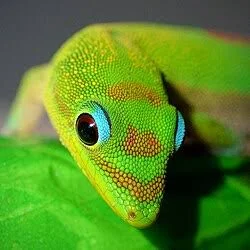 Scientifically known as Phelsuma laticauda, this arboreal gecko spends much of its time climbing, basking, hunting, and exploring above the ground.
Unlike many popular geckos that are mostly active at night, this species is primarily active during the day, making it interesting to watch while you are awake.
In addition, its delicate skin and tail mean that it is better suited to observation than frequent handling.
This complete guide covers Gold Dust Day Gecko care, including its origin, natural habitat, size, lifespan, diet, food, enclosure, tank size, humidity, temperature, lighting, UVB, cleaning, behavior, enrichment, health, breeding, buying considerations, and whether this colorful reptile makes a good pet.
Gold Dust Day Gecko Care at a Glance
The Gold Dust Day Gecko is an arboreal tropical reptile, so its enclosure should be designed vertically rather than like a traditional ground-based lizard enclosure.
Before bringing one home, understand the basic requirements.
| Feature | Details |
| Scientific name | Phelsuma laticauda |
| Common name | Gold Dust Day Gecko |
| Family | Gekkonidae |
| Genus | Phelsuma |
| Activity | Primarily diurnal |
| Lifestyle | Arboreal |
| Adult length | About 4–5 inches (10–13 cm) |
| Typical lifespan | Up to around 15 years with excellent care |
| Enclosure style | Tall, secure, well-ventilated terrarium |
| Minimum enclosure reference | About 12 × 12 × 18 inches for one adult, with larger strongly preferred |
| Basking area | Around 90°F (32°C) |
| General warm-area range | Around 82–89°F (28–32°C) |
| Night temperature | Around 70–77°F (21–25°C) |
| Humidity | Moderate to high with daily fluctuations |
| Diet | Insects plus prepared fruit/nectar-style gecko diet |
| UVB | Recommended and important |
| Handling | Minimal |
| Difficulty | Moderate |
These figures should be treated as husbandry starting points rather than rigid numbers.
Enclosure height, ventilation, lighting distance, room temperature, and equipment all influence the actual conditions experienced by the animal.
What Is a Gold Dust Day Gecko?
The Gold Dust Day Gecko is a member of the Phelsuma genus, commonly known as day geckos. It is a small arboreal species that is active during daylight hours.
Its appearance is one of its biggest attractions. Adults commonly have a green to yellow-green base color, with yellow or golden markings around the neck and head.
Blue coloration around the eyes and reddish markings toward the rear can also contribute to its distinctive appearance.
It also has specialized toe pads that help it move across smooth surfaces. This climbing ability is one reason a vertical enclosure is so important.
Instead of spending most of its time walking across the floor, a Gold Dust Day Gecko is more likely to move among branches, foliage, cork, vines, and other elevated surfaces.
Gold Dust Day Gecko Origin
The species is primarily associated with Madagascar and nearby islands, although it has also been introduced to some other locations with suitable climates.
Madagascar is especially important when understanding the animal’s natural history because its tropical and subtropical environments help explain why captive specimens need warmth, humidity, vegetation, and climbing opportunities.
This is also why the search term madagascar gold dust day gecko appears frequently online.
Although captive animals may be several generations removed from their wild ancestors, their basic environmental needs are still influenced by their natural biology.
Where Do Gold Dust Geckos Live?
In their natural range, these geckos use trees, vegetation, plants, and human-associated environments such as gardens and buildings where suitable conditions are available.
They are strongly associated with elevated surfaces.
A wild individual may climb:
- Tree trunks
- Branches
- Leaves
- Vines
- Walls
- Plant stems
- Other vertical surfaces
This arboreal lifestyle should be reflected in captivity.
A terrarium that is technically large enough but has almost no climbing structure does not provide the same opportunities as a well-designed vertical habitat.
Gold Dust Day Natural Habitat
The natural habitat of this species is generally warm, humid, and rich in vegetation. That does not mean the enclosure should remain soaking wet all day.
In fact, good ventilation and natural humidity fluctuations are important. A successful habitat should provide different microclimates.
For example, the upper section can be warmer and brighter, while lower areas can provide cooler and more shaded locations.
This allows the gecko to choose where it wants to spend time instead of being forced to remain at one temperature.
Gold Day Gecko Size
The Gold Dust Day Gecko size is usually around 4–5 inches, or approximately 10–13 cm, in total length. The tail makes up an important part of its overall length.
Juveniles are much smaller and need extra attention to escape-proofing because their tiny bodies can fit through surprisingly small gaps.
Size alone should not determine enclosure requirements.
A small gecko can still benefit from a spacious environment because it needs climbing routes, hiding places, basking areas, and opportunities to move naturally.
Gold Dust Day Gecko Lifespan
The Gold Dust Day Gecko lifespan can reach around 15 years when the animal receives excellent long-term husbandry. However, lifespan is never guaranteed.
Genetics, nutrition, previous care, chronic stress, parasites, injuries, environmental problems, and access to veterinary care can all influence longevity.
Therefore, buying a healthy animal is only the beginning. Consistent care over many years is what makes the biggest difference.
Gold Dust Day Tank Size
When people search for Gold Dust Day Gecko tank size, they often find different recommendations.
A commonly cited minimum for one adult is approximately 12 × 12 × 18 inches, with larger enclosures strongly preferred.
For practical husbandry, an enclosure around 18 × 18 × 24 inches or larger gives one adult considerably more usable climbing and enrichment space.
The important point is that the enclosure should be tall.
Why Height Matters
A vertical enclosure allows you to create:
- High basking areas
- Lower cool areas
- Multiple climbing routes
- Dense foliage
- Elevated feeding areas
- Hiding spaces
- Different light and shade zones
A larger enclosure is particularly useful when it can be properly furnished.
An enormous empty enclosure is less useful than a well-designed habitat where the gecko can climb and move naturally.
Gold Dust Day Gecko Enclosure Setup
A proper enclosure should be secure, ventilated, and easy to monitor.
A good setup can include:
- Tall glass or suitable reptile terrarium
- Secure doors
- Proper ventilation
- Branches
- Cork bark
- Vines
- Safe live plants
- Elevated feeding ledge
- UVB lighting
- Heat source
- Bright daytime lighting
- Digital thermometer
- Digital hygrometer
- Suitable tropical substrate
Front-opening enclosures are particularly convenient because they make feeding and cleaning easier while reducing the need to reach from above.
Gold Dust Day Gecko Temperature
Temperature management is an important part of Gold Dust Day Gecko care.
A practical temperature arrangement can include:
| Area | Approximate Temperature |
| Basking area | Around 90°F / 32°C |
| General warm area | Around 82–89°F / 28–32°C |
| Nighttime | Around 70–77°F / 21–25°C |
The enclosure should not have the same temperature everywhere. Instead, create a gradient.
The basking area should be near the top, while cooler areas should be available lower down or farther from the heat source.
Avoid Overheating
Small reptiles can overheat quickly.
Do not place the enclosure in direct sunlight from a window and assume this will provide natural heating. Sunlight through glass can cause the enclosure to become dangerously hot.
Use a reliable digital probe thermometer and measure the actual basking surface rather than guessing based on room temperature.
Gold Dust Day Gecko Humidity
Humidity is another important part of a tropical gecko setup. A useful general target is a moderate-to-high humidity environment with natural daily fluctuations.
One established care guide gives an average range around 40–70%, with humidity rising at night and falling during the day.
The exact reading can vary depending on ventilation, room conditions, plants, substrate, and misting.
How to Maintain Humidity
You can maintain suitable humidity by:
- Misting the enclosure
- Using moisture-retaining substrate
- Adding live plants
- Providing foliage
- Maintaining good ventilation
- Monitoring humidity with a digital hygrometer
Do not try to keep the enclosure constantly saturated. High humidity without adequate ventilation can encourage mold and poor air quality.
Gold Dust Day Gecko Lighting and UVB
Because this is a daytime-active reptile, proper lighting is extremely important.
A suitable setup should provide:
- UVB
- Bright visible light
- A basking area
- Shaded areas
- A consistent day-night cycle
UVB helps support normal vitamin D3 production and calcium metabolism.
One established care guide recommends arranging UVB so that the basking area reaches an appropriate UVI, with placement determined by the specific bulb, fixture, mesh, and distance.
It also notes that UVB bulbs should be replaced according to manufacturer guidance because output declines over time.
Gold Dust Day Gecko Diet
The Gold Dust Day Gecko diet should be varied because this species is omnivorous. In nature, it consumes animal prey as well as plant-based foods such as nectar and fruit juices.
In captivity, a balanced feeding plan can combine:
- Appropriately sized insects
- Commercial fruit-based gecko diet
- Nectar-style prepared foods
- Occasional suitable fruit
- Appropriate mineral supplementation
Variety is important because feeding only one type of insect can create nutritional limitations.
What Do Gold Dust Day Geckos Eat?
Suitable feeder insects can include:
- Small crickets
- Small roaches
- Fruit flies
- Small locusts or grasshoppers
- Small hornworms
- Silkworms
The prey should be appropriately sized for the gecko. Very large insects should not be offered simply because the gecko is willing to attack them.
A prepared day-gecko or crested-gecko-style meal replacement diet can also provide a convenient nutritional foundation when appropriately formulated.
Gold Dust Day Gecko Feeding Schedule
Age affects feeding frequency.
A practical schedule can look like this:
| Age | Feeding Approach |
| Young juveniles | Small insects frequently, with prepared diet offered regularly |
| Subadults | Insects several times per week plus prepared diet |
| Adults | Insects around twice weekly plus prepared diet according to condition and product instructions |
A reputable care guide similarly recommends more frequent insect feeding for juveniles and reduced insect frequency for adults.
The exact amount should be adjusted based on body condition, appetite, activity, age, and veterinary advice.
Supplements and Calcium
Feeder insects should generally be properly supplemented. Calcium is especially important because reptiles require adequate calcium for normal skeletal and muscular function.
However, more supplementation is not automatically better. Follow the instructions on the specific supplement and prepared diet you use.
If you are uncertain about calcium, vitamin D3, or multivitamin use, an exotic-animal veterinarian can help create a safer plan.
Can Gold Dust Day Geckos Eat Fruit?
Yes, fruit-based foods can form part of their diet. However, fruit should not simply mean feeding large amounts of sweet human fruit.
A properly formulated commercial gecko diet is often easier to balance nutritionally. Small amounts of suitable fruit can be used for variety, but the main diet should remain nutritionally appropriate.
Water and Drinking
A Gold Dust Day Gecko may drink water droplets from leaves and enclosure surfaces after misting.
Nevertheless, providing clean drinking water is a useful additional option.
If a water dish is used, place it somewhere accessible and clean it regularly. Never allow standing dirty water to remain in the enclosure.
Gold Dust Day Gecko Behavior
One of the most enjoyable things about this species is its daytime behavior.
You may see it:
- Basking
- Climbing
- Hunting insects
- Exploring foliage
- Drinking droplets
- Watching activity outside the enclosure
- Moving between warm and cool areas
- Defending its territory
Because it is active during the day, owners can often observe natural behavior without staying awake late at night.
Is Gold Dust Gecko Friendly?
It is better to describe this species as observational rather than cuddly.
Individual personalities vary, but most should not be expected to enjoy frequent handling. A gecko may become accustomed to your presence and may even approach you during feeding. T
hat does not necessarily mean it wants to be picked up.
The safest interaction is often simply allowing the animal to move naturally inside its enclosure.
Gold Dust Gecko Handling
Handling should be limited.
The species has delicate skin and a fragile tail, and excessive chasing or grabbing can cause significant stress or injury. If you need to move the gecko, use slow movements and avoid grabbing the tail.
For everyday interaction, consider:
- Offering an insect with soft-tipped feeding tongs
- Allowing it to approach your hand voluntarily
- Offering a small amount of prepared food
- Observing it quietly
Give a newly purchased gecko time to settle before attempting interaction.
Is the Gold Dust Day Gecko a Good Pet?
The answer depends on what you expect from a reptile. It can be a very rewarding pet for someone who enjoys observation, tropical terrariums, and natural reptile behavior.
However, it may not be the right choice for someone who wants a reptile that can be handled frequently.
Good Match for Someone Who:
- Enjoys observing reptiles
- Likes planted terrariums
- Can maintain appropriate humidity
- Can provide UVB lighting
- Is comfortable feeding insects
- Has time for routine cleaning
- Understands limited handling
- Wants a daytime-active reptile
Less Suitable for Someone Who:
- Wants a cuddly reptile
- Wants frequent handling
- Does not want to maintain humidity
- Dislikes feeder insects
- Wants an extremely low-maintenance pet
- Cannot monitor temperature and lighting
Gold Dust Day Gecko Cleaning Routine
Good hygiene helps maintain a healthier enclosure.
Daily Tasks
Check the enclosure every day and:
- Remove visible feces
- Remove leftover insects
- Remove spoiled food
- Check the water
- Check temperature
- Check humidity
- Observe the gecko’s behavior
Weekly Tasks
Once or more each week as needed:
- Wash feeding dishes
- Clean the water container
- Wipe dirty surfaces
- Inspect branches and foliage
- Check for mold
- Inspect equipment
- Look for damaged plants or décor
Deep Cleaning
A deeper enclosure cleaning should be performed periodically. Remove heavily contaminated substrate and clean removable décor appropriately.
If you use disinfectants, choose products intended for reptile environments and follow the product’s directions carefully.
Rinse surfaces thoroughly when required and allow them to dry appropriately.
Cleaning should remove harmful waste without turning every enclosure maintenance session into a complete habitat reset.
Gold Dust Day Gecko Substrate
Because this species is arboreal, substrate is not the most important feature of the enclosure. However, substrate can help retain moisture and support live plants.
Possible options include suitable tropical reptile substrates or carefully prepared soil-based mixes made from safe ingredients.
Avoid substrates containing pesticides, fertilizers, chemical additives, or sharp materials. Leaf litter can also contribute to a more naturalistic environment.
If the enclosure is bioactive, make sure the entire system is designed around appropriate drainage, ventilation, plant health, and cleanup organisms.
Plants and Decoration Plants are more than decoration.
They provide:
- Shade
- Cover
- Climbing opportunities
- Visual barriers
- Resting surfaces
- Environmental enrichment
Safe plant choices can include species commonly used in tropical reptile enclosures, but every plant should be researched before introduction.
Avoid plants treated with pesticides or unknown chemicals. Branches and vines should be securely attached so they cannot fall.
Fun Activities and Enrichment
A Gold Dust Day Gecko does not need plastic toys. Instead, enrichment should encourage natural behaviors.
Useful Enrichment Ideas
Create multiple climbing routes.
Place branches and vines at different heights.
Add dense foliage
This provides hiding and exploration opportunities.
Offer food in different safe locations
This can encourage natural searching behavior.
Provide different resting surfaces
Cork, branches, and plant leaves can create useful variety.
Create light and shade zones
The gecko should be able to move away from intense light and heat.
Refresh the enclosure gradually.
Occasionally adding a safe new branch or plant can create a new area to explore.
Avoid changing the entire enclosure every week. Stability is important too.
Gold Dust Day Gecko Health
A healthy gecko should generally be alert, active, and able to climb normally.
Pay attention to changes in:
- Appetite
- Body weight
- Activity
- Grip
- Eyes
- Skin
- Stool
- Breathing
- Movement
- Shedding
A single unusual behavior does not necessarily mean the animal is sick. However, persistent or multiple symptoms deserve attention.
Common Health Problems to Watch For
Dehydration
Poor hydration can occur when environmental conditions are inappropriate or access to water is inadequate.
Monitoring humidity, misting appropriately, and providing clean water can help.
Metabolic Bone Disease
Inadequate calcium, poor UVB exposure, or inappropriate supplementation can contribute to skeletal problems.
This is why diet and lighting must be considered together.
Stuck Shed
Humidity problems can contribute to shedding difficulties. Never pull stuck skin aggressively, particularly around toes.
Parasites
Parasites can occur in reptiles and may require fecal testing and veterinary treatment.
Do not automatically treat a gecko with medication without professional guidance.
Injuries
Falls, enclosure accidents, burns, and conflicts with other geckos can cause injuries.
Secure branches and correctly positioned heating equipment reduce avoidable risks.
Gold Dust Day Gecko and Other Geckos
Keeping multiple geckos together is not something to attempt casually. Day geckos can be territorial, and compatibility is not guaranteed.
A male and female may potentially be housed for breeding under appropriate conditions, while some keepers maintain compatible female groups.
However, every animal is an individual, and enclosure size must increase when housing multiple animals.
For a beginner who does not intend to breed, keeping one gecko can simplify care and reduce the risk of territorial conflict.
Gold Dust Day Gecko vs Similar Day Geckos
The Phelsuma genus contains numerous species, and they are not all the same size or equally demanding.
For example, a Giant Day Gecko is much larger and requires a substantially larger enclosure than a Gold Dust Day Gecko.
Therefore, never choose husbandry equipment solely because it was recommended for “day geckos” in general.
Always identify the exact species first.
Gold Dust Day Gecko Price
The Gold Dust Day Gecko price varies depending on location, age, sex, captive-bred status, breeder, health, and availability. There is no single worldwide price.
A very cheap animal may also come with hidden costs if it has poor health or inadequate previous husbandry.
When calculating the real cost of ownership, remember to include:
- Enclosure
- Lighting
- UVB
- Heating
- Thermometers
- Hygrometer
- Plants
- Branches
- Feeding supplies
- Insects
- Prepared diet
- Supplements
- Cleaning supplies
- Veterinary care
The setup can cost more than the animal itself.
Gold Dust Day Gecko for Sale
If you are searching for a Gold Dust Day Gecko for sale, focus on the seller as much as the animal.
Ask the breeder or seller:
- Is the animal captive-bred?
- How old is it?
- What is it currently eating?
- How often is it eating?
- Has it been eating normally?
- Has it recently shed?
- Is the sex known?
- Has it received appropriate UVB?
- Has it had health problems?
- How will it be shipped?
- What happens if the animal arrives unwell?
A reputable seller should be willing to answer reasonable husbandry questions.
Baby Gold Dust Day Gecko Care
A baby Gold Dust Day Gecko needs extra attention because of its small size.
Make sure:
- The enclosure is escape-proof
- Food is appropriately sized
- Feeding is frequent enough for growth
- Temperature is monitored
- Humidity is monitored
- UVB is correctly positioned
- Water is available
- Stress is minimized
Juveniles can be particularly vulnerable to poor nutrition and inappropriate environmental conditions.
How to Choose a Healthy Gold Dust Day Gecko
When buying, look for an animal that appears alert and capable of moving normally.
Potentially positive signs include:
- Clear eyes
- Good grip
- Normal climbing
- Good body condition
- Clean skin
- Normal appetite
- No obvious wounds
- No persistent discharge
Ask for recent photos or videos when purchasing remotely. Avoid relying entirely on a beautiful listing photograph.
Gold Dust Day Gecko Breeding
Breeding should only be considered after you have experience maintaining healthy adults. Breeding requires more than placing two geckos together.
You need:
- Sexually mature adults
- Appropriate nutrition
- Suitable environmental conditions
- Compatible animals
- Egg-laying opportunities
- A plan for hatchlings
- Appropriate housing
- Financial preparation
- Veterinary support when needed
Females also need appropriate nutrition because egg production places additional demands on the body. Responsible breeding means planning for every offspring before breeding occurs.
Gold Dust Day Gecko Eggs and Babies
If breeding occurs, eggs and hatchlings require careful management.
Young geckos should not simply be left in the same enclosure as adults without considering territorial behavior, feeding competition, and safety.
A responsible keeper should have separate housing available when necessary. Because hatchlings are tiny, escape prevention becomes especially important.
Is the Gold Dust Day Gecko Poisonous?
The search phrase gold dust day gecko poisonous is understandable because people sometimes wonder whether colorful reptiles are dangerous.
The Gold Dust Day Gecko is not considered a poisonous or venomous pet reptile.
Nevertheless, all reptiles should be treated as animals that can carry bacteria, including Salmonella. Wash your hands after handling the animal, its food, equipment, or enclosure.
Children should be supervised around reptiles, and reptiles should not be allowed around food-preparation areas.
Expert Care Tips for Better Husbandry
Tip 1: Measure Instead of Guessing
Do not judge temperature or humidity with your hand. Use reliable digital equipment.
Tip 2: Build the Habitat Before Buying the Gecko
Set up the enclosure first and allow the equipment to stabilize. This gives you time to identify temperature or humidity problems before the animal arrives.
Tip 3: Prioritize Vertical Space
A Gold Dust Day Gecko lives above the ground, so usable climbing space is extremely important.
Tip 4: Do Not Overfeed
A plump-looking gecko is not necessarily healthier. Monitor body condition and adjust feeding according to age and activity.
Tip 5: Avoid Excessive Handling
Observation is usually safer and less stressful than frequent physical interaction.
Tip 6: Keep Records
Record:
- Feeding
- Weight
- Shedding
- Unusual behavior
- Temperature changes
- Veterinary visits
These records can become extremely useful if health problems appear.
Gold Dust Day Gecko Care Checklist
Before purchasing, make sure you have:
- Secure vertical enclosure
- Appropriate heat source
- UVB lighting
- Bright daytime lighting
- Digital thermometer
- Digital hygrometer
- Secure branches
- Vines
- Cork or other safe climbing material
- Safe plants
- Feeding ledge
- Clean water
- Suitable substrate
- Appropriate feeder insects
- Prepared gecko diet
- Calcium/supplement plan
- Cleaning supplies
- Exotic-animal veterinarian
- Backup plan for power or equipment failure
FAQs
1. How big does a Gold Dust Day Gecko get?
A typical adult reaches approximately 4–5 inches (10–13 cm) in total length.
2. How long does a Gold Dust Day Gecko live?
With excellent care, individuals may live around 15 years. Actual lifespan varies between animals.
3. Is a Gold Dust Day Gecko a good beginner pet?
It can be suitable for a prepared beginner, but it is better considered a moderate-difficulty reptile because its tropical enclosure, UVB, diet, humidity, and delicate body require attention.
4. What does a Gold Dust Day Gecko eat?
It eats a combination of animal and plant-based foods. Captive diets commonly include suitable insects and a nutritionally balanced fruit or nectar-style gecko diet.
5. Do Gold Dust Day Geckos need UVB?
Yes. Appropriate UVB is an important part of responsible husbandry for this diurnal species.
6. What is the ideal Gold Dust Day Gecko tank size?
A commonly cited minimum for one adult is around 12 × 12 × 18 inches, while a larger enclosure such as 18 × 18 × 24 inches or bigger can provide more usable climbing and enrichment space.
7. What humidity does a Gold Dust Day Gecko need?
It needs a humid tropical-style environment with fluctuations rather than constant saturation. Monitoring the enclosure with a digital hygrometer is important.
8. Can Gold Dust Day Geckos be handled?
They can be extremely delicate and fast, so frequent handling is not recommended. Observation and gentle feeding interaction are generally safer.
9. Are Gold Dust Day Geckos poisonous?
No. They are not considered poisonous or venomous. However, good reptile hygiene is still important because reptiles can carry bacteria.
10. How much does a Gold Dust Day Gecko cost?
The price varies considerably according to location, age, sex, captive-bred status, health, and availability. The complete setup should also be included in your budget.
Final Thoughts
The Gold Dust Day Gecko is a beautiful and fascinating reptile for keepers who enjoy watching natural behavior rather than constantly handling their pets.
Its bright coloration, daytime activity, climbing ability, and tropical appearance make it an especially attractive choice for a well-planted display enclosure.
However, its small body does not mean simple care.
A successful setup requires suitable vertical space, appropriate temperatures, controlled humidity, good ventilation, UVB lighting, nutritious food, secure climbing structures, and regular cleaning.
The most important goal is not to create an enclosure that simply looks tropical.
It should function like a small, carefully managed habitat where the gecko can bask, climb, hide, hunt, feed, drink, and move between different environmental conditions.
If you are considering a Gold Dust Day Gecko for sale, take your time before purchasing. Research the seller, prepare the enclosure first, and make sure you are comfortable with the long-term responsibility.
With thoughtful preparation and consistent husbandry, this colorful little day gecko can become a rewarding long-term reptile companion and an excellent animal to observe every day.
I’ve created helpful guides in the Birds category on Petstdigo, featuring posts in Care, Cleaning, and Fun Activities. These guides share practical tips on grooming, skin and coat health, bathing routines, nutrition, playtime ideas, and calming solutions to keep your pets happy and healthy. Explore these pages for easy-to-follow advice and insights to support your pet’s overall well-being.