
The Asian Forest Scorpion is a large, fascinating tropical arachnid known for its dark body, powerful pincers, burrowing behavior, and mostly nocturnal lifestyle. It can be an interesting pet for an experienced or well-prepared keeper, but it is not an animal that should be handled casually.
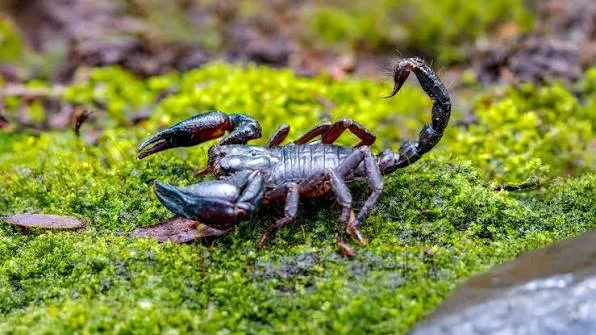 Proper humidity, deep substrate, secure housing, suitable food, and safe maintenance are essential for keeping this impressive scorpion healthy. The name Asian Forest Scorpion is commonly used in the exotic-pet trade for several closely related scorpions in the genus Heterometrus.
Heterometrus spinifer is one species frequently sold under this name, although other Heterometrus species may also be marketed similarly. Because common names can be confusing, confirming the exact species with a reputable breeder is always a good idea.
This complete guide covers Asian Forest Scorpion care, size, origin, natural habitat, lifespan, diet, feeding schedule, enclosure, temperature, humidity, substrate, cleaning, behavior, molting, safety, breeding, enrichment, cost, health concerns, and whether this unusual arachnid makes a good pet.
Asian Forest Scorpion Quick Facts
| Feature | Details |
| Common name | Asian Forest Scorpion |
| Scientific group | Heterometrus genus |
| Common species in trade | Heterometrus spinifer and related species |
| Animal type | Terrestrial scorpion |
| Adult size | Commonly around 4–6 inches |
| Lifespan | Often around 6–8 years in captivity |
| Activity | Primarily nocturnal |
| Diet | Carnivorous |
| Main foods | Crickets, Dubia roaches, locusts, mealworms, and similar prey |
| Temperature | About 75–82°F (24–28°C) |
| Humidity | Generally around 70–85% |
| Enclosure | Around 10 gallons or larger for one adult |
| Substrate depth | Several inches, often 4–6 inches or more |
| Water | Shallow dish available |
| Handling | Not recommended |
| Housing | Solitary housing is safest for beginners |
| Difficulty | Beginner to intermediate depending on experience |
These are general husbandry guidelines rather than universal numbers for every animal sold as an Asian Forest Scorpion. Exact requirements can vary between Heterometrus species.
What Is an Asian Forest Scorpion?
The Asian Forest Scorpion is a common name used for large tropical scorpions belonging primarily to the genus Heterometrus. These animals are members of the class Arachnida and order Scorpiones. They have eight legs, two large pincers called pedipalps, a segmented abdomen, and a curved tail ending in a venomous stinger.
Their sturdy appearance and oversized pincers are part of what makes them popular among exotic-pet keepers. Unlike some smaller, highly defensive scorpions, Heterometrus species often rely heavily on their strong pincers when threatened.
However, that does not make them harmless. They can pinch and sting, so they should always be treated as venomous animals. An Asian Forest Scorpion is best viewed as a display and observation pet, not a companion animal.
Asian Forest Scorpion Origin and Where Do They Live?
Asian Forest Scorpions are native to tropical and subtropical areas of Asia. The precise geographic distribution depends on the species. In nature, Heterometrus scorpions are associated with warm, humid environments.
They commonly live around forest floors, beneath logs, under leaf litter, in soil, and inside natural burrows. Their lifestyle explains many of their captive-care requirements. A dry, brightly lit enclosure with little substrate does not resemble the environment these animals evolved to use.
Instead, a suitable habitat should provide:
- Moist, burrowable substrate
- Natural or artificial hiding places
- Leaf litter
- Stable warmth
- High but controlled humidity
- Good ventilation
- Access to clean water
- Darkness and shelter
Because they are primarily nocturnal, they may remain hidden for much of the day and become active after the enclosure becomes dark.
Asian Forest Scorpion Natural Habitat
The natural habitat of these forest scorpions is generally warm and humid, with plenty of ground cover. Forest soil can remain damp underneath the surface even when the upper layer becomes slightly drier.
This creates a useful moisture gradient. Captive keepers can imitate this by maintaining moisture in the lower substrate rather than keeping every part of the enclosure constantly wet.
Natural cover is equally important. Cork bark, leaf litter, sturdy hides, and deep substrate allow the scorpion to choose where it wants to spend its time. Providing choices is usually better than forcing the animal into one particular microclimate.
Asian Forest Scorpion Size
The Asian Forest Scorpion size varies according to species, sex, age, and individual genetics. Many commonly kept adults reach approximately 4–6 inches (10–15 cm) in total length, although some Heterometrus species and individuals may become larger.
Their large pincers can make them look especially impressive. Juveniles are much smaller and should not automatically be kept in an adult-sized enclosure without considering their ability to find food and maintain appropriate environmental conditions.
When purchasing a specimen, ask the seller for the approximate age, species identification, and current size rather than relying only on the common name.
Asian Forest Scorpion Lifespan
The Asian Forest Scorpion lifespan is often estimated at approximately 6–8 years in captivity, although longevity can vary considerably between species and individuals. Good husbandry may support a longer and healthier life.
Important factors include:
- Appropriate temperature
- Correct humidity
- Nutritious prey
- Access to clean water
- Safe molting conditions
- Minimal unnecessary handling
- Proper enclosure hygiene
- Reduced stress
Because scorpions grow through successive molts, care during these vulnerable periods can have a significant effect on their well-being.
Asian Forest Scorpion Enclosure Size
For one adult, an enclosure around 10 gallons is commonly used as a starting point. A larger enclosure can be beneficial when it provides useful floor space and enough depth for burrowing.
The enclosure should be:
- Escape-proof
- Securely ventilated
- Easy to maintain
- Large enough for deep substrate
- Large enough for a hide and water dish
Floor space is generally more important than excessive vertical height. A very tall enclosure with only a shallow layer of substrate is not particularly useful for a burrowing terrestrial scorpion.
Asian Forest Scorpion Tank Setup
A good Asian Forest Scorpion tank setup should focus on security, humidity, burrowing, and hiding opportunities.
A basic setup can include:
- A secure glass or plastic enclosure
- Several inches of suitable substrate
- Cork bark or another stable hide
- Leaf litter
- A shallow water dish
- Artificial or chemical-free live plants
- A secure lid
- Digital temperature and humidity monitoring
- Heavy decorations should be positioned carefully.
If the scorpion burrows underneath an unstable object, the structure could collapse and injure it. Whenever possible, place heavy objects directly on the enclosure floor before adding substrate rather than balancing them loosely on top of soft soil.
Asian Forest Scorpion Substrate
Substrate is one of the most important components of an Asian Forest Scorpion enclosure. A suitable substrate should retain moisture while remaining loose enough to allow natural digging.
Potential materials include:
- Chemical-free organic topsoil
- Coconut fiber
- Reptile soil
- Leaf litter
- Appropriate soil-based mixtures
Avoid substrates containing fertilizers, pesticides, sharp particles, or other additives that could harm an invertebrate.
A depth of around 4–6 inches is a practical starting point for many adult setups, although deeper substrate can be used when the enclosure allows it. The substrate should be damp rather than soaked.
Asian Forest Scorpion Temperature
The recommended Asian Forest Scorpion temperature is generally around 75–82°F (24–28°C). A slight temperature gradient can be useful because it allows the animal to move between warmer and cooler areas. However, more heat is not automatically better.
When supplemental heating is necessary:
- Use a thermostat-controlled heat source.
- Heat only part of the enclosure when appropriate.
- Monitor the enclosure with reliable digital equipment.
- Avoid dangerous hot spots.
- Never rely on guesswork.
In warm climates, room temperature may already be sufficient for much of the year. Always measure the actual enclosure temperature rather than assuming it matches the room.
Asian Forest Scorpion Humidity
Humidity is a major part of Asian Forest Scorpion care. A general range of around 70–85% is commonly used for tropical Heterometrus species.
However, humidity should not be treated as a single number that must remain constant every minute. A healthier approach is to create a humid but well-ventilated environment.
To maintain appropriate humidity:
- Use a moisture-retentive substrate.
- Keep the lower substrate moist.
- Provide a water dish.
- Monitor humidity with a digital hygrometer.
- Maintain adequate ventilation.
- Avoid allowing the enclosure to become permanently saturated.
Too much moisture combined with poor airflow can encourage mold and unpleasant enclosure conditions.
Water Requirements
Fresh water should be available at all times. Use a shallow, stable water dish that the scorpion can access easily.
The dish should:
- Be difficult to tip over
- Be cleaned regularly
- Contain fresh water
- Be shallow enough to reduce drowning risk
A water dish does not replace appropriate environmental humidity. Both water access and a properly maintained substrate are important.
What Do Asian Forest Scorpions Eat?
Asian Forest Scorpions are carnivorous predators. Their captive diet generally consists of appropriately sized feeder insects.
Good options include:
- Dubia roaches
- Crickets
- Locusts
- Mealworms
- Superworms
- Other appropriate captive-bred feeder insects
A varied diet can be useful, although there is no need to offer a completely different food at every feeding. Feeder insects should be healthy and appropriately sized.
Asian Forest Scorpion Feeding Schedule
An adult can often be offered one or two appropriately sized prey items every one to two weeks. However, appetite differs between individuals. Juveniles typically require smaller prey and may need feeding more frequently.
A practical feeding routine is:
- Offer food after dark.
- Use appropriately sized prey.
- Observe whether the scorpion accepts the food.
- Remove uneaten prey when appropriate.
- Reduce feeding if the animal consistently refuses food.
Do not assume that a scorpion must eat every time food is offered.
Scorpions can naturally go through periods of reduced appetite, especially before molting.
Feeding a Baby Asian Forest Scorpion
A baby Asian Forest Scorpion needs appropriately sized food and stable environmental conditions. Tiny prey items may be necessary depending on the animal’s developmental stage.
Young scorpions should have:
- Small feeder insects
- Secure hiding places
- Moist substrate
- Good ventilation
- Stable temperature
- Minimal disturbance
Avoid placing oversized prey into a juvenile’s enclosure. Also, do not assume that a young scorpion should be housed with another simply because they are the same species. Cannibalism and injury are possible.
Asian Forest Scorpion Behavior
Understanding behavior makes care much easier. These scorpions are primarily nocturnal. During daylight hours, hiding is completely normal.
At night, you may observe:
- Burrowing
- Exploring
- Hunting
- Moving between hides
- Drinking
- Rearranging substrate
- Defensive posturing
A scorpion that suddenly becomes defensive should not be forced into interaction. Likewise, a scorpion spending much of the day hidden does not necessarily indicate illness.
Asian Forest Scorpion Temperament
Temperament varies between individuals. Many Heterometrus scorpions can be defensive when disturbed. A threatened animal may raise its pincers, retreat, pinch, or sting.
This is why the idea of a “tame scorpion” can be misleading.
Even if an individual appears calm, its behavior can change when it is:
- Hungry
- Stressed
- Recently moved
- Preparing to molt
- Disturbed inside its hide
- Suddenly exposed to bright light
Observation is safer than physical interaction.
Is an Asian Forest Scorpion a Good Pet?
For the right owner, an Asian Forest Scorpion can be a rewarding exotic pet. It is particularly suitable for someone who enjoys observing natural behavior rather than expecting affection or physical interaction.
Advantages
- Quiet
- Fascinating to observe
- Relatively low food requirements
- Does not need daily handling
- Interesting nocturnal behavior
- Can live for several years
- Requires less space than many conventional pets
Disadvantages
- Venomous
- Handling is not recommended
- Requires controlled humidity
- Can be defensive
- Often hides during the day
- Needs secure housing
- Species identification can be confusing
Therefore, it can be a reasonable choice for a prepared beginner, but it is not suitable for someone looking for a cuddly or interactive pet.
Can an Asian Forest Scorpion Kill You?
The search query “can an Asian Forest Scorpion kill you” reflects a common concern. The answer requires some nuance. Published research examining Heterometrus spinifer venom has described significant local effects from stings, while not showing the same lethal cardiovascular complications associated with some medically important scorpion species.
However, this does not mean every scorpion sold as an Asian Forest Scorpion has identical venom or that a sting should be considered harmless. The common trade name can refer to different Heterometrus species.
For that reason:
Never deliberately handle, provoke, squeeze, or corner an Asian Forest Scorpion.
If someone is stung and develops severe, unusual, or rapidly worsening symptoms, appropriate medical assistance should be sought.
Asian Forest Scorpion Venom and Sting Safety
Scorpions are venomous, not poisonous. Their venom is delivered through the stinger. The exact effects of a sting depend on the species and the person’s response.
Basic safety rules include:
- Do not handle the scorpion.
- Keep children away from the enclosure.
- Use tools during necessary maintenance.
- Keep the enclosure securely closed.
- Do not place hands into an occupied hide.
- Never intentionally provoke the animal.
- Know where the animal is before performing maintenance.
A catch cup and suitable long-handled tools are safer alternatives to using bare hands.
Asian Forest Scorpion Cleaning
Cleaning should maintain hygiene without unnecessarily destroying the animal’s environment.
Spot Cleaning
Regularly remove:
- Uneaten prey
- Food remains
- Moldy material
- Obviously contaminated substrate
- Other visible waste
- Clean and refill the water dish regularly.
At the same time, avoid digging through every burrow simply to make the enclosure look spotless. Scorpions use their environment as shelter, and excessive disturbance can cause unnecessary stress.
Deep Cleaning
A deeper cleaning may become necessary when substrate is heavily contaminated, persistent mold develops, or the enclosure develops an unpleasant smell.
A safe process is:
- Prepare a secure temporary container.
- Move the scorpion using a catch cup.
- Remove contaminated substrate.
- Clean the enclosure appropriately.
- Replace the substrate.
- Rebuild hides securely.
- Restore suitable moisture.
- Check temperature and humidity.
- Return the scorpion once the habitat is ready.
- Never attempt to grab the scorpion with your fingers.
Molting and How to Protect a Molting Scorpion
Molting is essential because the scorpion must shed its old exoskeleton as it grows.
Before molting, you may notice:
- Reduced appetite
- Increased hiding
- Less movement
- Changes in appearance
- Increased time spent inside a burrow
Once the molt begins, leave the animal completely alone.
Do not:
Handle it
- Move it
- Dig it out
- Offer live prey
- Touch the new exoskeleton
- Make unnecessary enclosure changes
The newly molted scorpion is soft and vulnerable. Even an otherwise harmless disturbance can result in serious injury.
Enrichment Activities for an Asian Forest Scorpion
Scorpions do not need toys in the same way that dogs or parrots do. Instead, enrichment should encourage natural behaviors.
Useful enrichment includes:
- Deep substrate for digging
- Cork bark tunnels
- Multiple hides
- Leaf litter
- Different burrowing areas
- Safe natural textures
- Occasional feeder variety
One of the best enrichment activities is simply allowing the scorpion to explore a well-designed habitat. You can also observe its nighttime hunting behavior without interfering.
Avoid repeatedly rearranging the enclosure. A naturalistic environment should provide opportunities for choice without constant disturbance.
Male vs Female Asian Forest Scorpion
Sexing Heterometrus scorpions can be difficult for beginners.
Experienced keepers may examine physical characteristics such as the pectines, body proportions, and other anatomical features.
However, size alone is not a reliable way to determine sex. If breeding is important, purchase a confirmed male or female from a knowledgeable breeder rather than relying on an unverified identification.
Breeding Asian Forest Scorpions
Breeding should only be attempted by keepers who understand the risks. Introducing two adult scorpions can result in aggression or injury.
Therefore, breeding should never involve simply putting two unfamiliar animals together and leaving them unattended.
Responsible breeding requires:
- Correct species identification
- Confirmed sexes
- Healthy adult animals
- Appropriate environmental conditions
- Careful observation
- A plan for offspring
- Separate housing when necessary
Heterometrus scorpions produce live young rather than laying eggs like many reptiles or amphibians. Young may remain with the mother during their early development, which makes post-birth management particularly important.
Asian Forest Scorpion Health Problems
Good husbandry prevents many common problems. Potential concerns include:
Dehydration
A consistently dry environment can be dangerous for a tropical forest scorpion.
Molting Problems
Poor environmental conditions, disturbance, or physical injury can complicate molting.
Mold
Persistent excessive moisture combined with poor airflow can encourage mold.
Injury
Collapsing decorations, inappropriate handling, or aggressive cage mates can cause injury.
Overheating
Excessive temperatures can create serious stress.
Feeding Problems
Long-term refusal of food combined with abnormal behavior should be investigated rather than ignored.
If the scorpion shows persistent weakness, unusual posture, serious injury, repeated failed molts, or other concerning symptoms, consult an exotic-animal veterinarian familiar with invertebrates whenever one is available.
How to Choose a Healthy Asian Forest Scorpion
If you are searching for an Asian Forest Scorpion for sale, the cheapest animal is not necessarily the best choice.
Before purchasing, look for:
- Clear species identification
- A reputable seller
- Evidence of normal feeding
- No obvious physical injuries
- Complete legs and pincers
- Healthy body condition
- Appropriate captive conditions
- Honest information about wild-caught or captive-bred status
Ask questions before buying.
A responsible seller should be able to tell you what the animal has been eating and provide useful information about its age, size, sex when known, and origin.
Because “Asian Forest Scorpion” can refer to several species, exact identification is particularly valuable.
How Much Does an Asian Forest Scorpion Cost?
The price of an Asian Forest Scorpion varies according to species, age, size, sex, availability, and whether the animal is captive-bred or imported. However, the animal itself is only one part of the expense.
A new keeper may also need to budget for:
- Enclosure
- Substrate
- Hygrometer
- Thermometer
- Hides
- Water dish
- Feeding tongs
- Heating equipment if necessary
- Feeder insects
- Replacement substrate
This means the initial setup cost can be considerably higher than the purchase price of the scorpion. Prices also vary widely by region, so checking current prices from reputable local breeders is more useful than relying on a single advertised figure.
Asian Forest Scorpion Care for Beginners
If this is your first scorpion, focus on getting the enclosure correct before purchasing the animal.
A simple preparation checklist is:
- Set up the enclosure first.
- Add several inches of appropriate substrate.
- Install hides.
- Add a shallow water dish.
- Measure temperature.
- Measure humidity.
- Test the enclosure for several days.
- Prepare feeder insects.
- Make sure the enclosure is escape-proof.
- Research the exact species whenever possible.
This preparation removes much of the stress associated with setting up a new exotic pet.
Common Beginner Mistakes
Using a Shallow Substrate
A terrestrial burrowing species benefits from several inches of substrate.
Keeping the Habitat Completely Dry
A tropical forest scorpion needs access to moisture.
Making the Enclosure Constantly Wet
High humidity does not mean stagnant, waterlogged conditions.
Handling the Scorpion
Handling creates unnecessary risk for both the keeper and animal.
Feeding Too Frequently
A scorpion does not need daily meals. Leaving Live Prey Inside
During Molting
A vulnerable scorpion can be injured by feeder insects.
Using Unstable Decorations
Heavy objects can collapse into burrows.
Ignoring Species Identification
The common name may not tell you exactly which Heterometrus species you have.
Consistency is generally more useful than repeatedly adjusting temperature and humidity.
Responsible Ownership and EEAT Care Guidance
Responsible exotic-pet information should be based on more than repeating numbers from random care sheets.
With Asian Forest Scorpions, species identification is especially important because several Heterometrus species may be traded under similar common names. Scientific references, experienced keepers, reputable breeders, and exotic-animal veterinarians can therefore provide more dependable guidance than an unidentified seller’s care instructions.
Scientific literature should also be used when discussing venom and medical risk. Research involving Heterometrus spinifer has examined its venom and documented its biological effects.
For responsible ownership:
- Verify local laws before buying.
- Prefer reputable sellers.
- Ask about the animal’s origin.
- Avoid irresponsible wild collection.
- Prepare the enclosure before acquiring the animal.
- Keep accurate care records.
- Have an emergency plan for stings.
- Contact an exotic veterinarian when serious health concerns arise.
Most importantly, good care means respecting the animal’s natural behavior instead of trying to turn a defensive wild species into a handling pet.
Asian Forest Scorpion Care Checklist
Before calling your setup complete, make sure you can answer “yes” to these questions:
- Is the enclosure secure?
- Is there enough floor space?
- Is the substrate deep enough for burrowing?
- Is the substrate moisture-retentive?
- Is the humidity monitored?
- Is the temperature monitored?
- Is clean drinking water available?
- Are there secure hides?
- Are heavy decorations stable?
- Are feeder insects appropriately sized?
- Do you know what to do during molting?
- Can you safely move the animal without touching it?
- Have you checked local ownership regulations?
If the answer is yes to all of these, you have covered the major foundations of responsible Asian Forest Scorpion husbandry.
FAQs
1. How big does an Asian Forest Scorpion get?
Most commonly kept Asian Forest Scorpions reach approximately 4–6 inches in total length, although adult size varies between species and individual animals.
2. How long does an Asian Forest Scorpion live?
The Asian Forest Scorpion lifespan is commonly estimated at around 6–8 years in captivity, although genetics, species, and husbandry can affect longevity.
3. What do Asian Forest Scorpions eat?
They eat insects and other suitable prey. Crickets, Dubia roaches, locusts, mealworms, and similar feeder insects can be used as captive food.
4. How often should I feed an Asian Forest Scorpion?
Many adults can be offered appropriately sized prey every one to two weeks. Juveniles generally need smaller prey and may eat more frequently.
5. What humidity does an Asian Forest Scorpion need?
A general humidity range of around 70–85% is commonly used for tropical Heterometrus species. Good ventilation should accompany high humidity.
6. Does an Asian Forest Scorpion need deep substrate?
Yes. These are terrestrial animals that can burrow. Around 4–6 inches of suitable substrate is a useful starting point for many adult enclosures.
7. Can you handle an Asian Forest Scorpion?
Handling is not recommended. Even a calm individual can become defensive and may pinch or sting when it feels threatened.
8. Is an Asian Forest Scorpion a good beginner pet?
It can be suitable for a prepared beginner who understands venomous-animal safety. However, someone looking for an animal that can be regularly handled should choose another pet.
9. Can an Asian Forest Scorpion kill you?
The medical risk depends on the exact species and individual circumstances. Some research on Heterometrus spinifer describes significant local effects from its venom, but this does not mean every scorpion sold under the common name has identical venom. Stings should always be taken seriously.
10. Is an Asian Forest Scorpion expensive to keep?
The scorpion itself may not be the largest expense. The initial enclosure, substrate, monitoring equipment, hides, and feeder insects can make startup costs significantly higher than the purchase price.
Final Thoughts
The Asian Forest Scorpion is an impressive exotic animal for keepers who appreciate natural behavior and are comfortable maintaining a venomous invertebrate safely. It does not need affection or daily interaction, but it does need a carefully designed environment.
The most important parts of successful care are simple: provide deep substrate, appropriate humidity, stable temperatures, secure hiding places, clean water, suitable prey, and minimal disturbance.
Above all, remember that this is a wild predator rather than a domesticated animal. Respecting its defensive behavior and avoiding unnecessary handling will protect both the scorpion and its keeper.
With responsible husbandry and consistent environmental conditions, an Asian Forest Scorpion can become a fascinating long-term addition to an exotic-pet collection.
I’ve created helpful guides in the Birds category on Petstdigo, featuring posts in Care, Cleaning, and Fun Activities. These guides share practical tips on grooming, skin and coat health, bathing routines, nutrition, playtime ideas, and calming solutions to keep your pets happy and healthy. Explore these pages for easy-to-follow advice and insights to support your pet’s overall well-being.