
The Ghost Mantis is one of the most unusual and fascinating praying mantises kept as an exotic pet. Famous for its incredible dead-leaf appearance, this small insect can blend into dry foliage so well that it may seem to disappear inside its enclosure.
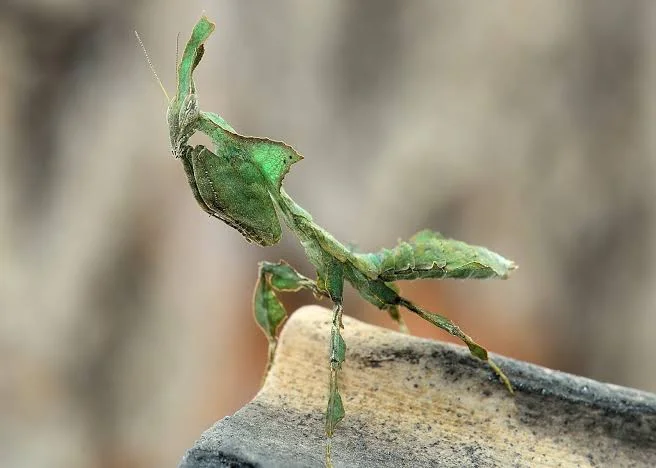 Its scientific name is Phyllocrania paradoxa, and its unusual body shape, calm behavior, and manageable size make it popular among mantis keepers. However, good Ghost Mantis care requires more than simply placing the insect in a container.
Proper ventilation, vertical space, suitable live food, moderate humidity, safe molting conditions, and regular observation are all important for keeping a healthy mantis.
If you are considering getting one, this complete guide covers everything you need to know, including its origin, natural habitat, size, lifespan, diet, enclosure, temperature, humidity, molting, cleaning, handling, breeding, behavior, enrichment, common mistakes, and whether a Ghost Mantis is a good pet for beginners.
Ghost Mantis Quick Facts
Before getting into the detailed care information, the following table gives you a quick overview of this species.
| Feature | Ghost Mantis Information |
| Scientific Name | Phyllocrania paradoxa |
| Common Name | Ghost Mantis |
| Family | Empusidae |
| Order | Mantodea |
| Type | Praying mantis |
| Native Range | Parts of Africa and Madagascar |
| Adult Size | Approximately 4–6 cm |
| Diet | Live insects |
| Lifespan | Several months to around a year depending on sex and conditions |
| Temperature | Approximately 22–28°C (72–82°F) |
| Humidity | Moderate with good ventilation |
| Activity | Mostly climbing, hunting, and resting |
| Handling | Limited and gentle |
| Housing | Tall, well-ventilated enclosure |
| Difficulty | Beginner to intermediate |
| Best Feature | Excellent dead-leaf camouflage |
These figures should be treated as practical husbandry guidelines rather than rigid rules. Individual mantises can respond differently to temperature, feeding, humidity, and developmental conditions.
What Is a Ghost Mantis?
The Ghost Mantis is a small praying mantis known for its remarkable camouflage. Instead of looking like the bright green mantises that many people imagine when they hear the word “mantis,” this species usually has a dry, leaf-like appearance. Its body has irregular edges, a distinctive head structure, and colors that can range from brown and tan to grayish or greenish shades.
These features make it extremely difficult to spot when it is sitting among dry leaves. The species belongs to the genus Phyllocrania and is scientifically known as Phyllocrania paradoxa. Its appearance is not simply decorative. Camouflage is an important part of its survival strategy.
Rather than constantly chasing prey, the mantis often waits patiently in vegetation. When a suitable insect comes close enough, it can strike with impressive speed. That combination of camouflage and ambush hunting is one of the main reasons this species is so interesting to keep.
Ghost Mantis Origin and Natural Habitat
The natural range of Phyllocrania paradoxa includes parts of Africa and Madagascar. It occurs across a relatively broad geographical area, which means wild individuals can experience somewhat different environmental conditions.
In nature, Ghost Mantises live among vegetation where their leaf-like body helps them remain hidden. Their natural environment provides several important clues for captive care.
- They benefit from:
- Vertical vegetation
- Branches and stems for climbing
- Areas where they can remain concealed
- Moderate moisture
- Good airflow
- Warm temperatures
- Plenty of space to hang during molting
A captive enclosure does not need to look exactly like a wild habitat. Instead, it should provide the important environmental features that support natural behavior.
Where Do Ghost Mantises Live?
Ghost Mantises are naturally found in various parts of Africa and Madagascar. Because their natural distribution is broad, it is not useful to assume that one exact temperature or humidity level represents every wild population.
For captive care, stability is generally more important than trying to reproduce a specific weather pattern. A well-designed habitat should therefore provide warmth, moderate humidity, ventilation, foliage, and safe climbing surfaces.
Mantis Appearance and Camouflage
The appearance of this species is what attracts many keepers in the first place.
A Ghost Mantis can look remarkably similar to:
- A dried leaf
- A piece of dead vegetation
- A small brown twig
- A curled piece of foliage
The head has a distinctive projection that contributes to its unusual silhouette. Its wings and body also help create a broken outline, making it harder for predators and prey to recognize it.
Color can vary considerably. Brown and tan are common, but individuals can also appear grayish or greenish. This explains why hobbyists sometimes search for terms such as green Ghost Mantis, black Ghost Mantis, or different Ghost Mantis color variations.
These descriptions generally refer to appearance rather than automatically indicating different species.
Ghost Mantis Size
One of the most common questions from new keepers is, ” How big do Ghost Mantis get? Adults generally reach approximately 4–6 cm in length, although individual size can vary.
Females tend to have a broader and heavier body, while males are generally slimmer. Despite being relatively small, the enclosure still needs enough vertical space for safe molting. This is an important point for beginners.
A mantis does not simply lie down and shed its skin. It normally hangs upside down and slowly pulls itself out of its old exoskeleton. Therefore, enclosure height is often more important than floor space.
Ghost Mantis Male vs Female
The difference between males and females becomes easier to see as the mantis matures.
Female Mantis
Females are usually:
- Larger and more robust
- Broader through the abdomen
- More heavily built
- Equipped with a wider overall appearance
Male Mantis
Males are commonly:
- Smaller and slimmer
- More delicate-looking
- Equipped with relatively long antennae
- More elongated in appearance
Sexing young nymphs can be more difficult, so beginners should not rely on one visual feature alone. The difference also matters for lifespan. Adult females commonly live longer than adult males.
Ghost Mantis Lifespan
The Ghost Mantis lifespan is short compared with traditional household pets.
So, how long do Ghost Mantises live?
A Ghost Mantis may live for several months to around a year depending on sex, developmental speed, temperature, nutrition, and overall husbandry.
Females generally have a longer adult lifespan than males. This is why searches such as mantis lifespan, how long do mantis live, Ghost Mantis lifespan, and how long do Ghost Mantis live can produce different answers.
There is no single lifespan number that applies to every individual. Temperature can influence how quickly a mantis develops. Warmer conditions may speed up growth, while cooler conditions can slow development.
However, deliberately increasing temperature simply to accelerate growth is not a good strategy. Stable, appropriate conditions are more important than rapid development.
Ghost Mantis Enclosure
A good Ghost Mantis enclosure should be tall, secure, well ventilated, and easy to maintain.
The enclosure should provide:
- Plenty of vertical clearance
- Secure climbing surfaces
- Good airflow
- Safe foliage
- A place to hide
- A suitable molting area
- Enough room to move naturally
For an adult, a tall enclosure around 20 × 20 × 30 cm can be a practical starting point, although exact dimensions can vary depending on the animal and enclosure design. The most important consideration is whether the mantis has enough unobstructed space to molt.
Ghost Mantis Enclosure Size
When choosing a Ghost Mantis enclosure size, do not focus only on the floor dimensions. Think vertically. A useful principle is to provide several times the mantis’s body length in vertical clearance.
The animal should be able to hang from the upper part of the enclosure without touching the floor or nearby decorations. A beautifully decorated enclosure is not useful if branches block the mantis’s molting path.
Setting Up a Mantis Enclosure
A simple setup can work extremely well. You can use:
- Artificial leaves
- Thin untreated branches
- Cork bark
- Mesh
- Safe twigs
- Simple substrate
- Vertical climbing structures
Place several branches at different heights. Leave enough open space between them so the mantis can move freely. The top of the enclosure is especially important because the mantis may spend much of its time there.
Make sure the animal can grip the sides or ceiling securely. Avoid sharp decorations or materials that could damage delicate legs.
Ghost Mantis Temperature
The recommended Ghost Mantis temperature is generally around 22–28°C (72–82°F). A normal household room may already provide suitable temperatures depending on the climate. If additional heating is necessary, use a controlled and safe method. Do not place the enclosure directly against a strong heat source.
Excessive heat can cause dehydration and unnecessary stress. Likewise, prolonged cold conditions can slow development and reduce normal activity. The goal is a stable, appropriate environment rather than constant temperature manipulation.
Ghost Mantis Humidity
Ghost Mantis humidity should be moderate rather than excessively wet. One of the most common mistakes is assuming that because a mantis comes from warm regions, its enclosure should remain damp all the time. That is not the case. Good airflow is extremely important.
A practical routine is:
- Lightly mist the enclosure when appropriate.
- Allow surfaces to dry partially.
- Maintain ventilation.
- Monitor the enclosure rather than relying only on guesswork.
- Adjust misting according to room conditions.
- Avoid waterlogged substrate and constantly wet walls.
High moisture combined with poor ventilation can encourage mold and unhealthy conditions.
What Do Ghost Mantis Eat?
So, what do Ghost Mantis eat? Ghost Mantises are carnivorous predators and need live prey.
Common feeder choices include:
- Fruit flies
- House flies
- Blue bottle flies
- Small roaches
- Other appropriately sized feeder insects
The correct feeder depends on the mantis’s age and size. Very young nymphs need tiny prey, while larger nymphs and adults can accept larger insects. Flying prey can be particularly useful because this species naturally responds to moving insects.
Ghost Mantis Feeding Schedule
There is no perfect feeding schedule that works for every individual. Young nymphs generally require food more frequently because they are growing rapidly.
Adults can often be fed every few days, depending on their size, appetite, and body condition. Rather than following a rigid calendar, observe the abdomen. A very thin abdomen may indicate that the mantis needs food.
A full abdomen usually means you can wait. Avoid excessive feeding. Overfeeding is unnecessary, and leftover prey can become a problem. Always remove dangerous or unwanted feeders before a molt.
Ghost Mantis Molting
Molting is one of the most important parts of successful care. A growing mantis must repeatedly shed its exoskeleton.
Before a molt, you may notice that your mantis:
- Stops eating
- Becomes less active
- Hangs upside down
- Moves toward the top of the enclosure
- Spends more time in one location
These behaviors are usually not a reason to panic. The biggest mistake is disturbing the mantis.
Once it begins preparing for a molt:
- Do not handle it.
- Remove aggressive feeder insects.
- Keep the enclosure stable.
- Maintain appropriate moisture.
- Make sure there is enough vertical space.
- Avoid moving branches around.
- A fall during molting can cause severe injury.
After a successful molt, allow the mantis time to harden its new exoskeleton before attempting any interaction.
Ghost Mantis Nymph Care
Young nymphs require more careful attention than adults.
For successful Ghost Mantis nymph care, provide:
- Very small live prey
- Appropriate ventilation
- Safe climbing surfaces
- Adequate vertical space
- Moderate moisture
- Stable temperature
- Minimal disturbance
Fruit flies are commonly suitable for small nymphs. As the mantis grows through successive molts, gradually increase prey size. Never offer prey that is excessively large or capable of overpowering the nymph.
Can Ghost Mantises Live Together?
Ghost Mantises are sometimes kept communally, and they can be more tolerant of one another than some highly cannibalistic mantis species.
However, communal housing is never completely risk-free. Cannibalism can still happen.
The risk can increase when:
- Food is scarce
- Space is limited
- Individuals are overcrowded
- One mantis is molting
- There are insufficient hiding places
For beginners, individual housing is usually easier to manage because you can monitor feeding, growth, molting, and health more accurately. If multiple individuals are housed together, plenty of space, foliage, and food are essential.
Ghost Mantis Behavior
Ghost Mantises are fascinating because their behavior is very different from that of common household pets.
They may spend long periods:
- Sitting motionless
- Climbing
- Hanging from branches
- Waiting for prey
- Slowly moving through foliage
- Watching nearby movement
- Do not assume a motionless mantis is automatically sick.
For an ambush predator, remaining still is part of normal behavior. When prey appears, the mantis can suddenly move with remarkable speed.
Handling a Ghost Mantis
Ghost Mantises can sometimes tolerate gentle handling, but they are not ideal pets for frequent physical interaction. Their legs and body are delicate. If you need to move one, allow it to walk onto your hand, a soft brush, or a twig.
Never grab the body. Most importantly, never handle a mantis during a molt. Avoid unnecessary handling immediately before or after molting as well. For this species, watching natural behavior is usually better than frequent handling.
Is Ghost Mantis a Good Pet?
Yes, the Ghost Mantis is a good pet for people who enjoy unusual insects and prefer observation over physical interaction.
It can be a particularly appealing choice for someone looking for a quiet exotic pet that requires relatively little space.
Why Ghost Mantises Make Good Pets
They offer several advantages:
- Very unusual appearance
- Fascinating camouflage
- Quiet lifestyle
- Small enclosure requirements
- Interesting hunting behavior
- Relatively simple feeding
- No need for daily walks
- Little noise
- Minimal space requirements
Possible Disadvantages
However, they are not perfect for everyone.
Potential drawbacks include:
- Short lifespan
- Live feeder requirements
- Delicate body
- Limited handling
- Molting risks
- Need for appropriate environmental conditions
If you want an animal you can cuddle, a Ghost Mantis is not the right choice. If you enjoy observing natural behavior, however, it can be an excellent exotic pet.
Ghost Mantis Cleaning
Cleaning a mantis enclosure is relatively straightforward.
Regularly check for:
- Dead feeder insects
- Uneaten prey
- Excess waste
- Mold
- Dirty surfaces
- Damaged mesh
- Loose branches
A simple routine is usually enough.
Daily Checks
Spend a few minutes observing the enclosure.
Check:
- Is the mantis active or resting normally?
- Is there leftover prey?
- Is the enclosure excessively wet?
- Is the animal preparing to molt?
Regular Cleaning
- Remove obvious waste and dead insects.
- Wipe dirty surfaces when necessary.
- Replace contaminated substrate rather than allowing mold to develop.
- Avoid excessive cleaning that constantly disturbs the mantis.
- The goal is a clean, stable habitat rather than a completely sterile environment.
Ghost Mantis Fun Activities and Enrichment
Mantises do not play with toys like dogs or parrots. Instead, enrichment should encourage natural behaviors.
You can provide:
- Different climbing branches
- Artificial foliage
- Multiple resting locations
- Different perch heights
- Areas of visual cover
- Safe hunting opportunities
One of the most enjoyable activities for an owner is watching the mantis hunt. You may also enjoy observing how quickly it disappears into foliage.
Avoid constantly changing the enclosure. A stable environment is generally better than repeatedly rearranging decorations.
Ghost Mantis Color Variations
The classic Ghost Mantis appearance is brown or tan, but individuals can show different shades.
Possible appearances include:
- Brown
- Tan
- Gray
- Greenish
- Darker brown
Terms such as green Ghost Mantis and black Ghost Mantis are often used in hobby discussions.
However, color alone does not mean the animal belongs to a different species. The scientific species name is Phyllocrania paradoxa.
Ghost Mantis Breeding
Breeding Ghost Mantises can be an interesting project for experienced keepers. However, breeding should not be attempted simply because adults are available. The animals need to be mature and healthy.
One of the major concerns is the risk of the female eating the male. To reduce risk, experienced keepers typically ensure the female is well fed and carefully monitor the introduction. After mating, the female may produce an ootheca, which is an egg case containing developing offspring.
Young nymphs require very small prey and appropriate space. If you are new to mantises, learning basic husbandry first is a better approach than immediately attempting breeding.
Ghost Mantis Ootheca and Babies
The ootheca contains multiple developing eggs. Once nymphs hatch, they are extremely small and need tiny prey. This is where preparation becomes important.
Before allowing an ootheca to hatch, make sure you have:
- Suitable tiny feeders
- Enough containers
- Proper ventilation
- Appropriate temperature
- Safe climbing material
- A plan for separating individuals if necessary
A large number of nymphs can quickly become difficult to manage without preparation.
Common Ghost Mantis Care Mistakes
Even though this species is relatively manageable, several common mistakes can create serious problems.
1. Too Much Humidity
Constantly wet conditions can encourage mold and poor airflow.
2. Poor Ventilation
Fresh airflow is essential.
3. Too Little Vertical Space
A mantis needs sufficient room to molt safely.
4. Oversized Feeders
Large prey can injure a small mantis.
5. Leaving Feeders During Molting
A vulnerable mantis cannot defend itself effectively.
6. Excessive Handling
Repeated handling can cause unnecessary stress or injury.
7. Overfeeding
A mantis does not need food simply because a particular day has arrived.
8. No Climbing Material
Smooth, empty enclosures are unsuitable for normal behavior.
9. Excessive Heat
High temperatures can increase dehydration and stress.
10. Rearranging the Habitat During Molting
Disturbing branches or the mantis itself during this period can have serious consequences.
Ghost Mantis Health Problems
Most husbandry-related problems can be reduced by maintaining stable conditions.
Possible concerns include:
Dehydration
A very weak or unusually thin mantis may indicate a husbandry issue.
Failed Molt
Insufficient vertical space, poor grip, unsuitable moisture, disturbance, or falls can contribute to molting problems. Injuries, falls, and rough handling can damage delicate legs and body structures.
Mold
Mold becomes more likely when moisture is excessive and ventilation is poor.
Feeding Problems
A mantis may refuse food before molting, so temporary loss of appetite is not automatically a health emergency. However, prolonged weakness, obvious injury, or abnormal symptoms should be taken seriously.
For serious problems, seek advice from a veterinarian experienced with exotic animals or from a qualified invertebrate specialist.
Ghost Mantis for Sale
People searching for Ghost Mantis for sale should consider the animal’s health and the seller’s experience rather than choosing solely based on price.
Before purchasing, ask:
- What instar is the mantis?
- When did it last molt?
- Is it feeding?
- What feeders is it eating?
- Is the sex known?
- How has it been housed?
- Has it had any recent problems?
- Is the seller experienced with this species?
Avoid buying an animal that appears severely weak, injured, or unable to grip surfaces. Also check your local laws before purchasing or importing exotic insects because regulations can differ between locations.
How to Choose a Healthy Ghost Mantis
A healthy-looking mantis should generally be capable of gripping surfaces and moving appropriately for its developmental stage.
When selecting one, look for:
- Good grip
- Normal body posture
- No obvious injuries
- No severe deformities
- Appropriate activity
- A reasonably healthy abdomen
- Evidence that it is feeding normally
If purchasing a nymph, ask the seller about its recent molt and feeding history. Good husbandry starts before the animal reaches your home.
Ghost Mantis vs Other Types of Mantis
There are many types of mantis, and each species has its own strengths and challenges.
Ghost Mantises are especially attractive because they combine:
- Small adult size
- Excellent camouflage
- Interesting behavior
- Relatively manageable care
- Unusual appearance
Larger mantises may provide a more dramatic display, while some species may be more active.
Therefore, when comparing mantis types, consider more than appearance.
Think about:
- Adult size
- Lifespan
- Feeding requirements
- Enclosure needs
- Molting requirements
- Handling tolerance
- Availability
- Experience level
FAQs
1. How long do Ghost Mantises live?
Ghost Mantises generally have a relatively short lifespan. Depending on sex, temperature, development, nutrition, and husbandry, they may live several months to around a year, with females generally living longer than males.
2. What do Ghost Mantises eat?
Ghost Mantises eat live insects. Suitable prey can include fruit flies, flies, small roaches, and other appropriately sized feeder insects.
3. How big do Ghost Mantises get?
Adult Ghost Mantises generally reach around 4–6 cm, although individual size can vary. Females are usually broader and heavier than males.
4. Are Ghost Mantises good pets for beginners?
They can be good beginner-to-intermediate pets because they are quiet, small, fascinating to observe, and relatively simple to house. However, beginners must understand molting and live-feeder requirements.
5. What temperature does a Ghost Mantis need?
A practical temperature range is approximately 22–28°C (72–82°F). Stable conditions are more important than constantly changing the temperature.
6. What humidity does a Ghost Mantis need?
Moderate humidity with strong ventilation is generally appropriate. The enclosure should not remain constantly wet, because excessive moisture and poor airflow can encourage mold.
7. How often should you feed a Ghost Mantis?
Feeding frequency depends on age, size, and body condition. Young nymphs generally need smaller prey more frequently, while adults can often be offered suitable prey every few days.
8. Can Ghost Mantises live together?
They can sometimes be kept communally, but cannibalism remains possible. Individual housing is generally easier and safer for beginners because feeding and molting can be monitored more closely.
9. Can you handle a Ghost Mantis?
Gentle handling is possible with some individuals, but frequent handling is not recommended. The species is delicate and is better suited to observation than physical interaction.
10. What should I do when my Ghost Mantis is molting?
Do not disturb it. Remove potentially dangerous feeder insects, maintain stable environmental conditions, and make sure the mantis has enough unobstructed vertical space to hang safely.
Final Thoughts
The Ghost Mantis is a remarkable exotic insect that offers something very different from traditional pets. Its dead-leaf camouflage, unusual body shape, quiet nature, and ambush-hunting behavior make it fascinating to watch.
The species does not need a massive enclosure or constant human interaction. Nevertheless, successful care still depends on attention to detail. A tall enclosure, excellent ventilation, moderate humidity, suitable temperature, appropriate live prey, and sufficient molting space form the foundation of good husbandry.
Most importantly, remember that this is an observation pet rather than a cuddly companion. You may not spend hours handling it, but you can spend plenty of time watching it climb, camouflage itself, hunt, molt, and behave naturally. For someone interested in unusual insects, that can be exactly what makes the experience rewarding.
I’ve created helpful guides in the Birds category on Petstdigo, featuring posts in Care, Cleaning, and Fun Activities. These guides share practical tips on grooming, skin and coat health, bathing routines, nutrition, playtime ideas, and calming solutions to keep your pets happy and healthy. Explore these pages for easy-to-follow advice and insights to support your pet’s overall well-being.