
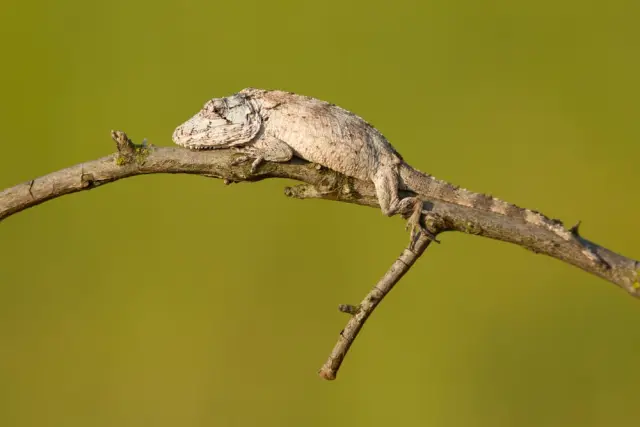
The Cuban False Chameleon is one of the most unusual-looking lizards available to experienced reptile keepers. Despite its name, it is not a true chameleon. Instead, this slow-moving Cuban lizard is known for its bulky body, unusual head shape, rough appearance, and specialized lifestyle.
 A proper Cuban False Chameleon care setup requires more than a basic reptile tank because this species benefits from vertical space, appropriate humidity, good ventilation, UVB lighting, varied insects, climbing opportunities, and a carefully maintained environment.
If you are researching a Cuban False Chameleon for sale, it is important to understand its needs before buying one. This is not a pet that should be chosen simply because it looks interesting.
With the right enclosure and routine, however, a healthy Cuban False Chameleon can be a fascinating display animal and a rewarding species for an experienced keeper.
Cuban False Chameleon Quick Facts
Good husbandry starts with understanding the animal’s natural lifestyle.
The Cuban False Chameleon is generally associated with forested environments in Cuba, where it spends much of its time around vegetation, branches, and other structures.
Here is a quick overview of the basic requirements:
| Feature | Details |
| Common Name | Cuban False Chameleon |
| Scientific Name | Anolis barbatus |
| Origin | Cuba |
| Type | Arboreal/semi-arboreal lizard |
| Adult Size | Around 7–10 inches, depending on the individual |
| Enclosure | Tall, well-ventilated enclosure |
| Minimum Starting Size | About 24 × 18 × 36 inches for one adult |
| Temperature | Generally mid-70s to low-80s°F, with a warmer basking area |
| Humidity | Approximately 60–80%, with ventilation |
| Lighting | Full-spectrum lighting with appropriate UVB |
| Diet | Primarily insects and other suitable invertebrates |
| Water | Fresh water plus misting as appropriate |
| Lifespan | Several years; reliable captive lifespan data are limited |
| Handling | Minimal and gentle |
| Difficulty | Intermediate to advanced |
These figures should be treated as starting husbandry targets rather than rigid rules. Individual animals, enclosure design, room temperature, ventilation, and local climate can all affect the ideal setup.
What Is a Cuban False Chameleon?
The Cuban False Chameleon is a distinctive lizard native to Cuba. It is often called a “false chameleon” because its appearance and slow movements can remind people of true chameleons.
However, it is not actually a chameleon.
Its classification is within the anole group, and the species is commonly known as Anolis barbatus. Older references may use the name Chamaeleolis barbatus, reflecting historical changes in classification.
This distinction matters because beginners sometimes assume that a Cuban False Chameleon should be cared for exactly like a veiled or panther chameleon. That is not the case. Its natural history, body structure, behavior, and husbandry requirements are different.
One of the most attractive features of this species is its unusual appearance. It has a large head, sturdy body, textured skin, and an almost prehistoric appearance.
Origin and Natural Habitat
The Cuban False Chameleon is native to Cuba, where it occurs in forested habitats and areas with vegetation and climbing structures.
In the wild, these lizards encounter:
- Branches and woody structures
- Dense vegetation
- Natural hiding areas
- Variable light levels
- Moist microhabitats
- Insects and other small invertebrates
- Areas with both cover and ventilation
A good enclosure should therefore provide more than an empty glass box. The goal is to create different microhabitats so the lizard can move between warmer, cooler, brighter, darker, drier, and more humid areas.
This ability to choose its preferred location is particularly important for reptiles because they rely heavily on their environment to regulate body temperature and other physiological processes.
Cuban False Chameleon Size and Appearance
A typical Cuban False Chameleon size is roughly 7–10 inches, although individual size can vary.
The species has a distinctive body structure that makes it appear larger and heavier than many similarly sized lizards.
Common physical characteristics include:
- A broad, heavy-looking head
- Thick body
- Shorter-looking limbs
- Rough or textured skin
- Strong feet for climbing
- Camouflage-oriented coloration
- Slow, deliberate movements
Young animals generally look smaller and less robust than adults.
A baby Cuban False Chameleon also requires more careful monitoring because small reptiles can become dehydrated or lose body condition more quickly when husbandry is incorrect.
Do Cuban False Chameleons Change Color?
One common question is: Do Cuban False Chameleons change color?
They can show some variation in coloration, but they should not be thought of as true chameleons capable of dramatic color changes.
Color may appear different because of:
- Stress
- Lighting
- Temperature
- Activity level
- Background surroundings
- Individual variation
- Time of day
A sudden or persistent unusual coloration should be considered alongside other signs of health rather than interpreted as a normal “mood color” alone.
Cuban False Chameleon Enclosure Size
Choosing the correct Cuban False Chameleon enclosure is one of the most important parts of successful care.
Because this species benefits from climbing and vertical movement, height is particularly valuable.
A practical starting enclosure for one adult is approximately:
24 × 18 × 36 inches
Larger is better when the enclosure can maintain appropriate temperature, humidity, ventilation, and lighting.
A larger enclosure allows you to create:
- Multiple climbing routes
- Hiding places
- Different temperature zones
- Natural perches
- Vegetation
- Open areas
- Moisture gradients
The Cuban False Chameleon enclosure size should also be adjusted according to the animal’s age, size, behavior, and enclosure design.
Cuban False Chameleon Tank Size
When searching for a Cuban False Chameleon tank size, do not focus only on floor space. A tall enclosure is usually more useful than a short, wide aquarium because the animal can use branches and elevated resting areas.
For juveniles, a smaller enclosure may make monitoring feeding and hydration easier. As the animal grows, upgrade the enclosure rather than keeping an adult permanently in a small juvenile setup.
Setting Up the Enclosure
A good enclosure should include several functional zones.
Branches and Perches
Provide sturdy branches at different heights. Make sure every branch is secure. A falling branch can seriously injure a reptile.
Use:
- Natural untreated branches
- Reptile-safe climbing structures
- Cork bark
- Stable vines designed for reptile enclosures
Avoid sharp or unstable decorations.
Plants and Cover
Plants provide visual barriers and help the enclosure feel more natural.
Suitable options can include sturdy reptile-safe live plants or artificial plants specifically designed for enclosure use. Plants should not block all ventilation or interfere with UVB exposure.
Hiding Areas
Although the Cuban False Chameleon can be a good display animal, it still needs places where it can retreat.
Provide:
- Dense foliage
- Cork bark
- Covered branches
- Elevated hiding areas
- Shaded sections
A reptile that never has an opportunity to hide may become chronically stressed.
Cuban False Chameleon Temperature
Maintaining an appropriate Cuban False Chameleon temperature gradient is more useful than trying to keep the entire enclosure at one identical temperature.
A reasonable starting approach is:
- Warm areas: around the upper 70s to low 80s°F
- Cooler areas: generally in the low-to-mid 70s°F
- A localized warming/basking zone can be provided when appropriate
Always measure temperatures with reliable digital thermometers.
Do not assume that the temperature shown on your home’s thermostat is the same as the temperature inside the enclosure. The lizard should be able to move away from the warmer area whenever it wants.
Avoid Overheating
One of the most common reptile-care mistakes is assuming that hotter is always better. It is not.
Excessive heat can cause:
- Dehydration
- Stress
- Reduced appetite
- Lethargy
- Heat-related injury
Monitor the actual enclosure instead of relying only on general room temperature.
Humidity and Ventilation
Humidity is another important part of Cuban False Chameleon care. A general starting range of approximately 60–80% humidity can work when combined with proper ventilation.
However, humidity should not mean stagnant, constantly wet air.
Good ventilation helps reduce the risk of:
- Mold
- Persistent dampness
- Poor air quality
- Respiratory problems
- Bacterial buildup
A useful setup often provides a humidity increase after misting, followed by gradual drying. Use a digital hygrometer to monitor humidity rather than guessing.
UVB and Lighting
UVB lighting is an important component of responsible reptile husbandry because it supports normal vitamin D3 production and calcium metabolism. Use a quality reptile UVB system appropriate for the enclosure.
The exact UVB strength and mounting distance depend on the specific bulb, reflector, mesh, enclosure height, and manufacturer’s recommendations.
A general day/night cycle of around 10–12 hours of daytime lighting can provide a practical starting point. Remember that UVB bulbs lose effectiveness over time even when they still produce visible light. Follow the manufacturer’s replacement guidance.
Cuban False Chameleon Diet
The Cuban False Chameleon diet should focus on appropriately sized prey items.
Suitable feeder insects can include:
- Crickets
- Dubia roaches
- Black soldier fly larvae
- Silkworms
- Appropriately sized mealworm
- Other suitable captive-raised feeder insects
Variety is better than relying on only one feeder. Prey should be appropriately sized so the lizard can consume it safely.
Gut Loading
Feeder insects should be properly gut-loaded before feeding. This means providing nutritious food to the insects so they offer better nutritional value to the reptile.
A quality calcium supplement may also be used according to the animal’s age, diet, UVB exposure, and veterinary guidance. Avoid blindly giving large amounts of supplements. More is not automatically better.
How Often Should You Feed a Cuban False Chameleon?
Feeding frequency depends on age, size, body condition, activity, and the individual animal. Young lizards generally need more frequent feeding than adults because they are growing.
Adults can usually be fed on a controlled schedule rather than receiving unlimited insects. Watch body condition carefully.
Signs that feeding may need adjustment include:
- Noticeable weight loss
- Persistent refusal to eat
- Excessive weight gain
- Reduced activity
- Poor muscle condition
A kitchen scale capable of measuring small weights can be useful for tracking changes over time.
Water and Hydration
Fresh drinking water should be available in a clean, accessible container when appropriate. Misting can also be useful because some reptiles prefer drinking droplets from surfaces.
However, never assume that misting alone guarantees hydration.
Monitor the animal for signs such as:
- Sunken-looking eyes
- Weakness
- Unusual lethargy
- Sticky saliva
- Reduced activity
- Persistent refusal to eat
If dehydration appears significant, consult an experienced exotic-animal veterinarian.
Baby Cuban False Chameleon Care
A baby Cuban False Chameleon needs particularly careful observation.
Young reptiles can be more vulnerable to:
- Dehydration
- Incorrect temperatures
- Poor nutrition
- Calcium imbalance
- Stress
- Inadequate feeding
A juvenile enclosure does not need to be enormous immediately if the animal is difficult to monitor in a very large setup.
However, it should still provide appropriate climbing opportunities, hiding areas, ventilation, lighting, and environmental gradients.
Feed appropriately sized insects and monitor the young animal’s weight and growth. Do not overcrowd the enclosure simply because the animal is small.
Adult Cuban False Chameleon Care
An adult Cuban False Chameleon needs a stable enclosure with enough vertical space, secure branches, vegetation, hiding areas, appropriate lighting, and controlled environmental conditions.
Adults should not be treated as completely maintenance-free reptiles.
Continue monitoring:
- Appetite
- Weight
- Droppings
- Activity
- Skin condition
- Eyes
- Body condition
- Hydration
- Climbing ability
Small changes can sometimes provide early warning that something is wrong.
Cuban False Chameleon Lifespan
The Cuban False Chameleon lifespan is not as well documented in captivity as the lifespan of some common pet reptiles.
Several years may be possible with proper care, but it is better not to promise a precise lifespan because reliable long-term captive data are limited.
Good husbandry can support longevity, but genetics, nutrition, disease, stress, environmental quality, and veterinary care all influence an individual animal’s lifespan.
Temperament and Handling
This species is generally better viewed as a display-oriented reptile rather than a pet that needs frequent handling.
A Cuban False Chameleon may tolerate limited, gentle handling, but unnecessary handling can cause stress.
When handling is necessary:
- Move slowly.
- Avoid grabbing from above.
- Support the body properly.
- Keep handling sessions short.
- Never squeeze the animal.
- Return it to the enclosure if it shows strong signs of stress.
Use handling primarily when necessary for health checks, enclosure maintenance, transportation, or veterinary care.
Is a Cuban False Chameleon a Good Pet?
So, is a Cuban False Chameleon a good pet? It can be—but mainly for the right keeper.
Advantages
- Extremely unusual appearance
- Interesting natural behavior
- Suitable for an attractive planted enclosure
- Fascinating display animal
- Relatively manageable adult size
- Can be rewarding for experienced reptile keepers
Disadvantages
- Not ideal for frequent handling
- Husbandry mistakes can cause health problems
- Captive lifespan information is limited
- May be difficult to find from responsible breeders
- Requires specialized enclosure conditions
- Exotic-animal veterinary care may be necessary
For a first-time reptile owner, a more established beginner species may be easier. For an experienced keeper who enjoys observing unusual reptiles, the Cuban False Chameleon can be an excellent project.
Cuban False Chameleon Cost
The total cost of ownership is more important than the purchase price. If you search for a Cuban False Chameleon for sale, remember that the animal itself is only one part of the expense.
Your initial setup may include:
- The lizard
- Tall enclosure
- UVB fixture and bulb
- Heating equipment
- Thermometers
- Hygrometer
- Branches
- Plants
- Hides
- Substrate
- Feeding insects
- Calcium supplements
- Water equipment
- Cleaning supplies
There are also recurring expenses for feeder insects, replacement bulbs, substrate, electricity, and veterinary care.
Prices vary significantly depending on availability and seller, so avoid choosing an animal solely because it appears unusually cheap.
Finding a Cuban False Chameleon for Sale
When looking for a Cuban False Chameleon for sale, responsible sourcing should be a priority.
Before purchasing, ask the seller:
- Is the animal captive-bred?
- How old is it?
- What has it been eating?
- Is it feeding consistently?
- Has it been treated for parasites?
- What temperatures and humidity has it been kept at?
- How long has the seller had it?
- Are there any known health problems?
- Can the seller provide reliable husbandry information?
Avoid sellers who cannot explain basic care or who pressure buyers to purchase immediately. Also check local wildlife and exotic-pet regulations before acquiring the species.
Laws concerning collection, importation, possession, and sale can vary by country, state, or locality.
Cuban False Chameleon Cleaning Routine
Good hygiene helps maintain a healthy enclosure.
Daily
- Remove visible waste.
- Remove uneaten prey when necessary.
- Replace contaminated water.
- Check temperature and humidity.
- Observe the lizard’s behavior.
Weekly
- Wipe heavily soiled surfaces.
- Inspect branches and decorations.
- Clean the water container thoroughly.
- Check plant condition.
- Inspect ventilation areas.
Deep Cleaning
Perform deeper cleaning when the enclosure becomes heavily soiled or according to your husbandry system. Do not use harsh household chemicals around reptiles.
Always ensure surfaces are properly rinsed and dry or appropriately prepared before returning the animal.
Fun Activities and Enrichment
A Cuban False Chameleon does not need toys in the same way a dog does, but environmental enrichment is valuable. You can provide enrichment by changing safe aspects of the enclosure gradually.
Useful ideas include:
- Multiple climbing routes
- Different perch heights
- Natural-looking vegetation
- Covered and open areas
- Opportunities to search for feeder insects
- Different resting locations
- Safe visual barriers
Scatter-feeding or controlled hunting opportunities can encourage natural feeding behavior, provided uneaten insects do not remain in the enclosure and cause problems.
Common Health Problems
Improper husbandry can contribute to several health problems.
Metabolic Bone Disease
Poor calcium nutrition, inadequate UVB exposure, or other husbandry problems can contribute to metabolic bone disease.
Possible warning signs include:
- Weakness
- Tremors
- Abnormal movement
- Soft or poorly formed bones
- Difficulty climbing
This requires veterinary attention.
Dehydration
Inadequate water intake or unsuitable environmental conditions can lead to dehydration.
Respiratory Problems
Persistent poor ventilation, inappropriate temperatures, or prolonged environmental stress may contribute to respiratory illness.
Watch for:
- Open-mouth breathing
- Excess mucus
- Clicking sounds
- Difficulty breathing
- Unusual lethargy
Parasites
Internal parasites can occur in reptiles, especially newly acquired animals. A reptile veterinarian can recommend appropriate testing. Never give deworming medication without professional guidance.
Signs of a Healthy Cuban False Chameleon
A healthy animal will generally show:
- Alert behavior
- Good grip
- Normal climbing ability
- Appropriate body condition
- Clear eyes
- Normal skin
- Regular feeding behavior
- Normal droppings
- No obvious breathing difficulty
A single unusual behavior does not automatically mean illness, but persistent changes deserve attention.
Male vs Female Cuban False Chameleon
Sexual differences can be subtle compared with some other lizard species. Rather than relying only on appearance, experienced keepers may consider body characteristics and other species-specific traits.
If accurate sex identification matters, ask an experienced reptile keeper, breeder, or veterinarian.
Can Cuban False Chameleons Live Together?
Cohabitation should not be assumed to be safe simply because the animals are the same species.
Keeping multiple reptiles together can introduce problems involving:
- Competition
- Food
- Hiding areas
- Territory
- Stress
- Injury
For most keepers, an individual enclosure is easier to manage and monitor. If multiple animals are kept, the enclosure must be appropriately designed, and the animals should be monitored closely.
Beginner Mistakes to Avoid
Avoid these common mistakes when starting Cuban False Chameleon care:
- Using a short enclosure instead of providing useful vertical space.
- Keeping humidity high without ventilation.
- Skipping UVB lighting.
- Feeding only one type of insect.
- Using oversized prey.
- Handling the animal too frequently.
- Ignoring changes in body weight.
- Buying from an irresponsible seller.
- Failing to quarantine a new reptile.
- Assuming visible light means the UVB bulb is still effective.
- Overheating the enclosure.
- Waiting too long when serious illness signs appear.
Avoiding these mistakes can make daily care much more predictable.
A Simple Daily Care Routine
A consistent routine makes exotic-pet care easier.
Morning
- Check temperature.
- Check humidity.
- Inspect the lizard.
- Replace water if needed.
- Remove obvious waste.
Feeding Time
- Offer appropriately sized prey.
- Remove dangerous or uneaten insects.
- Observe feeding behavior.
Evening
- Check that the enclosure is functioning correctly.
- Confirm that the animal has access to appropriate resting areas.
- Allow the enclosure to follow its normal day/night cycle.
Consistency is often more important than constantly changing the setup.
Expert Care and Responsible Ownership
Responsible Cuban False Chameleon care should be based on the animal’s biology rather than assumptions made from its common name.
The most important principles are:
- Research the species before purchase.
- Provide a properly sized vertical enclosure.
- Use appropriate UVB lighting.
- Maintain temperature and humidity gradients.
- Provide varied, nutritious prey.
- Monitor body condition.
- Keep the enclosure clean.
- Minimize unnecessary handling.
- Quarantine new reptiles.
- Establish access to an exotic-animal veterinarian.
- Purchase responsibly sourced animals.
- Check ownership and wildlife laws in your area.
Because this species is less commonly kept than many mainstream reptiles, high-quality care information can be harder to find.
That makes careful research and professional veterinary support especially valuable. No online care guide can replace diagnosis from a qualified reptile veterinarian.
If your lizard develops breathing problems, severe weakness, repeated refusal to eat, unexplained weight loss, abnormal movement, injuries, or other concerning symptoms, seek professional veterinary advice.
FAQs
1. Is the Cuban False Chameleon a true chameleon?
No. Despite its common name and unusual appearance, it is a lizard in the anole group rather than a true chameleon.
2. What is the scientific name of the Cuban False Chameleon?
It is commonly classified as Anolis barbatus. Older literature may use Chamaeleolis barbatus.
3. How big does a Cuban False Chameleon get?
A typical adult may reach around 7–10 inches, although individual size varies.
4. What is the best Cuban False Chameleon tank size?
A tall enclosure around 24 × 18 × 36 inches can be a useful starting point for one adult, with larger being preferable when practical.
5. What does a Cuban False Chameleon eat?
Its diet can include appropriately sized insects and other suitable invertebrate prey, such as crickets, Dubia roaches, black soldier fly larvae, and silkworms.
6. Do Cuban False Chameleons change color?
They can show some color variation, but they do not have the dramatic color-changing ability associated with true chameleons.
7. How long does a Cuban False Chameleon live?
Reliable long-term captive lifespan data are limited. Several years may be possible with appropriate care.
8. Is a Cuban False Chameleon good for beginners?
It is generally better suited to intermediate or experienced reptile keepers because its husbandry and availability can be more specialized.
9. Can I handle a Cuban False Chameleon?
Limited, gentle handling may be tolerated, but frequent handling is usually unnecessary and can cause stress.
10. Does a Cuban False Chameleon need UVB?
Providing appropriate UVB as part of a complete reptile lighting setup is an important part of responsible husbandry.
11. Can Cuban False Chameleons live together?
Cohabitation can create competition and stress, so individual housing is generally easier to manage safely.
12. Where can I find a Cuban False Chameleon for sale?
Look for a reputable, transparent breeder or seller who can explain the animal’s history, diet, health, and husbandry. Always check local ownership regulations before purchasing.
Final Thoughts
The Cuban False Chameleon is an extraordinary reptile for keepers who appreciate unusual species and enjoy creating naturalistic enclosures.
Its strange appearance, slow movements, climbing behavior, and Cuban origin make it very different from the typical pet lizard. However, it should not be purchased simply because it looks like a miniature dinosaur or chameleon.
Successful ownership requires a carefully designed Cuban False Chameleon enclosure, appropriate temperature and humidity, reliable UVB lighting, varied nutrition, good hygiene, and regular observation.
If you are an experienced reptile keeper willing to learn its specific requirements, this species can be a fascinating addition to your collection. For beginners, choosing a more forgiving reptile may be a better starting point.
The most important rule is simple: research first, purchase responsibly, and build the correct habitat before bringing the animal home.
I’ve created helpful guides in the Birds category on Petstdigo, featuring posts in Care, Cleaning, and Fun Activities. These guides share practical tips on grooming, skin and coat health, bathing routines, nutrition, playtime ideas, and calming solutions to keep your pets happy and healthy. Explore these pages for easy-to-follow advice and insights to support your pet’s overall well-being.