
If you are looking for an unusual reptile with a prehistoric appearance and a surprisingly big personality, the Leachianus Gecko is worth learning about.
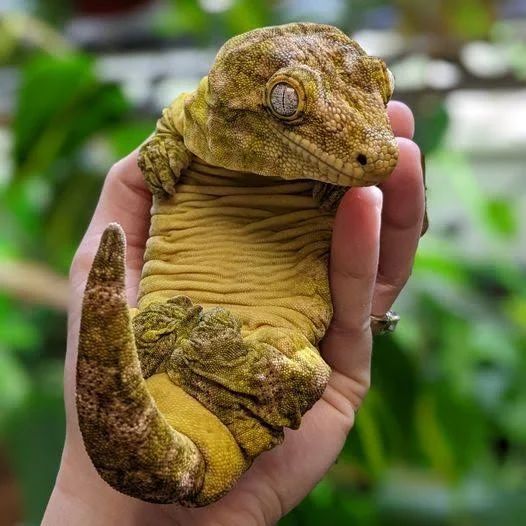 Also called the New Caledonian Giant Gecko or simply a “Leachie,” this large arboreal gecko is known for its chunky body, powerful grip, distinctive vocalizations, and long potential lifespan.
Unlike many smaller geckos, it needs a spacious vertical enclosure, appropriate humidity, a varied diet, and an owner who understands its behavior.
This complete Leachianus Gecko care guide covers everything a new keeper needs to know, including its origin, habitat, size, lifespan, enclosure, temperature, humidity, diet, handling, cleaning, enrichment, health, cost, and responsible buying.
Leachianus Gecko Basic Facts
The Leachianus Gecko (Rhacodactylus leachianus) is the largest living gecko species. It comes from New Caledonia, a group of islands in the southwest Pacific Ocean.
In captivity, these geckos can become impressive long-term companions, but their size, strength, territorial behavior, and specialized habitat requirements mean they are not ideal for every beginner.
| Feature | Leachianus Gecko Facts |
| Scientific name | Rhacodactylus leachianus |
| Common names | Leachianus Gecko, Leachie, New Caledonian Giant Gecko |
| Origin | New Caledonia |
| Lifestyle | Arboreal and mostly nocturnal |
| Adult size | About 9–17 inches, depending on locality |
| Lifespan | Commonly 20+ years with proper care |
| Diet | Omnivorous |
| Main foods | Complete gecko diet, fruit-based foods, insects |
| Humidity | Generally moderate to high with a drying period |
| Temperature | Mild to warm, with a temperature gradient |
| Difficulty | Intermediate |
| Activity | Mostly active at night |
| Temperament | Variable; can become manageable with consistent handling |
The Smithsonian’s National Zoo identifies the species as a New Caledonian gecko and notes that it is the largest known gecko species, reaching roughly 14 inches in some individuals and potentially living for around two decades in human care.
What Is a Leachianus Gecko?
So, what is a gecko in the first place? Geckos are lizards belonging to the infraorder Gekkota, and they are found across many parts of the world.
Different gecko species range from tiny animals that fit comfortably in a person’s hand to large reptiles such as the Leachianus Gecko. The Leachianus is especially interesting because it looks and behaves differently from many popular pet geckos.
It has a broad head, heavy body, strong limbs, textured skin, and a gripping tail and toes suited to climbing. Although it is sometimes grouped with other gecko species kept as pets, it should not be treated exactly like a small beginner species.
A Leachianus is powerful for its size and can produce a surprisingly painful bite if it feels threatened. The species occurs naturally on the main island of Grande Terre and on smaller islands around New Caledonia.
Different populations and localities can vary in size, appearance, and temperament.
Origin and Where Do Leachianus Live?
The Leachianus Gecko is native to New Caledonia, a French territory located in the southwest Pacific.
Its natural environment includes humid forests, dense vegetation, trees, branches, and areas with plenty of hiding opportunities.
There are two commonly discussed forms associated with the species:
- Grande Terre populations, generally larger
- Isle of Pines populations, often associated with the smaller Henkeli form
In nature, these geckos spend much of their time climbing and moving through vegetation. They are primarily nocturnal, so they become more active after sunset.
Their natural lifestyle explains many aspects of successful captive care. A good enclosure should provide vertical climbing space, sturdy branches, hiding areas, appropriate humidity, and a safe temperature gradient.
Leachianus Gecko Types and Localities
The term “types” can be confusing because some names describe geographic localities while others describe color or genetic traits.
| Type or Form | Main Characteristics |
| Grande Terre Leachianus Gecko | Associated with New Caledonia’s main island; generally larger and heavier |
| Yate Leachianus Gecko | A locality-associated form from Grande Terre; appearance can vary |
| Isle of Pines / Henkeli | Generally smaller than many Grande Terre animals |
| Albino Leachianus Gecko | A color/genetic morph rather than a geographic locality |
The Yate Leachianus Gecko is often discussed by keepers as a locality, while “Henkeli” is commonly associated with Isle of Pines animals.
Therefore, buyers should ask breeders about the animal’s actual locality, lineage, and parent information rather than relying only on a marketplace label.
An albino Leachianus Gecko is different again because albino describes pigmentation rather than where the animal originated.
Leachianus Gecko Size
One of the biggest attractions of this species is its impressive adult size. Depending on locality and individual genetics, adult Leachianus Geckos can reach approximately 9–17 inches in total length.
Grande Terre animals are generally associated with the larger end of the range, while Henkeli-type animals are often smaller.
ReptiFiles lists approximately 14–17 inches for R. l. leachianus and about 9–12 inches for R. l. henkeli.
Growth is not identical between individuals. Genetics, nutrition, health, age, and husbandry all influence development.
Because this is a large gecko, planning the adult enclosure before bringing home a young animal is one of the smartest things a keeper can do.
Leachianus Gecko Lifespan
A healthy Leachianus Gecko lifespan can be impressive. With appropriate husbandry, nutrition, hygiene, and veterinary care, these reptiles can live for 20 years or more.
Some husbandry references place potential captive longevity closer to 20–30 years. That means buying one is a long-term commitment.
A person considering a Leachianus should think beyond the cute juvenile stage and consider whether they can provide proper care for decades.
Before purchasing, ask yourself:
- Can I maintain the enclosure long-term?
- Can I afford quality food and veterinary care?
- Will I still be able to care for this reptile in five, ten, or twenty years?
- Can I provide an appropriately large enclosure?
- Do I have a plan if my housing situation changes?
Is a Leachianus a Good Pet?
For the right keeper, yes, a Leachianus Gecko can be an excellent pet. However, it is better described as an intermediate-level reptile rather than an effortless beginner animal.
They can be fascinating to watch, especially at night. Their climbing behavior, vocalizations, feeding response, and individual personalities make them engaging pets.
On the other hand, they have strong jaws and can become defensive. Some individuals tolerate handling well, while others remain more independent.
Pros
- Unique appearance
- Large and impressive compared with many geckos
- Long lifespan
- Interesting nocturnal behavior
- Can become manageable with appropriate handling
- Complete gecko diets make basic nutrition easier
- Excellent choice for experienced reptile keepers
Cons
- Requires a large enclosure
- Can be expensive to purchase and maintain
- Bites can hurt
- Not every individual enjoys handling
- Needs controlled humidity and temperature
- Long-term commitment
- Can be territorial
For someone specifically looking for a calm reptile that enjoys frequent handling, another species may be a better choice.
Leachianus Gecko Enclosure Size and Setup
The Leachianus Gecko enclosure size should reflect the adult animal rather than its juvenile size. Because this is an arboreal species, height is particularly valuable.
ReptiFiles recommends approximately 48 × 24 × 48 inches as a minimum enclosure for larger R. l. leachianus and around 36 × 18 × 36 inches for smaller R. l. henkeli animals.
Larger is generally better when the enclosure can be properly equipped. Essential enclosure features include:
- Strong climbing branches
- Cork bark
- Sturdy vines
- Multiple hiding locations
- Elevated resting area
- A suitable water dish
- Food dish
- Appropriate substrate
- Good ventilation
- Secure doors and locks
Branches must be strong enough to support the gecko’s weight.
Avoid decorations that can collapse or injure the animal. A vertical enclosure with several levels also allows the gecko to choose where it feels comfortable.
Temperature and Humidity
Proper environmental control is one of the most important parts of Leachianus Gecko care. A commonly recommended approach is to provide a mild temperature gradient rather than making the entire enclosure equally warm.
ReptiFiles recommends a basking area around 86–88°F, general temperatures around 72–78°F, and cooler nighttime temperatures around 66–72°F. Humidity should also fluctuate rather than remaining permanently saturated.
A general target around 60–80%, with appropriate drying periods and good ventilation, is commonly recommended. Use digital thermometers and a reliable hygrometer rather than guessing conditions by touch.
Avoid these mistakes
- Keeping the entire enclosure too hot
- Allowing the enclosure to remain wet constantly
- Eliminating ventilation
- Using only one temperature measurement
- Misting heavily without allowing the enclosure to dry appropriately
Lighting and UVB
Leachianus Geckos are nocturnal, but that does not automatically mean lighting is irrelevant. A naturalistic day-night cycle can help establish a consistent routine.
Low-level UVB may also be beneficial when provided appropriately. The enclosure should still contain shaded areas so the gecko can move away from direct exposure.
Avoid leaving bright lights on throughout the night. Their nocturnal behavior means darkness is an important part of their normal daily cycle.
Leachianus Gecko Diet and Food
The Leachianus Gecko diet is omnivorous. In captivity, nutrition should be varied and appropriately balanced rather than relying on one food item.
A high-quality complete gecko diet can form an important nutritional foundation. Insects can then provide additional variety and enrichment.
Suitable foods may include:
- Complete commercial gecko diet
- Appropriately sized crickets
- Dubia roaches
- Other suitable feeder insects
- Occasional appropriately prepared fruit
- Species-appropriate supplemental foods
The Smithsonian notes that New Caledonian geckos consume both invertebrates and fruit in their natural feeding ecology.
Feeding schedule
Young geckos generally require more frequent feeding than adults because they are growing.
Adults can often be fed several times per week depending on their diet, body condition, activity, and the specific feeding system being used.
Rather than feeding unlimited amounts, monitor body condition. A healthy gecko should not look extremely thin, but obesity should also be avoided.
Supplements
Supplementation depends on the complete diet and feeder insects being offered.
When insects are part of the feeding program, appropriate calcium and vitamin supplementation may be required according to the product instructions and veterinary guidance.
Avoid blindly adding large amounts of supplements. More is not automatically better.
Cleaning a Leachianus Gecko Enclosure
Regular cleaning protects both the reptile and the enclosure.
Daily or frequent maintenance
Remove:
- Fresh feces
- Uneaten perishable food
- Spoiled fruit
- Wet or contaminated substrate
- Dirty water
Regular deeper cleaning
Wipe down heavily soiled surfaces and clean food and water dishes thoroughly. During a full enclosure clean, temporarily place the gecko in a secure container with appropriate ventilation.
Never use harsh household chemicals around the animal unless the product is specifically appropriate for reptile environments and is used according to its instructions.
A bioactive setup can reduce some routine cleaning work, but it still requires monitoring and maintenance.
Bioactive Leachianus Gecko Enclosure
A properly designed bioactive enclosure can work well for this species.
A bioactive setup generally combines:
- Suitable substrate
- Live plants
- Leaf litter
- Microfauna
- Drainage where appropriate
- Hiding areas
- Climbing structures
Springtails and isopods may help break down organic waste, but they do not eliminate the need for keeper maintenance.
The enclosure should still be spot-cleaned and monitored carefully.
Handling a Leachianus Gecko
Handling should begin slowly. A young gecko that is nervous should not be immediately grabbed and restrained.
Instead, allow it to become familiar with the keeper’s presence.
When handling:
- Approach calmly.
- Avoid sudden movements.
- Support the entire body.
- Let the gecko move between your hands.
- Keep sessions short initially.
- Stop if the animal shows strong defensive behavior.
- Remember that a Leachianus is not a toy.
Some individuals become very calm, while others prefer limited interaction. Never intentionally provoke a bite to “test” temperament.
Fun Activities and Enrichment
Even reptiles benefit from an environment that allows natural behaviors.
Good enrichment ideas include:
- Rearranging climbing routes occasionally
- Providing cork tubes
- Offering multiple elevated resting locations
- Introducing safe naturalistic plants
- Varying feeding locations
- Using appropriately sized live prey for hunting
- Providing multiple hiding areas
Do not constantly rearrange the entire enclosure. Stability is also important. A good enclosure should allow the gecko to climb, hide, explore, rest, and hunt naturally.
Shedding
Leachianus Geckos shed their skin as they grow. Healthy shedding usually happens without major intervention. Maintaining appropriate humidity and providing suitable surfaces can support normal shedding.
Never pull off skin that is still attached. If retained shed repeatedly affects the toes, eyes, or other areas, consult an exotic-animal veterinarian.
Common Health Concerns
Like other reptiles, Leachianus Geckos can experience health problems when husbandry is inadequate.
Potential concerns include:
- Dehydration
- Obesity
- Poor nutrition
- Metabolic bone problems
- Parasites
- Mouth infections
- Respiratory problems
- Injuries
- Retained shed
Warning signs include:
- Sudden weight loss
- Persistent lethargy
- Difficulty climbing
- Abnormal breathing
- Swelling
- Loss of appetite
- Repeated vomiting or regurgitation
- Unusual feces
- Persistent mouth problems
A reptile showing significant changes should be evaluated by a veterinarian experienced with exotic animals.
Leachianus Gecko Price and Cost
The Leachianus Gecko price can vary considerably.
Factors affecting price include:
- Locality
- Genetics
- Morph
- Age
- Sex
- Parent lineage
- Size
- Breeder reputation
- Geographic location
Rare or desirable animals can cost significantly more than ordinary captive-bred individuals.
However, purchase price is only the beginning. You also need to budget for:
- Large enclosure
- Heating equipment
- Lighting
- Thermometers and hygrometers
- Food
- Supplement
- Substrate
- Décor
- Replacement equipment
- Veterinary care
A cheap gecko can become an expensive pet if the owner has not budgeted for proper husbandry.
Leachianus Gecko for Sale and Responsible Buying
Searching for a Leachianus Gecko for sale or a leachie gecko for sale can produce many results, but not every seller provides the same quality of care.
When considering Leachianus Geckos for sale, look for a reputable breeder who can explain the animal’s background.
Ask:
- How old is the gecko?
- What locality or lineage is it?
- What does it currently eat?
- Has it been eating consistently?
- Has it shed normally?
- Has it had any health problems?
- What are the parents like?
- Was it captive-bred?
- What care conditions is it accustomed to?
Red flags
Be cautious when a seller:
- Cannot identify the animal’s origin
- Refuses to discuss feeding
- Provides no clear photos or information
- Offers an unusually low price without explanation
- Ships visibly unhealthy animals
- Makes unrealistic claims about rarity
- Pressures you to buy immediately
Responsible purchasing helps discourage poor breeding and improper animal care.
Beginner Mistakes to Avoid
New keepers commonly make several mistakes.
1. Choosing an enclosure that is too small
The animal may start tiny, but it will grow substantially.
2. Keeping humidity constantly high
Humidity needs to be balanced with ventilation and drying periods.
3. Feeding only one food
A varied, nutritionally balanced diet is preferable.
4. Handling too aggressively
Trust takes time.
5. Ignoring nighttime behavior
A nocturnal reptile may appear inactive during the day and become highly active after dark.
6. Guessing temperatures
Use accurate digital equipment.
7. Buying based only on appearance
Health, lineage, temperament, and husbandry history matter more than a pretty color.
Leachianus Gecko vs Other Popular Geckos
The Leachianus is often compared with smaller pet geckos.
| Feature | Leachianus Gecko | Smaller Popular Geckos |
| Adult size | Large | Usually smaller |
| Enclosure | Large and vertical | Often smaller |
| Diet | Omnivorous | Depends on species |
| Activity | Mostly nocturnal | Often nocturnal |
| Handling | Individual-dependent | Usually species-dependent |
| Bite strength | Relatively strong | Often milder |
| Lifespan | Potentially 20+ years | Varies |
| Difficulty | Intermediate | Some are beginner-friendly |
This comparison matters because you shouldn’t choose a Leachianus simply because it is called a “gecko.” Different gecko animal species have very different care requirements.
Signs of a Healthy Leachianus Gecko
When choosing an animal, look for:
- Clear eyes
- Good body condition
- Strong grip
- Normal movement
- Healthy skin
- Clean mouth
- No obvious swelling
- No persistent breathing problems
- Good feeding response
- Appropriate alertness when active
A healthy juvenile should also be developing appropriately for its age. If possible, ask the breeder to demonstrate the animal feeding and climbing normally.
Expert Care and Responsible Ownership
Good reptile care is based on more than internet tips or a single care sheet.
The best approach combines species-specific husbandry information, observation of the individual animal, accurate environmental monitoring, appropriate nutrition, and professional veterinary care when needed.
This guide follows established information about the species’ natural history and captive husbandry.
Zoo-based information identifies the Leachianus as a New Caledonian giant gecko with an omnivorous diet and long potential captive lifespan, while detailed husbandry references provide practical guidance on enclosure dimensions, temperature, humidity, feeding, and environmental setup.
Keepers should also understand that husbandry recommendations can change as reptile nutrition and veterinary knowledge improve.
Therefore, serious health concerns should always be discussed with an exotic-animal veterinarian rather than treated solely with online advice.
Most importantly, responsible ownership means planning for the animal’s entire life—not just buying a fascinating juvenile.
FAQs
1. How big does a Leachianus Gecko get?
Adult size varies by locality and individual genetics. Many adults are around 9–17 inches long, with larger Grande Terre animals reaching the upper part of that range.
2. How long does a Leachianus Gecko live?
A properly cared-for Leachianus Gecko can live for 20 years or more, making it a serious long-term commitment.
3. Is a Leachianus Gecko good for beginners?
It can be kept by a dedicated beginner who researches extensively, but its size, enclosure requirements, strength, and temperament make it more suitable for an intermediate keeper.
4. What does a Leachianus Gecko eat?
They are omnivorous. A balanced, complete gecko diet can be combined with appropriate insects and suitable fruit-based foods.
5. What is the best Leachianus Gecko enclosure size?
For larger animals, a minimum of around 48 × 24 × 48 inches is commonly recommended, while smaller Henkeli-type animals may require less space. Bigger, well-designed enclosures can provide additional enrichment.
6. Are Leachianus Geckos aggressive?
Temperament varies. Some become calm with proper socialization, while others may remain defensive or territorial.
7. Can a Leachianus Gecko bite?
Yes. They have strong jaws, and a defensive bite can be painful. Handling should always be calm and respectful.
8. How much does a Leachianus Gecko cost?
The price varies according to locality, genetics, age, sex, rarity, and breeder reputation. The enclosure and long-term care costs should also be included in your budget.
9. Are Grande Terre Leachianus Geckos bigger?
Generally, Grande Terre animals are associated with the larger forms of the species, while Henkeli-type animals are usually smaller.
10. What is a Yate Leachianus Gecko?
Yate is a locality-associated name used within the hobby for Leachianus Geckos from the Yate area of Grande Terre. Buyers should ask breeders for lineage information rather than relying only on a locality label.
Final Thoughts
The Leachianus Gecko is one of the most impressive geckos available to reptile keepers. Its large size, unusual appearance, nocturnal behavior, vocal personality, and potentially 20-plus-year lifespan make it a fascinating species.
However, impressive does not mean effortless. A successful keeper needs to provide a spacious Leachianus Gecko enclosure, stable temperatures, appropriate humidity, varied nutrition, climbing opportunities, regular cleaning, enrichment, and responsible handling.
Just as importantly, the owner must be prepared for a long-term commitment. If you are prepared to meet those requirements, a Leachianus can be a rewarding reptile to observe and care for.
If you want a very small, inexpensive, highly handleable beginner gecko, however, another species may be a better match. The best pet is not necessarily the most unusual one—it is the animal whose needs you can consistently meet for its entire life.
I’ve created helpful guides in the Birds category on Petstdigo, featuring posts in Care, Cleaning, and Fun Activities. These guides share practical tips on grooming, skin and coat health, bathing routines, nutrition, playtime ideas, and calming solutions to keep your pets happy and healthy. Explore these pages for easy-to-follow advice and insights to support your pet’s overall well-being.