
The Gambian Pouched Rat is one of the most unusual and fascinating rodents you can keep or study. Also known as the Gambian giant pouched rat or African giant rat, this large African rodent is famous for its impressive size, expandable cheek pouches, intelligence, excellent sense of smell, and curious personality.
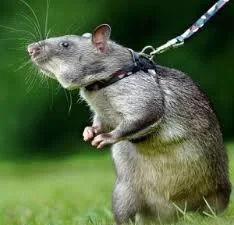 However, caring for one is very different from caring for an ordinary pet rat. A responsible owner needs to provide a spacious enclosure, suitable nutrition, enrichment, regular cleaning, gentle socialization, and access to an exotic-animal veterinarian.
This complete guide explains the Gambian Pouched Rat’s origin, natural habitat, size, weight, lifespan, diet, behavior, enclosure requirements, exercise, grooming, health, breeding, legality, cost, and whether it really makes a good pet.
Gambian Pouched Rat Overview
The Gambian Pouched Rat is scientifically known as Cricetomys gambianus. It belongs to the family Nesomyidae and is native to sub-Saharan Africa. Although people often call it a giant rat, it is not simply an oversized version of the common brown rat.
Its most recognizable feature is the pair of large cheek pouches that allow it to collect and carry food. Like hamsters, these pouches provide an efficient way to transport food before it is eaten or stored.
The species is primarily nocturnal, meaning it is naturally more active during the evening and night. That schedule is important for anyone considering a Gambian pouched rat pet because daytime may often be its preferred sleeping period.
| Feature | Details |
| Common name | Gambian Pouched Rat |
| Scientific name | Cricetomys gambianus |
| Other names | African giant pouched rat, Gambian giant rat |
| Family | Nesomyidae |
| Native region | Sub-Saharan Africa |
| Diet | Omnivorous |
| Activity | Primarily nocturnal |
| Adult size | Can approach 3 feet including the tail |
| Typical captive lifespan | Around 5–7 years; some may live longer |
| Distinctive feature | Large expandable cheek pouches |
| Personality | Curious, intelligent, cautious and potentially tame |
| Pet difficulty | Advanced |
| Main care challenge | Size, enclosure, enrichment and specialized care |
Published measurements vary among sources and individual animals, so weight and length should be treated as approximate rather than as a single fixed number. The National Pouched Rat Society reports that Gambian pouched rats can reach 30 inches or more and may weigh around 1.5–2 kg.
What Is a Gambian Pouched Rat?
A Gambian Pouched Rat is a large African omnivorous rodent adapted to collecting and storing food. Its cheek pouches are particularly useful because the animal can make repeated foraging trips and transport food back to a secure location.
This behavior is not just an interesting physical feature. It is an important part of the animal’s natural lifestyle. Wild individuals consume a broad range of foods, including fruits, vegetables, roots, seeds, nuts, insects, and other available foods.
They can also cache food for later consumption. For that reason, a good captive environment should provide opportunities to forage rather than simply placing all food in one bowl.
Gambian Pouched Rat Origin and Natural Range
The species originates from sub-Saharan Africa and has a broad natural distribution. It occurs in a variety of environments south of the Sahara, including wooded grasslands, forest edges, clearings, riverine areas, thickets, and locations close to human habitation.
Its ability to use different habitats demonstrates considerable adaptability. However, natural adaptability does not mean an individual can thrive in a poor captive environment. A pet animal still needs appropriate shelter, temperature, nutrition, enrichment, and protection from hazards.
Where Do Gambian Pouched Rats Live?
In the wild, these rodents use protected areas such as burrows, natural crevices, hollow trees, termite mounds, and spaces around tree roots. They prefer locations where they can remain sheltered from excessive heat and predators. A captive enclosure should therefore provide several different zones rather than an empty cage.
Useful features include:
- Secure sleeping areas
- Deep or appropriate bedding
- Hiding boxes
- Tunnels
- Foraging areas
- Safe climbing opportunities
- Chewable enrichment
- Separate food and water areas
The aim is to recreate the choices and complexity of a natural environment without attempting to copy a wild habitat literally.
Gambian Pouched Rat Size and Weight
One of the first questions people ask is, “How big does a Gambian Pouched Rat get?”
The answer is: very big for a rodent.
Adults can reach around 30 inches or more in total length, including the tail. Weight varies considerably, but captive-care sources commonly report adults around 1.5–2 kg, while individual animals can fall outside that range.
The tail accounts for a substantial part of the total length. Because of this size, owners must plan for the adult animal rather than buying equipment based on the size of a juvenile.
Gambian Pouched Rat Weight
Weight should be considered together with body condition. A healthy animal should have a proportionate body shape rather than simply being as heavy as possible. Regular weighing is useful because gradual weight loss can be difficult to notice under thick fur.
Keep a simple record of:
- Body weight
- Appetite
- Activity
- Water intake
- Stool consistency
- General behavior
A sudden unexplained change deserves veterinary attention.
Gambian Pouched Rat Lifespan
The commonly reported Gambian Pouched Rat lifespan is around 5–7 years in captivity, although some individuals may live longer. Animal Diversity Web reports approximately 5–7 years, with some individuals reaching eight years.
There is also older veterinary literature reporting longer captive lifespans for African giant rats, which shows that published longevity figures are not completely uniform. Therefore, prospective owners should prepare for a multi-year commitment rather than assuming a short rodent lifespan.
Good nutrition, appropriate housing, preventive veterinary care, exercise, low-stress handling, and genetics can all influence an individual animal’s health and longevity.
Gambian Pouched Rat Temperament and Behavior
The temperament of a Gambian Pouched Rat depends heavily on genetics, early socialization, handling, environment, and individual personality. A well-socialized animal can become comfortable with familiar people. Nevertheless, these rodents should not be treated like dogs or cats.
They may be:
- Curious
- Intelligent
- Food motivated
- Cautious around unfamiliar people
- Active at night
- Protective of their sleeping area
- Strong chewers
- Interested in exploring new objects
Patience is especially important with a young or recently adopted animal. Instead of grabbing the animal, allow it to investigate your hands and learn that human interaction is safe.
Is a Gambian Pouched Rat a Good Pet?
A Gambian Pouched Rat can be a rewarding pet for the right experienced owner, but it is not an ideal beginner rodent. Its intelligence and personality can make it fascinating to live with. At the same time, its size and strength create responsibilities that are easy to underestimate.
Advantages
- Intelligent and trainable
- Fascinating natural behavior
- Can become comfortable with humans
- Enjoys enrichment
- Strong sense of smell
- Can learn through positive reinforcement
- Longer-lived than many small rodents
Disadvantages
- Requires a very large enclosure
- Strong chewing behavior can damage unsuitable materials
- Needs daily mental stimulation
- May be difficult to find an experienced veterinarian
- Can be expensive to house properly
- May have legal restrictions
- Requires careful socialization
- Not suitable for every household
Therefore, the answer to “Can you have a Gambian Pouched Rat as a pet?” depends on both your ability to provide proper care and the laws where you live.
Gambian Pouched Rat Enclosure Size and Setup
There is no single universally agreed minimum cage dimension that suits every adult. The practical rule is simple: bigger is better, provided the enclosure is secure and easy to clean.
The National Pouched Rat Society recommends a large, sturdy enclosure and notes that multi-level housing can provide additional usable space. It also recommends solid floors rather than wire flooring and emphasizes that cage space does not replace opportunities for supervised free-roaming.
Because these rodents are powerful chewers, metal construction is generally more appropriate than relying heavily on plastic or wood.
A suitable enclosure should have:
- Solid flooring
- Secure doors and locks
- Strong metal construction
- Multiple hiding areas
- Appropriate bedding
- Safe platforms
- Food and water stations
- Chew toys
- Tunnels
- Foraging opportunities
- Enough room to turn, stretch, and move naturally
Avoid cages with easily accessible toxic coatings or materials that can be swallowed during chewing.
Gambian Pouched Rat Temperature and Environment
Although the species comes from Africa, keeping it excessively hot is not appropriate. Gambian pouched rats can be sensitive to heat, and wild animals often use cool, sheltered burrows.
Keep the enclosure:
- Away from direct sunlight
- Away from heaters
- Away from strong air-conditioning drafts
- Dry and well ventilated
- Protected from sudden temperature changes
- In a quiet area during sleeping hours
Good ventilation is important, but avoid creating cold drafts directly across the sleeping area.
Gambian Pouched Rat Diet and Food
A healthy Gambian Pouched Rat diet should be varied and nutritionally balanced. Wild animals are omnivorous and consume fruits, vegetables, roots, tubers, seeds, grains, nuts, insects, mollusks, and other available foods.
For a captive pet, the basic diet should be built around an appropriate nutritionally complete rodent food, supplemented with carefully selected fresh foods.
Suitable options can include:
- Quality complete rodent pellets
- Leafy greens
- Safe vegetables
- Small portions of fruit
- Appropriate grains
- Limited nuts and seeds
- Suitable protein sources
- Occasional insects
The exact quantity should depend on the animal’s size, age, activity level, body condition, and veterinary advice.
Foods to Limit or Avoid
Avoid making the diet heavily dependent on:
- Sugary snacks
- Salty processed foods
- Chocolate
- Alcohol
- Caffeinated drinks
- Moldy food
- Spoiled fresh produce
- Very fatty treats
Because the species naturally stores food, check hidden areas regularly and remove fresh food before it spoils.
Gambian Pouched Rat Water Requirements
Fresh, clean water should be available every day. A sturdy water bottle can reduce contamination, while a heavy ceramic bowl can provide an additional option if the animal does not constantly tip it over.
Check water sources daily for:
- Leaks
- Blockages
- Bedding contamination
- Chewing damage
- Algae or dirt
Water intake can vary, but a noticeable change in drinking behavior can be an early warning sign of illness.
Feeding and Foraging Enrichment
Food can become one of the best enrichment tools. Instead of providing every meal in a bowl, hide small portions in safe locations around the enclosure. You can also use appropriate cardboard tubes, paper parcels, or simple puzzle feeders.
This encourages natural behaviors such as:
- Searching
- Sniffing
- Carrying
- Manipulating
- Opening
- Storing
- Investigating
Because the species naturally caches food, foraging activities are particularly suitable.
Gambian Pouched Rat Teeth and Chewing
Chewing is an important consideration. Rodents have continuously growing incisors, so safe chewing opportunities should be part of their environment.
However, owners should not assume that any piece of wood or household object is automatically safe. Use purpose-designed, untreated, pet-safe chew materials and inspect them regularly.
A strong chewer can quickly damage plastic, wood, wiring, or weak cage components. This is another reason a robust enclosure is essential. If the teeth appear abnormal, the animal struggles to eat, drools, loses weight, or shows obvious mouth discomfort, consult an exotic-animal veterinarian.
Cleaning a Gambian Pouched Rat Enclosure
Cleaning is essential for controlling odors and maintaining a healthy environment. However, excessive cleaning that removes every familiar scent can make some animals unsettled. A practical routine combines daily spot cleaning with regular deeper cleaning.
Daily Cleaning
- Replace dirty water
- Remove spoiled food
- Remove heavily soiled bedding
- Spot-clean toilet areas
- Check for damaged enrichment
- Inspect the enclosure for escape points
Weekly Cleaning
- Replace or wash appropriate bedding
- Clean food and water containers
- Wipe platforms
- Clean heavily soiled areas
- Inspect the cage structure
- Check hidden food stores
- Wash safe accessories
The National Pouched Rat Society recommends regular cage cleaning and notes that weekly cleaning is typical, with litter-trained animals sometimes requiring more focused cleaning of specific areas.
Gambian Pouched Rat Exercise
Exercise should be part of the daily routine. A large enclosure gives the animal room to move, but supervised exploration outside the enclosure can provide additional stimulation.
Before allowing free-roaming time:
- Secure doors and windows
- Cover electrical wires
- Remove toxic plants
- Block unsafe gaps
- Remove small objects that could be swallowed
- Keep other pets separated
- Supervise continuously
Not every animal will immediately enjoy free-roaming. Allow confidence to develop gradually.
Gambian Pouched Rat Fun Activities
Mental stimulation is just as important as physical exercise.
Try activities such as:
- Treat hunts – Hide tiny portions of food around a safe area.
- Cardboard puzzles – Place food inside tubes or paper parcels.
- Digging boxes – Provide a safe box filled with appropriate material.
- Target training – Teach the rat to touch a target for a reward.
- Name recognition – Pair its name with positive reinforcement.
- Exploration sessions – Introduce safe new objects regularly.
- Chewing stations – Rotate safe chew materials.
- Foraging trays – Scatter suitable food among safe materials.
APOPO’s training program demonstrates how African giant pouched rats can learn through socialization, clicker training, scent discrimination, and reward-based methods.
Gambian Pouched Rat Colors and Appearance
Most Gambian Pouched Rats have brown, grayish, or buff-colored fur with a lighter underside. The tail is long and relatively sparsely haired.
Their large cheek pouches are the defining physical characteristic. Captive individuals may show some variation in coloration and markings. However, color alone should not be used to determine health, sex, or species.
Gambian Pouched Rat Social Needs
Social behavior requires careful consideration. Some sources describe these animals as social in natural settings, while individual captive temperament can vary.
Housing decisions should therefore be based on the individual animals, sex, compatibility, enclosure size, and expert guidance. Never place unfamiliar animals together suddenly.
If companionship is being considered, introductions should be gradual and closely supervised. A single animal also needs substantial human interaction and enrichment, but human attention should not be treated as an automatic substitute for every natural social behavior.
Gambian Pouched Rat Sleep Schedule
Gambian Pouched Rats are primarily nocturnal. That means an owner may see considerably more activity after sunset than during the middle of the day. A suitable routine should therefore allow the animal to sleep undisturbed. Avoid repeatedly waking a sleeping rat for handling.
Instead, schedule interaction during its naturally active period. This is particularly important for families with young children who may expect a pet to be awake throughout the day.
Gambian Pouched Rat Predators and Natural Threats
In the wild, these rodents face threats from predators and human activity. Their underground shelters, nocturnal habits, cautious behavior, and social responses help them survive. Animal Diversity Web notes that while individual Gambian rats may be taken by predators, humans have historically been a major source of mortality in some regions.
A pet kept indoors does not face the same natural predators, but household hazards can become the equivalent of serious environmental threats. Dogs, cats, toxic substances, electrical cables, open doors, and unsafe outdoor access should all be treated as potential dangers.
Gambian Pouched Rat Adaptations
Several adaptations make this species especially interesting.
Large cheek pouches
They allow food to be transported efficiently.
Strong sense of smell
Olfaction is extremely important to these rodents and is one reason African giant pouched rats have been used in scent-detection work.
Nocturnal behavior
Being active at night helps the animal avoid some daytime environmental pressures.
Burrowing lifestyle
Sheltered spaces provide protection and stable conditions.
Omnivorous diet
The ability to consume different food sources allows the species to exploit changing environments.
Gambian Pouched Rat Male vs Female
Males and females can look similar, particularly when young. Sex should be determined by examining reproductive anatomy rather than relying on size or color.
Correct identification is essential if multiple animals are housed together because accidental breeding can happen. If you are unsure, ask an experienced exotic-animal veterinarian or knowledgeable breeder to confirm the sex.
Gambian Pouched Rat Reproduction
Gambian rats can reproduce relatively quickly under suitable conditions. Animal Diversity Web reports a gestation period of approximately 30–32 days, with commonly reported litters of around one to five young.
Females can reach reproductive maturity at around six months. Because breeding can create significant housing and welfare responsibilities, it should never be undertaken casually.
Responsible breeding requires:
- Correct sex identification
- Healthy parents
- Appropriate genetic planning
- Separate housing when necessary
- Veterinary support
- Adequate space
- A plan for offspring
- Knowledge of pregnancy and newborn care
Gambian Pouched Rat Baby Care
Newborns are highly dependent on their mother. A breeding female needs a quiet, secure nesting area, adequate nutrition, fresh water, and minimal unnecessary disturbance.
Do not repeatedly handle newborns simply because they are interesting to see. If a mother rejects young, appears ill, stops eating, or shows signs of complications, veterinary help should be obtained promptly.
Because breeding and neonatal care can become complicated quickly, inexperienced owners should not intentionally breed these animals.
Gambian Pouched Rat Health and Common Concerns
There is no substitute for veterinary care when an exotic rodent becomes sick. Possible health concerns can include dental problems, respiratory disease, parasites, injuries, nutritional problems, obesity, skin issues, and age-related conditions.
Watch for:
- Loss of appetite
- Sudden weight loss
- Difficulty breathing
- Unusual discharge
- Persistent diarrhea
- Lethargy
- Swelling
- Difficulty walking
- Excessive scratching
- Changes in drinking
- Changes in urination
- Difficulty chewing
Rodents often hide signs of illness until a problem becomes significant, so behavioral changes deserve attention.
Expert Care and Responsible Ownership
Gambian Pouched Rat Cost
The total cost of ownership is more important than the initial purchase price.
Expenses may include:
- Purchase or adoption fee
- Large enclosure
- Secure locks
- Bedding
- Food
- Water equipment
- Enrichment
- Cleaning supplies
- Veterinary examinations
- Emergency veterinary care
- Transport
- Potential permits
A cheap animal can become expensive if the owner has not prepared the correct enclosure and veterinary budget. Rather than asking only, “How much does a Gambian Pouched Rat cost?”, ask, “Can I afford several years of appropriate care?”
Gambian Pouched Rat Adoption and Finding a Responsible Source
If you are considering Gambian Pouched Rat adoption, investigate reputable exotic-animal rescues and experienced organizations first.
A responsible source should be willing to discuss:
- Age
- Sex
- Health history
- Diet
- Temperament
- Socialization
- Previous housing
- Veterinary records
- Legal ownership
- Any known behavioral issue
Avoid acquiring an animal solely because it is rare or unusual. The best match is one where the animal’s needs and your ability to provide care genuinely fit together.
Beginner Mistakes to Avoid
New owners should be especially careful about these common mistakes:
- Choosing an enclosure that is too small
- Buying equipment designed only for ordinary pet rats
- Using weak plastic or chewable cage materials
- Providing too little enrichment
- Feeding excessive treats
- Ignoring hidden food caches
- Waking the animal repeatedly during the day
- Handling too forcefully
- Introducing animals too quickly
- Ignoring weight changes
- Waiting too long to seek veterinary care
- Forgetting to research local laws
- Breeding without a responsible plan
Avoiding these problems can make daily care considerably easier.
FAQs
1. How long does a Gambian Pouched Rat live?
A typical reported captive lifespan is around 5–7 years, although some individuals may live longer.
2. How big does a Gambian Pouched Rat get?
Adults can reach around 30 inches or more in total length, including the tail. Weight varies, with captive-care sources commonly reporting roughly 1.5–2 kg.
3. Can you own a Gambian Pouched Rat?
That depends on your location. Some jurisdictions restrict or prohibit ownership, so local laws should always be checked before acquisition.
4. Are Gambian Pouched Rats dangerous?
They are not automatically dangerous, but they are powerful animals. Poor socialization, fear, pain, or inappropriate handling can increase the risk of defensive biting.
5. What does a Gambian Pouched Rat eat?
They are omnivores and naturally eat fruits, vegetables, roots, seeds, nuts, insects, mollusks, and other available foods.
6. Why are they called pouched rats?
They have large cheek pouches used to collect and transport food before eating or storing it.
7. Are Gambian Pouched Rats good pets for beginners?
Generally, they are better suited to experienced exotic-pet owners because of their size, enclosure requirements, chewing behavior, enrichment needs, and specialized care.
8. What are Gambian Pouched Rats used for?
African giant pouched rats have been used in scent-detection programs, including landmine and tuberculosis detection. APOPO currently identifies its HeroRATs as Cricetomys ansorgei.
9. Where can I adopt a Gambian Pouched Rat?
Availability varies by region. Look for reputable exotic-animal rescues or experienced, legal sources, and verify the animal’s health and background before adoption.
10. How do you keep a Gambian Pouched Rat happy?
Give it a spacious enclosure, balanced food, safe chew materials, hiding places, foraging opportunities, exercise, positive-reinforcement training, and calm interaction that respects its nocturnal schedule.
Final Thoughts
The Gambian Pouched Rat is much more than a giant version of an ordinary pet rat. Its large body, expandable cheek pouches, strong sense of smell, nocturnal lifestyle, intelligence, and food-caching behavior make it a truly distinctive African rodent. As a companion animal, it can be fascinating and rewarding for an experienced owner.
Nevertheless, it requires considerably more planning than a conventional small pet. The enclosure must be large and secure, the diet must be balanced, enrichment should be part of everyday life, and cleaning must be consistent. Most importantly, ownership should always be legal and welfare-focused.
If you are researching this species because you are considering a Gambian Pouched Rat pet, take time to investigate local regulations, veterinary availability, enclosure requirements, and long-term costs before making a decision. With responsible preparation, appropriate enrichment, good nutrition, gentle socialization, and professional veterinary support, this remarkable rodent can provide years of fascinating behavior and companionship.
I’ve created helpful guides in the Birds category on Petstdigo, featuring posts in Care, Cleaning, and Fun Activities. These guides share practical tips on grooming, skin and coat health, bathing routines, nutrition, playtime ideas, and calming solutions to keep your pets happy and healthy. Explore these pages for easy-to-follow advice and insights to support your pet’s overall well-being.