
A Giant Millipede is a fascinating exotic invertebrate that can make an excellent pet for the right keeper. These slow-moving animals are known for their long segmented bodies, numerous legs, peaceful behavior, and fascinating relationship with the forest floor.
Unlike cats, dogs, or other highly interactive pets, they do not need constant attention. Instead, their care focuses on creating a humid, naturalistic enclosure with deep organic substrate, suitable food, proper ventilation, and safe places to hide and burrow.
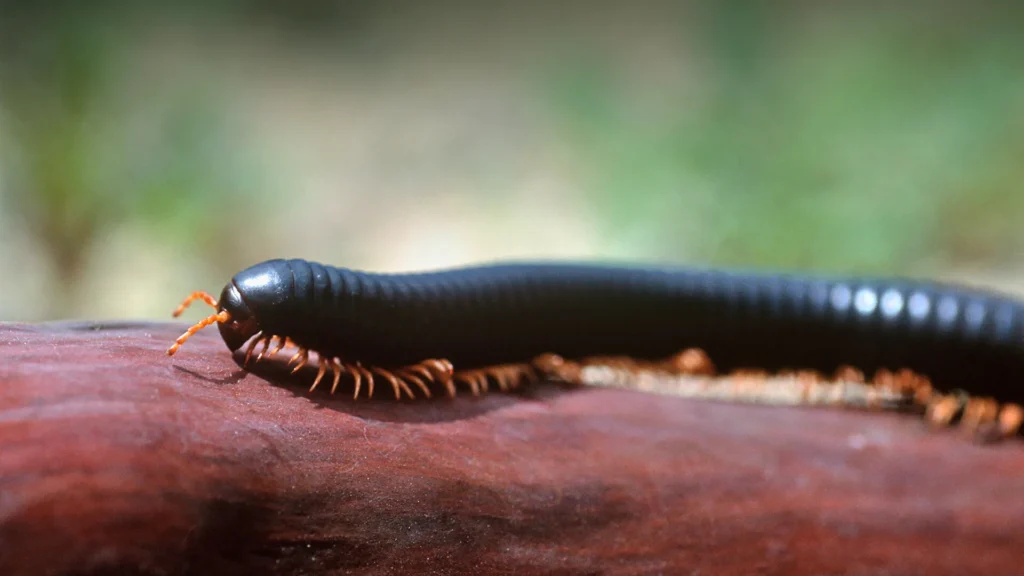 For beginners, keeping one can be surprisingly rewarding. Watching a millipede move through leaf litter, explore its enclosure, or slowly feed on decaying wood offers a unique look at the behavior of an important decomposer.
However, the common name “giant millipede” can describe several different species, so identifying the exact species before buying one is an important first step.
This guide covers Giant Millipede care, including origin, natural habitat, size, lifespan, diet, food, enclosure setup, humidity, temperature, substrate, cleaning, handling, molting, enrichment, breeding, safety, buying advice, common mistakes, and whether this unusual invertebrate makes a good pet.
What Is a Giant Millipede?
A Giant Millipede is not necessarily one particular species. Instead, the name is commonly used for several unusually large millipedes belonging to the class Diplopoda. Millipedes are different from centipedes even though the two can look similar at first glance.
Most millipedes are slow-moving decomposers that feed primarily on dead and decaying plant material. Centipedes, on the other hand, are active predators. One of the most recognizable features of millipedes is their many legs.
Despite their common reputation, they do not actually have a thousand legs. Their number of legs varies according to species and growth stage. Large species have become popular among exotic-pet keepers because they are generally quiet, interesting to observe, and relatively easy to house compared with many larger exotic animals.
Still, simple does not mean maintenance-free. A suitable habitat is essential because moisture, substrate quality, temperature, and nutrition all affect their health.
Giant Millipede Origin and Where Do They Live?
Large millipedes are naturally found in different parts of the world, depending on the species. The Giant African Millipede, one of the best-known species in the pet trade, is associated with tropical regions of Africa.
Other large species occur in North America, Madagascar, and other warm or temperate regions. In nature, these animals usually stay close to the ground. They move through leaf litter, soil, fallen branches, and decomposing vegetation.
During daylight hours, they may remain hidden beneath leaves, logs, bark, or underground. At night, they are often more active. Their natural environment explains many of their captive-care requirements.
Rather than needing a bright, dry enclosure, they generally benefit from a dark or dim environment containing moisture-rich organic material and plenty of places to hide.
Giant Millipede Species and Types
The phrase “giant millipede” can be confusing because different large species have different requirements.
| Common Name | Scientific Group or Example | General Distribution | Main Characteristics | Care Consideration |
| Giant African Millipede | Archispirostreptus gigas | Tropical Africa | Very large, dark-bodied species | Popular pet species; needs humid, deep substrate |
| African Giant Millipede | Several African species | Africa | Large tropical millipedes | Requirements vary between species |
| Giant American Millipede | Large Narceus species and related forms | North America | Robust woodland millipedes | Usually associated with leaf litter and soil |
| American Giant Millipede | Common name for large North American species | United States and nearby regions | Cylindrical body and numerous legs | Identify exact species before purchase |
| Giant Pill Millipede | Several species, including Zoosphaerium | Madagascar and surrounding regions | Can curl into a tight ball | May have different environmental requirements |
| Giant Millipede | General common name | Several regions | Large size compared with ordinary millipedes | Scientific identification is important |
This distinction matters when searching for an African giant millipede, giant American millipede, or giant pill millipede. Common names can sometimes be used loosely, while scientific names provide much better identification.
Giant Millipede Size and Appearance
Size depends heavily on the species. The Giant African Millipede is particularly famous for its impressive length and can reach roughly 30 centimeters or more under suitable conditions. Other species may be considerably smaller.
A typical large millipede has:
- A long cylindrical body
- Numerous body segments
- Many pairs of legs
- A hard external skeleton
- Short antennae
- A relatively slow walking style
- Dark brown, black, reddish, or patterned coloration depending on species
Juveniles are much smaller than adults. They increase in size through repeated molts, so their appearance and body proportions can change as they mature.
Giant Millipede Care Requirements
Before setting up an enclosure, it helps to understand the basic requirements.
| Care Factor | Recommended Approach |
| Enclosure | Secure, escape-proof enclosure with good ventilation |
| Floor Space | Enough room for comfortable movement |
| Substrate Depth | Deep enough for burrowing and molting |
| Substrate | Organic, moisture-retaining material with decomposing leaves and wood |
| Temperature | Stable, species-appropriate room temperature |
| Humidity | High enough to prevent substrate from drying |
| Food | Decaying leaves and hardwood as the foundation |
| Supplements | Suitable calcium source when appropriate |
| Lighting | Low or ambient light is generally preferable |
| Hiding Places | Cork bark, leaf litter, and natural shelters |
| Cleaning | Regular spot cleaning rather than constant substrate replacement |
| Handling | Gentle and occasional |
| Molting | Leave the animal completely undisturbed |
The exact temperature and humidity requirements should always be adjusted according to the species rather than applying one number to every large millipede.
Giant Millipede Enclosure Setup
A proper Giant Millipede enclosure should prioritize floor area and substrate depth rather than height. These animals are mainly ground-dwellers.
They do not need a tall climbing enclosure like an arboreal reptile. A secure glass, acrylic, or sturdy plastic enclosure can work well when properly ventilated.
A good enclosure should provide:
- Secure ventilation
- Escape-resistant lid
- Deep substrate
- Leaf litter
- Decaying hardwood
- Hiding areas
- Stable humidity
- Appropriate temperature
- Easy access for maintenance
As a practical rule, the enclosure should provide enough space for the animal to move around without constantly touching the walls. Larger individuals naturally need more floor space.
If keeping multiple animals, increase the available space and resources rather than simply placing several millipedes into a small container.
Substrate and Burrowing
Substrate is arguably one of the most important parts of millipede husbandry. It is not simply bedding. It provides a place to burrow, rest, molt, and, importantly, obtain natural food.
A suitable mixture may contain:
- Decaying hardwood
- Decaying leaves
- Chemical-free organic soil
- Safe leaf litter
- Other species-appropriate organic materials
Avoid treated wood, chemically fertilized soil, pesticides, artificial additives, and unknown garden materials. The substrate should remain damp enough to maintain appropriate humidity, but it should not become permanently waterlogged.
A deep substrate layer is especially important because a millipede may disappear underground for an extended period while preparing for or completing a molt.
Temperature and Humidity
Maintaining stable environmental conditions is a major part of successful Giant African Millipede care. Tropical species generally prefer warm, humid conditions rather than extremely hot or dry environments.
A commonly used range for many tropical giant millipedes is around 20–25°C (68–77°F), although species-specific requirements should take priority. Humidity is equally important. Instead of relying entirely on one hygrometer reading, examine the substrate.
It should be:
- Moist
- Cool to moderately warm
- Not dusty
- Not completely saturated
- Free from standing water
- Maintain good ventilation at the same time.
If the enclosure is too dry
you may notice:
- Dry substrate
- Reduced activity
- Excessively dry leaf litter
- Difficulty maintaining stable humidity
- Increased risk during molting
If the enclosure is too wet
Potential warning signs include:
- Standing water
- Permanently saturated substrate
- Strong odor
- Excessive mold
- Poor ventilation
The ideal environment is therefore humid but well ventilated, rather than simply wet. Giant Millipede
Diet and Food
One of the most common questions from new owners is, what do millipedes eat? The answer is closely connected to their natural role as decomposers.
Most millipedes primarily consume decaying organic matter. Their natural diet includes dead leaves, decomposing wood, and other plant material that is already breaking down. This means that good-quality substrate is actually part of the diet.
Suitable food can include:
- Decaying hardwood
- Dead leaves
- Leaf litter
- Cucumber
- Zucchini
- Carrot
- Pumpkin
- Sweet potato
- Melon
- Apple
- Suitable leafy vegetables
Fresh vegetables and fruit should be considered supplements rather than the foundation of the diet. A well-prepared organic substrate is much more important than offering large amounts of fresh produce.
What Does a Millipede Eat in the Wild?
In the wild, millipedes commonly feed on material such as:
- Fallen leaves
- Rotten wood
- Dead plant matter
- Decomposing vegetation
- Organic material within the soil
As they consume and process this material, they help break it down and return nutrients to the environment. That natural behavior should influence the way they are fed in captivity.
Instead of thinking about feeding as giving an animal one large meal, think of it as maintaining a continuous supply of safe, decomposing organic material.
Calcium Requirements
Calcium is important for the development and maintenance of the exoskeleton. A suitable calcium source can be offered depending on the species and overall diet.
Cuttlebone is one option commonly used by invertebrate keepers. Avoid excessive supplementation simply because calcium is beneficial. More is not automatically better.
The better approach is to provide a balanced habitat with appropriate organic material and a sensible calcium source.
How Often Should You Feed a Giant Millipede?
There is no strict meal schedule comparable to feeding a dog or cat.
Instead:
- Keep suitable organic substrate available at all times.
- Offer small quantities of fresh food.
- Observe how quickly it is consumed.
- Remove spoiled food.
- Adjust portions according to the animal’s size and activity.
Millipedes often become more active during the evening and night, so placing fresh food in the enclosure later in the day can make observation easier.
Giant Millipede Lifespan
The Giant Millipede lifespan varies according to species, genetics, nutrition, environmental conditions, and overall husbandry.
Some commonly kept giant species can live for several years in captivity, while individual lifespans may vary. A long lifespan depends on more than food alone.
Good husbandry includes:
- Stable humidity
- Suitable temperature
- Nutritious substrate
- Adequate calcium
- Clean food
- Safe enclosure materials
- Minimal chemical exposure
- Proper molting conditions
- Low-stress handling
Because different species can have different lifespans, always research the exact species you intend to keep.
Giant Behavior and Temperament
Most commonly kept giant millipedes are calm, slow, and relatively defensive rather than aggressive.
They may:
- Walk slowly through the enclosure
- Burrow into substrate
- Hide under bark
- Become active at night
- Curl their body when disturbed
- Remain underground while molting
- Explore after changes to the enclosure
A giant millipede is best viewed as an observation pet.
It does not usually form the type of emotional bond associated with mammals. Nevertheless, watching its natural behavior can be surprisingly enjoyable.
Can Millipedes Bite?
Many people ask, ” Can millipedes bite?
Millipedes are not predators and generally do not use biting as their primary defense.
They are very different from centipedes, which are active hunters equipped with venomous structures. However, millipedes are not completely without defenses.
When threatened, some species can release defensive chemicals. These substances may irritate the skin and can be particularly problematic if they come into contact with the eyes.
Therefore, avoid squeezing or frightening the animal.
Are Millipedes Poisonous?
Another common search is, are millipedes poisonous?
The answer requires an important distinction. Millipedes are not venomous predators. They do not hunt prey using venom like centipedes.
However, many species can produce defensive secretions. These chemicals may cause irritation or discomfort, particularly when they contact sensitive areas.
After handling:
- Wash your hands thoroughly.
- Do not touch your eyes.
- Keep the animal away from your face.
- Do not allow children to handle it without responsible supervision.
If a defensive secretion causes significant irritation, particularly around the eyes, rinse thoroughly and seek appropriate medical advice if symptoms continue.
Handling a Millipede Safely
Although a millipede can be handled, frequent handling is unnecessary.
When handling one:
- Wash and dry your hands first.
- Allow it to walk onto your hand rather than grabbing it.
- Support the body properly.
- Keep it close to a safe surface.
- Avoid squeezing.
- Never pull its legs.
- Return it to the enclosure gently.
- Wash your hands afterward.
Never handle a millipede that is actively molting.
Molting and Why It Matters
Molting is a critical part of millipede growth. As the animal becomes larger, it must shed its old exoskeleton.
Before and during this process, it may burrow deep into the substrate and stop moving. For a beginner, this can look alarming. Do not immediately assume that a buried or inactive millipede is sick.
During a suspected molt:
- Do not dig through the substrate.
- Do not pick up the animal.
- Do not expose it unnecessarily.
- Do not rearrange its hiding area.
- Keep environmental conditions stable.
- Maintain suitable moisture.
A millipede is particularly vulnerable during this period, so disturbance can cause serious problems.
Giant Millipede Cleaning and Maintenance
Cleaning should be regular but gentle. Because decomposing organic matter is part of the habitat, the goal is not to make the enclosure sterile.
Routine cleaning
Remove:
- Moldy fresh food
- Rotten vegetables
- Contaminated material
- Excess waste when necessary
At the same time, retain healthy leaf litter and useful organic substrate.
When should substrate be replaced?
Replace or refresh substrate when it has become:
- Heavily depleted
- Contaminated
- Compacted
- Unpleasant-smelling
- No longer suitable for burrowing
Avoid replacing everything unnecessarily.
A completely sterile enclosure can actually remove some of the resources the animal depends on. Never use harsh household chemicals inside the enclosure while the millipede is present.
Fun Activities and Enrichment
A millipede does not need toys in the traditional sense. However, environmental enrichment can encourage natural behaviors.
You can provide:
- Cork bark shelters
- Pieces of untreated hardwood
- Deep leaf litter
- Different substrate depths
- Safe tunnels
- Natural hiding areas
- Multiple feeding locations
One simple enrichment activity is to place a small amount of suitable food in a new safe location and observe how the millipede finds it.
Another option is to create several hiding areas so the animal can choose where it feels most comfortable. The goal is not to force interaction. Instead, enrichment should encourage natural exploration, burrowing, and foraging.
Can Giant Millipedes Live Together?
Some species can be housed communally, but this should never be assumed for every millipede.
Before keeping multiple individuals together, consider:
- Species compatibility
- Enclosure size
- Food availability
- Substrate depth
- Humidity
- Competition
- Breeding potential
Overcrowding can create unnecessary stress and make maintenance more difficult. For beginners, keeping one animal and learning its behavior first can be a sensible approach.
Breeding Giant Millipedes
Breeding can occur in captivity when compatible males and females are provided with suitable environmental conditions.
However, sexing young millipedes can be difficult. In some millipede groups, males can be distinguished by specialized reproductive structures associated with particular body segments.
If breeding occurs, females may lay eggs within the substrate. Young millipedes are extremely small and require the same basic environmental foundation as adults, including suitable moisture and organic food.
Breeding should not be the first priority for a new keeper. First learn how to maintain a healthy adult habitat.
Male vs Female Giant Millipede
Sexual differences vary between species, so there is no universal visual rule for all giant millipedes.
In some species, males can have modified legs or reproductive structures that help experienced keepers identify them.
Because these differences may be difficult to see, especially in juveniles, asking for the scientific name and obtaining species-specific sexing information is much more reliable than guessing based on body size.
Giant Millipede for Sale: What to Know Before Buying
If you are searching for giant millipede for sale, millipede for sale, or millipedes for sale, do not choose an animal based only on price or size.
A responsible seller should ideally be able to explain:
- The scientific name
- Approximate age
- Approximate size
- Captive-bred or wild-caught status
- Current diet
- Current enclosure conditions
- Origin
- Any relevant legal requirements
The same advice applies when searching for african giant millipede for sale, giant african millipede for sale, or american giant millipede for sale.
Warning signs when buying
Be cautious if:
- The seller cannot identify the species.
- The animal appears severely dehydrated.
- The enclosure conditions look poor.
- The seller gives no information about its origin.
- The seller cannot explain its current diet.
- The animal is being marketed only as a novelty without care information.
Prepare the enclosure before bringing the millipede home.
Is a Giant Millipede a Good Pet?
Yes, a Giant Millipede can be a very good pet for the right person.
It is especially appealing to people who enjoy unusual animals, naturalistic enclosures, and observation rather than constant physical interaction.
Advantages
- Quiet
- Fascinating to watch
- Usually slow-moving
- Requires relatively little space
- Does not need walks
- Does not need constant social interaction
- Interesting natural behavior
- Can be suitable for responsible beginners
Disadvantages
- Requires appropriate humidity
- Needs deep, quality substrate
- Can release defensive chemicals
- Vulnerable during molting
- Not an affectionate pet
- Species-specific requirements can vary
- Legal restrictions may apply in some regions
Therefore, the question is not simply whether millipedes are easy. The better question is whether their lifestyle matches yours.
Common Giant Millipede Care Mistakes
1. Using shallow substrate
A thin layer does not provide enough space for natural burrowing and molting.
2. Letting the enclosure dry out
Humidity is especially important for tropical species.
3. Keeping the substrate permanently soaked
Too much water combined with poor ventilation can create unhealthy conditions.
4. Feeding only fresh vegetables
Fresh produce should supplement a nutritious organic substrate rather than replace it.
5. Using chemically treated wood
Pesticides and preservatives can be dangerous to invertebrates.
6. Disturbing a molting millipede
Digging it up can cause severe injury.
7. Handling too frequently
Observation is generally safer and more appropriate than constant handling.
8. Cleaning too aggressively
Removing all organic material can damage the habitat’s natural balance.
9. Buying an unidentified species
Different species can have different environmental needs.
10. Purchasing before preparing the enclosure
The habitat should be ready before the animal arrives.
Responsible Ownership and E-E-A-T
Good exotic-pet care information should be based on biology rather than assumptions. Responsible keepers should identify the exact species, understand its natural environment, and adjust husbandry accordingly.
A care routine designed for one tropical species should not automatically be applied to every animal sold under the name “giant millipede.” Experience also matters.
New keepers should regularly observe:
- Activity levels
- Feeding behavior
- Substrate moisture
- Body condition
- Molting behavior
- Enclosure cleanliness
Keeping simple notes can help identify changes before they become serious problems.
For health concerns, consult an exotic-animal veterinarian or other appropriately qualified professional when one is available, particularly if the millipede shows persistent abnormal behavior, unexplained injury, or significant changes unrelated to normal molting.
Responsible ownership also includes checking local laws before purchasing. Some species may be restricted because of environmental or agricultural concerns.
Most importantly, never release a captive millipede into the wild.
Giant Millipede Care Checklist
Before bringing one home, make sure you have:
- A secure enclosure
- Adequate ventilation
- Deep organic substrate
- Decaying hardwood
- Leaf litter
- Safe hiding places
- Appropriate temperature monitoring
- Humidity monitoring
- Suitable fresh food
- A calcium source when appropriate
- Species-specific care information
- A safe cleaning routine
Preparing these essentials beforehand makes the transition much easier.
FAQs
1. How big does a Giant Millipede get?
Size depends on the species. Some of the largest commonly kept species can reach around 30 centimeters or more, while other species remain considerably smaller.
2. How long does a Giant Millipede live?
The Giant Millipede lifespan varies by species and husbandry. Many commonly kept species can live for several years when provided with appropriate conditions.
3. What does a Giant Millipede eat?
Millipedes primarily consume decaying leaves, decomposing hardwood, and other organic plant material. Fresh vegetables and fruit can be offered as supplements.
4. What should I put in a Giant Millipede enclosure?
A suitable setup should include deep organic substrate, leaf litter, decaying hardwood, hiding places, ventilation, and stable environmental conditions.
5. Do Giant Millipedes need high humidity?
Many tropical species require consistently humid conditions. However, humidity should be balanced with good ventilation, and the exact requirements depend on the species.
6. Can Giant Millipedes bite?
They are not predatory animals and generally do not bite people. However, they can produce defensive secretions when stressed, so careful handling is recommended.
7. Are Giant Millipedes poisonous?
They are not venomous predators. Nevertheless, some species produce defensive chemicals that can irritate skin or eyes.
8. Can I handle a Giant Millipede?
Yes, but handling should be gentle and occasional. Never squeeze, drop, or disturb one that is molting.
9. Are Giant Millipedes good pets for beginners?
Many commonly kept species can be suitable for beginners who are prepared to maintain proper substrate, humidity, food, and temperature. They are best for people who enjoy observation rather than frequent interaction.
10. Where can I find a Giant Millipede for sale?
When searching for a giant millipede for sale, choose a responsible seller who can identify the species and explain its origin and care history. Always check applicable local laws before purchasing.
Final Thoughts
A Giant Millipede is an unusual but rewarding exotic pet for people who appreciate animals that are more interesting to observe than to handle. Its care is based around a simple principle: recreate the conditions it would naturally experience on the forest floor.
That means providing deep organic substrate, suitable moisture, stable temperatures, decaying leaves and wood, appropriate food, hiding places, and enough ventilation.
The Giant African Millipede is particularly popular, but it is important to remember that “giant millipede” can describe several different species. Always identify the exact animal before deciding on its enclosure or care routine.
If you are considering a giant millipede pet, take your time setting up the habitat before purchasing the animal. Avoid buying purely because an animal looks impressive.
Instead, choose a reputable source, learn its scientific identity, understand its requirements, and make sure you can provide those conditions consistently.
With responsible care, these fascinating decomposers can become a memorable part of an exotic-pet collection. Their slow movements, unusual appearance, burrowing behavior, and role in breaking down organic material make them far more interesting than their quiet nature might initially suggest.
I’ve created helpful guides in the Birds category on Petstdigo, featuring posts in Care, Cleaning, and Fun Activities. These guides share practical tips on grooming, skin and coat health, bathing routines, nutrition, playtime ideas, and calming solutions to keep your pets happy and healthy. Explore these pages for easy-to-follow advice and insights to support your pet’s overall well-being.