
The Green Keeled Lizard is a beautiful, active, tree-dwelling reptile that can be a fascinating pet for an experienced keeper. Its bright green coloration, slender body, long tail, and climbing behavior make it very different from many common pet lizards.
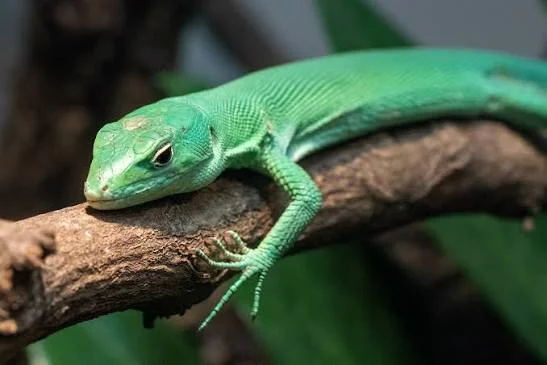 Scientifically known as Gastropholis prasina, it is also commonly called the Green Keel-bellied Lizard. Because this species spends much of its time above the ground, proper vertical space, climbing branches, foliage, lighting, humidity, and ventilation are essential.
Although it may look like an easy reptile because of its relatively small size, the Green Keeled Lizard has specific husbandry needs.
It is active during the day, naturally adapted to warm and humid environments, and generally better suited to keepers who are willing to create a carefully planned habitat.
This complete guide explains Green Keeled Lizard care, including its origin, natural habitat, size, lifespan, enclosure, tank size, temperature, humidity, UVB, diet, food, feeding schedule, handling, cleaning, enrichment, health, behavior, breeding, and whether it makes a good pet.
Green Keeled Lizard Care Guide
The best way to care for a Green Keeled Lizard is to think about its natural lifestyle first. This is an arboreal lizard, meaning it spends considerable time climbing and moving through vegetation.
Therefore, a suitable enclosure should not simply provide floor space. It should offer usable vertical space, secure branches, foliage, basking areas, hiding places, and different microclimates.
A healthy setup should allow the lizard to decide when it wants warmth, shade, humidity, or a more exposed resting position.
Good Green Keeled Lizard care includes:
- A secure vertical enclosure
- Strong climbing branches
- Appropriate foliage
- Suitable UVB lighting
- A warm basking area
- A cooler retreat
- Controlled humidity
- Good ventilation
- A varied insect diet
- Proper supplementation
- Fresh water
- Regular cleaning
- Environmental enrichment
Minimal unnecessary handling. One of the biggest husbandry mistakes is trying to keep this species in a basic enclosure with only a heat source and food bowl.
A more naturalistic environment is much better suited to its behavior.
What Is a Green Keeled Lizard?
The Green Keeled Lizard is a small arboreal lizard belonging to the family Lacertidae. Its scientific name is Gastropholis prasina. The name “keeled” refers to the raised ridge or keel-like appearance of some of its scales.
The species is known for its green coloration and slender body, although individual appearance can vary. Unlike terrestrial lizards that spend much of their time walking across the ground, these lizards are natural climbers.
Their long tails and strong limbs help them move through branches and vegetation. They are also diurnal, so they are primarily active during daylight hours.
This makes them especially interesting for people who enjoy watching natural reptile behavior rather than keeping an animal that hides all day.
Quick Green Keeled Lizard Facts
| Feature | Details |
| Common Name | Green Keeled Lizard |
| Alternative Name | Green Keel-bellied Lizard |
| Scientific Name | Gastropholis prasina |
| Family | Lacertidae |
| Lifestyle | Arboreal |
| Activity | Primarily diurnal |
| Adult Size | Around 10–12 inches total length |
| Diet | Mainly insects and other small invertebrates |
| Enclosure | Tall, secure, well-ventilated |
| UVB | Recommended |
| Humidity | Moderate to high with good airflow |
| Temperament | Alert, active, sometimes shy |
| Handling | Limited and gentle |
| Care Level | Intermediate |
| Best For | Prepared reptile keepers |
Keeled Lizard Origin and Natural Range
The Green Keeled Lizard is native to East Africa, where it is associated with warm, vegetation-rich environments. Its natural surroundings help explain nearly every important aspect of captive care.
The species is adapted to climbing, hunting small prey, moving through vegetation, and using different environmental conditions throughout the day.
Instead of imagining a desert landscape, picture a warm woodland environment filled with:
- Branches
- Leaves
- Shrubs
- Vines
- Natural hiding areas
- Insects
- Warm daytime conditions
Humid microhabitats. Captive husbandry should not attempt to copy every detail of the wild environment. Instead, it should reproduce the major biological requirements that support normal behavior and health.
Where Do Green Lizards Live?
In the wild, Green Keeled Lizards occur in parts of East Africa and are associated with forested or vegetation-rich habitats. They are adapted to spending time above the ground.
Consequently, a keeper should provide plenty of climbing opportunities rather than focusing entirely on substrate depth. This also explains why a Green Keeled Lizard enclosure looks different from the enclosure used for a ground-dwelling gecko or desert lizard.
A good habitat should give the animal multiple routes through the enclosure. Branches should be positioned at different heights, while foliage can create shaded areas and hiding opportunities.
Green Keeled Lizard Size
One of the most common searches is Green Keeled Lizard size. Adults are generally around 10–12 inches in total length, although individual size can vary.
Much of this length comes from the long tail. The body itself is relatively slender, so judging health only by total length is not appropriate. Body condition, activity, appetite, muscle tone, and overall appearance are more useful indicators.
Keeled Lizard Growth
Young lizards are much smaller and more delicate than adults.
A baby Green Keeled Lizard should be monitored carefully during growth because juveniles can be more sensitive to inappropriate temperatures, dehydration, poor nutrition, and stress.
Keepers should monitor:
- Body weight
- Appetite
- Activity
- Shedding
- Body condition
Growth over time.e Regular records can be extremely useful if a health problem develops.
Green Keeled Lizard Full Grown
A full-grown Green Keeled Lizard has a slender adult body, developed coloration, strong climbing ability, and a proportionally long tail. Growth rates vary between individuals.
Genetics, food availability, temperature, UVB exposure, stress, and general husbandry can all influence development. Avoid trying to accelerate growth by excessive feeding. Fast growth is not necessarily healthy growth.
A balanced diet and appropriate environmental conditions are more important than making a juvenile grow as quickly as possible.
Green Keeled Lizard Lifespan
The exact Green Keeled Lizard lifespan in captivity can vary, and reliable long-term data are more limited than for some commonly kept reptiles.
However, responsible husbandry can significantly influence an individual’s health and longevity.
Important factors include:
- Good nutrition
- Appropriate UVB exposure
- Correct temperatures
- Proper hydration
- Stable humidity
- Adequate exercise
- Low chronic stress
- Clean surroundings
- Disease prevention
Veterinary care when needed. Because lifespan depends on many factors, avoid treating one exact number as guaranteed.
The best goal is to create conditions that support normal biology throughout the animal’s life.
Green Keeled Lizard Tank Size
A common question is what size tank does a Green Keeled Lizard need?
Because this species is arboreal, height is particularly valuable.
For one adult, a practical starting point can be a tall enclosure around 24 × 18 × 36 inches or larger, with a larger enclosure preferred when space and resources allow.
The exact dimensions should also depend on how effectively the enclosure is furnished. A large empty enclosure is not necessarily better than a smaller but appropriately structured habitat.
Important Green Keeled Lizard Enclosure Features
A good enclosure should include:
- Vertical climbing space
- Strong branches
- Cork bark
- Dense foliage
- Elevated resting areas
- Hiding places
- Basking location
- Cooler retreat
- Water source
- Good ventilation
- Secure doors
The lizard should be able to move between different areas without constantly being exposed.
Green Keeled Lizard Enclosure Setup
Setting up the enclosure correctly before bringing the animal home is one of the smartest things a keeper can do. Start with the main climbing structure.
Use sturdy branches that can safely support the lizard and remain firmly attached. Then add foliage around the climbing routes. Artificial plants can be useful because they are easy to clean.
Live plants can also provide a more natural appearance, but they should be reptile-safe and free from pesticides or other harmful chemicals.
A Useful Enclosure Layout
Upper section: climbing branches and foliage
Middle section: resting branches, feeding areas, and additional cover
Basking zone: warm branch positioned at an appropriate distance from the heat and UVB sources
Lower section: substrate, water area, and additional hiding opportunities. Leave enough open space for movement.
Do not fill every inch with decorations.
Green Keeled Lizard Temperature
Temperature management is an important part of reptile husbandry. Instead of keeping the entire enclosure at one temperature, create a temperature gradient.
A reasonable starting point is a basking area around 85–90°F (29–32°C), while cooler areas can remain around 72–78°F (22–26°C).
These values should be treated as practical husbandry targets rather than absolute numbers for every individual. Use reliable digital thermometers to measure different areas.
Why a Temperature Gradient Matters
A lizard cannot regulate its internal temperature by sweating like a human. Instead, it moves between warmer and cooler areas.
For example:
- The lizard warms itself in the basking zone.
- It becomes active and searches for food.
- It moves to a cooler branch when necessary.
- It retreats into shade when it wants less heat.
This behavioral control is called thermoregulation, and a good enclosure should allow it naturally.
Green Keeled Lizard Humidity
Green Keeled Lizard humidity should generally be maintained in a moderate-to-high range, often around 60–80%, while allowing natural fluctuations.
However, humidity should never be considered separately from ventilation. High humidity plus stagnant air can create an unhealthy environment.
How to Maintain Healthy Humidity
You can use:
- Regular misting
- Moisture-retaining substrate
- Live plants
- Water bowls
- Naturalistic décor
Controlled ventilation. Use a digital hygrometer to monitor conditions. Rather than trying to keep humidity at exactly one number all day, focus on providing appropriate moisture while allowing the enclosure to breathe and dry appropriately.
Green Keeled Lizard UVB Lighting
UVB is an important part of responsible reptile husbandry. A suitable UVB setup supports vitamin D3 production and calcium metabolism.
However, simply installing a UVB bulb is not enough. The distance between the bulb and the animal, the type of fixture, the mesh or screen covering, and the position of branches can all affect UVB exposure.
UVB Best Practices
- Use a quality reptile UVB system.
- Follow the manufacturer’s distance recommendations.
- Replace bulbs according to their effective lifespan.
- Provide shaded areas.
- Make sure the lizard can move away from intense UV exposure.
- Position branches so the lizard can actually use the UVB zone.
UVB and heat should work together as part of a complete habitat rather than being treated as optional decorations.
Green Keeled Lizard Substrate
Substrate should be chosen according to the enclosure’s humidity, cleaning routine, and overall design.
Possible options for a naturalistic enclosure include suitable reptile-safe soil-based mixtures, coco-based materials, or other products designed for humid tropical or woodland habitats.
The substrate should:
- Be free from chemicals
- Avoid sharp particles
- Help maintain appropriate humidity
- Be easy to spot-clean
Not produce excessive dust. Avoid choosing substrate solely because it looks attractive. Safety and function should come first.
Green Keeled Lizard Diet
The Green Keeled Lizard diet should primarily consist of appropriately sized insects and other small invertebrates.
Suitable feeder options can include:
- Crickets
- Dubia roaches
- Discoid roaches
- Black soldier fly larvae
- Silkworms
- Appropriately sized mealworms
Other safe captive-raised insects.s Variety is important because different feeder insects provide different nutritional profiles.
Avoid relying on one insect species for every meal.
What Do Green Keeled Lizards Eat in Captivity?
A practical feeding rotation might include several feeder insects rather than one staple.
For example:
1: crickets
2: dubia roaches
3: black soldier fly larvae
4: crickets or another suitable feeder
The exact schedule should be adjusted for age, body condition, activity, and appetite.
Green Keeled Lizard Feeding Schedule
Young lizards generally require more frequent feeding than adults because they are growing.
A general approach is:
| Life Stage | Feeding Approach |
| Baby | Frequent small meals |
| Juvenile | Regular meals with appropriately sized prey |
| Subadult | Several meals per week |
| Adult | Several appropriately sized meals per week |
Rather than counting a fixed number of insects for every lizard, watch body condition and appetite. Feeder insects should be appropriately sized.
A very large insect can be difficult or dangerous for a small lizard to consume.
Gut Loading and Supplements
Feeder insects should be properly gut-loaded before being offered. This means providing nutritious food to feeder insects so that the nutritional value is passed on to the reptile.
Calcium supplementation may also be necessary depending on the diet and UVB setup. However, supplementation should not be excessive.
A good approach is to follow a consistent reptile-appropriate supplementation plan and adjust it according to age, diet, UVB exposure, and veterinary advice.
Water and Hydration
Fresh, clean water should be available. Some Green Keeled Lizards may drink from droplets on leaves or branches after misting. Others may use a water dish.
Providing access to clean water while maintaining appropriate humidity is a practical approach. Check the water daily and replace it whenever it becomes contaminated.
Hydration is especially important for juveniles and during periods of increased environmental dryness.
Green Keeled Lizard Behavior
Green Keeled Lizards are active daytime reptiles.
Their behavior may include:
- Climbing
- Hunting insects
- Basking
- Exploring foliage
- Moving between branches
- Watching their surroundings
- Resting in vegetation
This activity level makes them excellent observation pets.
However, they may not appreciate frequent physical interaction. Their value as pets comes largely from watching natural behaviors in a well-designed environment.
Green Keeled Lizard Handling
Green Keeled Lizard handling should be gentle and limited.
Some individuals may become accustomed to their keeper, but that does not mean they enjoy being held for long periods. Build trust gradually.
Better Handling Practices
- Move slowly.
- Avoid grabbing from above.
- Do not chase the lizard around the enclosure.
- Allow it to become familiar with your presence.
- Support the body when handling is necessary.
- Keep sessions short.
- Avoid grabbing the tail.
Return the lizard if it becomes highly stressed.
For many individuals, calm observation is better enrichment than frequent handling.
Signs of Stress
Learning to recognize stress is an important part of good reptile care.
Possible signs include:
- Constant hiding
- Repeated frantic movement
- Open-mouth defensive behavior
- Sudden loss of appetite
- Excessive escape attempts
- Unusual aggression
- Persistent lethargy
One isolated behavior does not always mean something is wrong. Look for persistent changes from the animal’s normal behavior.
If a lizard suddenly behaves very differently, check the enclosure conditions and consider veterinary advice.
Is a Green Keeled Lizard a Good Pet?
So, is the Green Keeled Lizard a good pet? For the right keeper, yes.
However, it is not the best choice for someone who wants a very easy reptile or an animal that enjoys frequent handling.
Why It Can Be a Great Pet
- Beautiful natural coloration
- Active during daylight
- Fascinating climbing behavior
- Relatively compact
- Interesting hunting behavior
- Attractive naturalistic enclosure potential
- Excellent observation animal
Potential Challenges
- Requires a specialized enclosure
- Needs appropriate UVB
- Humidity must be monitored
- Good ventilation is important
- Can be fast and nervous
- Handling should be limited
- Juveniles require careful husbandry
- Responsible sourcing can take patience
For someone who enjoys creating naturalistic reptile habitats, these challenges can actually become part of the enjoyment.
Green Keeled Lizard Cleaning Routine
A clean enclosure supports good health and reduces unpleasant odors. Cleaning does not mean sterilizing every surface every day.
Instead, use a combination of spot cleaning and regular deeper maintenance.
Daily Cleaning
Check:
- Droppings
- Uneaten insects
- Water quality
- Wet or contaminated substrate
- Damaged branches
- Temperature
- Humidity
Remove visible waste promptly.
Weekly Maintenance
Depending on the enclosure, perform additional cleaning of:
- Water bowls
- Dirty surfaces
- Feeding areas
- Contaminated substrate
- Artificial plants
- Decorations
A bioactive enclosure may require a different maintenance routine because beneficial organisms help break down waste.
Regardless of setup, monitor hygiene rather than following a rigid cleaning schedule.
Fun Activities and Enrichment
Green Keeled Lizards do not need conventional toys. Instead, environmental enrichment is much more useful.
Try:
- Adding new safe climbing routes
- Providing different branch thicknesses
- Creating leafy hiding areas
- Offering prey in different safe locations
- Using elevated feeding spots
- Providing multiple resting positions
- Introducing safe natural textures
Food-based enrichment can encourage natural hunting behavior.
For example, instead of placing every feeder insect in the same location, you can occasionally offer prey in a safe feeding area that encourages movement and exploration.
Do not constantly rearrange the entire enclosure. Stability is also important.
Bioactive Green Keeled Lizard Enclosure
A bioactive enclosure can be an interesting option for experienced keepers.
A properly designed bioactive setup may include:
- Suitable substrate
- Leaf litter
- Live plants
- Natural branches
- Cleanup organisms
- Appropriate drainage
- Good ventilation
The purpose is not simply to make the enclosure look like a forest. The goal is to create a functional miniature ecosystem that supports natural behaviors while remaining manageable.
A bioactive setup still requires monitoring and cleaning. It is not a maintenance-free enclosure.
Green Keeled Lizard Health
A healthy Green Keeled Lizard should normally be alert, active, responsive, and interested in food.
Monitor:
- Appetite
- Body weight
- Activity
- Eyes
- Skin
- Breathing
- Droppings
- Shedding
- Climbing ability
Potential Health Problems
Poor husbandry can contribute to:
- Metabolic bone disease
- Dehydration
- Nutritional deficiencies
- Parasites
- Respiratory disease
- Skin problems
- Injuries
- Obesity
If the lizard stops eating for an unusual period, becomes severely lethargic, develops breathing problems, loses significant weight, or shows obvious injury, consult an exotic-animal veterinarian.
Internet advice should not replace professional diagnosis.
Shedding
Green Keeled Lizards periodically shed their skin. Before shedding, coloration may become duller.
During this period:
- Maintain appropriate humidity.
- Provide suitable textured surfaces.
- Avoid unnecessary handling.
- Do not pull off loose skin.
If retained shed repeatedly affects toes, eyes, or other sensitive areas, seek veterinary advice.
Baby Green Keeled Lizard Care
A baby Green Keeled Lizard needs extra attention. Young lizards have smaller bodies and can be more vulnerable to dehydration, stress, inappropriate prey size, and nutritional problems.
For juveniles:
- Provide appropriately sized insects.
- Feed regularly.
- Maintain stable temperatures.
- Monitor humidity.
- Provide appropriate UVB.
- Offer secure hiding areas.
- Avoid excessive handling.
- Monitor growth and body condition.
A simple care journal can be useful. Record feeding, weight, shedding, and unusual behavior.
Adult Green Keeled Lizard Care
An adult Green Keeled Lizard requires a mature enclosure with enough room to climb and exercise. As the lizard grows, inspect the enclosure regularly.
Make sure:
- Branches are still secure.
- Climbing routes remain usable.
- The UVB setup is appropriate.
- Basking access has not been blocked.
- Humidity remains manageable.
- There is adequate foliage.
- The lizard can move between warm and cool areas.
An enclosure that worked for a juvenile may eventually become too small.
Male vs. Female Green Keeled Lizard
Sexual differences can be subtle, especially in younger animals. Do not rely solely on coloration or body size when trying to identify sex.
Experienced breeders or reptile veterinarians may be better equipped to determine sex using physical characteristics.
If you plan to keep multiple animals or attempt breeding, accurate sex identification becomes especially important.
Can Green Keeled Lizards Live Together?
Cohabitation should not be taken for granted. Even when two lizards appear peaceful initially, competition can develop over:
- Food
- Basking areas
- Hiding places
- Preferred branches
- Territory
A larger enclosure with multiple resources may reduce competition, but it does not guarantee compatibility.
For a keeper focused on simple monitoring and individual care, keeping one lizard can be easier.
Anyone keeping multiple individuals should always have a separate enclosure available.
Breeding Green Keeled Lizards
Breeding should be approached responsibly. Before attempting reproduction, the keeper should understand:
- Sex identification
- Adult nutrition
- Courtship behavior
- Egg laying
- Incubation
- Hatchling care
- Appropriate enclosure requirements
- Responsible placement of offspring
Prioritize healthy adults over breeding frequency.
Producing babies without suitable homes or resources is not responsible reptile keeping.
Green Keeled Lizard for Sale
Searches for Green Keeled Lizard for sale should always be approached carefully. Price should not be the only consideration.
Before purchasing, look for:
- Healthy body condition
- Clear eyes
- Normal alertness
- Good appetite
- No obvious wounds
- Clean housing
- Reliable seller information
- Captive-bred origin when possible
- Appropriate legal documentation
Ask the seller what the lizard has been eating and what temperatures, humidity, lighting, and enclosure conditions it has been kept under.
A responsible seller should be willing to answer reasonable husbandry questions. Also check local wildlife and exotic-animal regulations before purchasing or importing a reptile.
The same advice applies to searches such as green bellied keeled lizard for sale. Common names can be inconsistent, so confirm the scientific name before purchasing.
Emerald Tree Skink vs Green Keeled Lizard
Searchers sometimes compare an Emerald Tree Skink vs Green Keeled Lizard because both are attractive green arboreal reptiles.
However, they are different species with different care considerations. Do not assume that care information for one species can simply be transferred to the other.
When comparing reptiles, look at:
- Adult size
- Natural range
- Diet
- Humidity
- Temperature
- Enclosure requirements
- Activity
- Temperament
- Handling
- Availability
Scientific names are particularly useful when common names become confusing.
Blue Green Keeled Lizard and Other Search Names
People may also encounter terms such as blue green keeled lizard while searching online.
Color descriptions used by sellers and hobbyists can sometimes be inconsistent.
Therefore, do not purchase an animal based only on a common or color-based name.
Always verify:
Scientific name → species → expected adult appearance → care requirements.
This simple step can prevent major husbandry mistakes.
How to Know if Your Green Keeled Lizard Is Healthy
A healthy individual should generally demonstrate normal activity and respond appropriately to its surroundings.
Positive signs can include:
- Regular interest in food
- Alert eyes
- Strong climbing ability
- Normal movement
- Healthy-looking skin
- Regular shedding
- Stable body condition
- Normal droppings
Keepers should pay more attention to changes over time than to one isolated observation.
For example, a normally active lizard suddenly hiding constantly deserves more attention than a lizard that simply spends one afternoon resting.
Green Keeled Lizard Care Checklist
Before bringing one home, prepare everything first.
Essential Equipment
- Tall secure enclosure
- Sturdy branches
- Cork bark
- Safe foliage
- UVB lighting
- Appropriate heat source
- Digital thermometer
- Digital hygrometer
- Suitable substrate
- Water dish
- Feeding equipment
- Calcium supplement
- Reptile-safe cleaning supplies
- Hiding areas
Before Purchase
Confirm that:
- The enclosure is tested.
- Temperatures are stable.
- Humidity is appropriate.
- UVB is working.
- Food is available.
- Water is ready.
- A veterinarian is accessible.
You understand local ownership regulations. Preparation makes the transition much easier for the animal.
Common Green Keeled Lizard Care Mistakes
1. Using a Low Enclosure
This wastes the species’ natural climbing potential.
2. Keeping Humidity High Without Ventilation
Moisture needs airflow.
3. Ignoring UVB
Lighting should be treated as part of the animal’s basic husbandry.
4. Feeding Only One Insect
Variety provides broader nutrition.
5. Overhandling
Frequent chasing and grabbing can create chronic stress.
6. Overfeeding
More food does not automatically mean better health.
7. Using Unsafe Branches
Unstable décor can cause falls and injuries.
8. Completely Rearranging the Enclosure
Constant changes can make the lizard feel insecure.
9. Buying Before Preparing the Habitat
The enclosure should be ready before the animal arrives.
Expert Care Note and EEAT
Expert-care note: Good reptile husbandry should be based on the animal’s natural behavior rather than appearance alone.
For an arboreal species such as the Green Keeled Lizard, vertical climbing space, secure branches, appropriate UVB, thermal gradients, humidity management, ventilation, hiding opportunities, and enrichment all contribute to a more functional habitat.
It is also important to recognize the limits of generalized online care guides. Individual animals can differ, and husbandry may need to be adjusted according to age, body condition, enclosure design, climate, and health.
For persistent appetite loss, abnormal breathing, unexplained weight loss, injuries, or other concerning symptoms, an exotic-animal veterinarian is the appropriate source of diagnosis and treatment.
Green Keeled Lizard Care Summary
| Care Category | Recommended Approach |
| Scientific Name | Gastropholis prasina |
| Lifestyle | Arboreal |
| Activity | Mainly daytime |
| Adult Size | Approximately 10–12 inches |
| Enclosure | Tall and secure |
| Suggested Adult Starting Size | Around 24 × 18 × 36 inches or larger |
| Basking Area | Around 85–90°F |
| Cooler Area | Around 72–78°F |
| Humidity | Approximately 60–80%, with ventilation |
| UVB | Recommended |
| Main Food | Insects and small invertebrates |
| Water | Fresh water + appropriate misting |
| Handling | Limited and gentle |
| Cleaning | Daily spot cleaning + regular maintenance |
| Enrichment | Climbing, foliage, varied feeding opportunities |
| Difficulty | Intermediate |
| Best For | Prepared reptile keepers |
FAQs
1. Are Green Keeled Lizards good pets?
Yes, they can be excellent pets for experienced or well-prepared reptile keepers. They are especially rewarding for people who enjoy observing active climbing behavior rather than handling their reptile frequently.
2. How big does a Green Keeled Lizard get?
A Green Keeled Lizard generally reaches around 10–12 inches in total length, including its long tail.
3. What size tank does a Green Keeled Lizard need?
A tall enclosure is preferred because this species is arboreal. Around 24 × 18 × 36 inches or larger can be a practical starting point for one adult, although additional space is beneficial.
4. What does a Green Keeled Lizard eat?
They primarily eat insects and other small invertebrates. Crickets, roaches, black soldier fly larvae, silkworms, and other appropriately sized feeder insects can be included in a varied diet.
5. What humidity does a Green Keeled Lizard need?
A general target is approximately 60–80%, although humidity should naturally fluctuate and must be combined with adequate ventilation.
6. Do Green Keeled Lizards need UVB?
UVB is recommended as part of responsible husbandry because it supports vitamin D3 production and calcium metabolism.
7. Can Green Keeled Lizards be handled?
They can sometimes become accustomed to gentle interaction, but they are generally better suited to observation than frequent handling. Short, calm handling is preferable.
8. How long do Green Keeled Lizards live?
Their captive lifespan can vary considerably. Good nutrition, appropriate environmental conditions, disease prevention, and veterinary care can all contribute to longevity.
9. Are Green Keeled Lizards beginner-friendly?
They are generally better suited to intermediate keepers because they require a specialized arboreal enclosure, appropriate lighting, humidity management, and careful environmental control.
10. How do you set up a Green Keeled Lizard enclosure?
Use a tall, secure enclosure with sturdy branches, foliage, hiding areas, a basking zone, UVB lighting, appropriate substrate, fresh water, and good ventilation. Create both warm and cool areas so the lizard can regulate its body temperature naturally.
Final Thoughts
The Green Keeled Lizard is an unusual and beautiful reptile that can make a rewarding pet when its needs are understood.
Its green coloration may be the first thing that attracts a keeper, but its active arboreal lifestyle is what makes the species especially interesting.
Unlike a simple ground-dwelling setup, this lizard benefits from a three-dimensional habitat filled with branches, foliage, hiding areas, basking locations, and safe climbing routes.
Good Green Keeled Lizard care is therefore less about buying expensive equipment and more about creating an environment that supports natural behavior.
A properly designed enclosure, suitable UVB, controlled humidity, good ventilation, appropriate temperatures, varied insect diet, clean water, regular maintenance, and sensible handling can provide a strong foundation for long-term health.
Most importantly, do your preparation before purchasing the animal. Test the enclosure, understand the feeding routine, prepare the equipment, and make sure you have access to an exotic-animal veterinarian if needed.
For a keeper who enjoys observing natural reptile behavior and is willing to provide specialized care, the Green Keeled Lizard can be a fascinating addition to a responsible reptile collection.
I’ve created helpful guides in the Birds category on Petstdigo, featuring posts in Care, Cleaning, and Fun Activities. These guides share practical tips on grooming, skin and coat health, bathing routines, nutrition, playtime ideas, and calming solutions to keep your pets happy and healthy. Explore these pages for easy-to-follow advice and insights to support your pet’s overall well-being.