
The Kimberley Rock Monitor (Varanus glauerti) is a fascinating Australian monitor lizard known for its active nature, climbing ability, intelligence, and strong connection to rocky habitats.
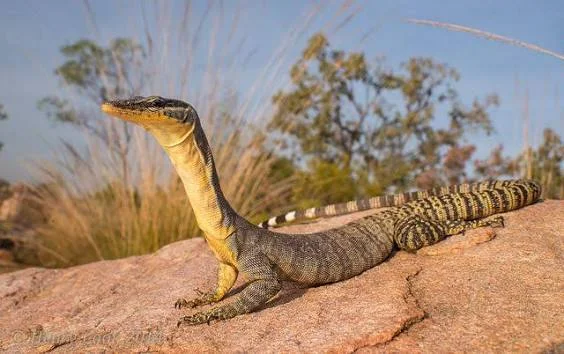 Although it is smaller than many famous monitor species, it is not a simple beginner reptile. Proper Kimberley Rock Monitor care requires a secure enclosure, excellent lighting, appropriate heating, climbing structures, nutritious food, enrichment, and patient socialization.
For an experienced reptile keeper, however, this compact monitor can be an incredibly rewarding animal to observe and interact with.
Kimberley Rock Monitor Quick Facts
Before buying one, it is useful to understand its basic requirements. The following table provides a quick overview of the species and its captive-care needs.
| Care Factor | Details |
| Scientific name | Varanus glauerti |
| Common names | Kimberley Rock Monitor, Glauert’s Monitor |
| Family | Varanidae |
| Origin | Northwestern Australia |
| Adult size | Commonly around 60–80 cm total length |
| Lifespan | Approximately 10–20 years with good care |
| Activity | Diurnal |
| Difficulty | Advanced |
| Temperament | Alert, active, curious |
| Diet | Mainly insects and other animal-based prey |
| Enclosure | Large, secure, climbing-oriented |
| UVB | Required |
| Basking | Strong basking area with a usable temperature gradient |
| Humidity | Generally dry environment with access to humid microclimates |
| Water | Fresh drinking water at all times |
| Handling | Possible with gradual socialization |
| Best suited for | Experienced reptile keepers |
The Kimberley Rock Monitor is scientifically recognized as Varanus glauerti.
It is native to northern Australia and is particularly associated with rocky landscapes and areas offering cracks, ledges, and climbing opportunities.
What Is a Kimberley Rock Monitor?
The Kimberley Rock Monitor is a relatively small monitor lizard from Australia. It belongs to the genus Varanus, the same genus that contains many of the world’s monitor lizards.
However, it has a very different lifestyle from huge monitor species. Instead of spending most of its time in water or covering enormous distances across open ground, this species is closely associated with rocky terrain.
It is an active hunter that can climb, bask, hide, investigate its surroundings, and quickly move through complicated terrain. That behavior is important when planning captivity.
A good enclosure should not simply provide enough room for the lizard to turn around.
It should give the animal opportunities to:
- Climb
- Bask
- Hide
- Explore
- Hunt
- Thermoregulate
- Exercise
- Retreat from people
- Choose between different microclimates
This is one reason the species is best considered an advanced reptile pet.
Origin and Natural Distribution
The Kimberley Rock Monitor originates from northwestern Australia, especially the Kimberley region of Western Australia and areas extending into the Northern Territory.
Its natural range includes rugged landscapes with rocky outcrops, cliffs, gorges, sandstone formations, and vegetation associated with tropical northern Australia.
The terrain provides natural hiding places and elevated surfaces. Consequently, the species has developed physical and behavioral adaptations that allow it to move efficiently around rocks and narrow spaces.
Understanding its origin helps explain several captive-care requirements. For example, simply placing a few decorations inside a box does not recreate the choices available in its natural environment.
Instead, the enclosure should offer a mixture of warm surfaces, cooler retreats, climbing opportunities, and protected hiding areas.
Where Do Kimberley Rock Monitors Live?
In the wild, Kimberley Rock Monitors are associated with rocky habitats in northern Australia.
They may use:
- Rocky escarpments
- Sandstone formations
- Boulder fields
- Cliffs
- Gorges
- Rock crevices
- Tree trunks
- Vegetated areas around rocky terrain
- Sheltered cracks and cavities
Rock crevices are particularly important because they provide protection from predators and extreme environmental conditions.
The species can also use elevated surfaces. Therefore, captive enclosures should provide vertical structures instead of relying entirely on floor space.
A naturalistic setup does not need to look exactly like the Australian landscape. What matters most is that it allows the monitor to express natural behaviors.
Kimberley Rock Monitor Size
The Kimberley Rock Monitor size is one of the reasons this species attracts experienced reptile keepers. Adults commonly reach around 60–80 cm (24–32 inches) in total length, although individual size can vary.
The tail represents a substantial portion of the animal’s total length. Do not choose an enclosure based on the smallest adult measurement.
A growing monitor should have enough space to exercise, climb, turn comfortably, and establish a meaningful temperature gradient.
Kimberley Rock Monitor Size by Life Stage
| Life Stage | Main Consideration |
| Hatchling | Secure enclosure with appropriate small-scale hides and climbing areas |
| Juvenile | Upgrade space as growth accelerates |
| Subadult | Increase climbing and exercise opportunities |
| Adult | Large enclosure with extensive usable vertical and horizontal space |
Growth is not perfectly predictable.
For that reason, the keeper should be prepared to upgrade the enclosure rather than waiting until the animal appears cramped.
Kimberley Rock Monitor Lifespan
A healthy Kimberley Rock Monitor lifespan can extend for many years in captivity.
Around 10–20 years is a reasonable long-term planning range, with good husbandry playing a major role in whether an individual reaches the upper end of that range.
Important factors include:
- Genetics
- Nutrition
- UVB exposure
- Temperature
- Exercise
- Hydration
- Stress
- Hygiene
- Parasite prevention
- Veterinary care
A monitor that lives in an unsuitable enclosure may survive for some time while still experiencing poor welfare. Therefore, lifespan should never be the only measure of successful care.
Kimberley Rock Monitor Enclosure
A proper Kimberley Rock Monitor enclosure should be secure, well ventilated, highly structured, and large enough to support natural movement.
A commonly cited adult starting size is approximately 48 × 24 × 36 inches, although larger is strongly preferable where possible. The important point is not just the external dimensions.
The animal needs usable space. A tall enclosure filled with branches and secure ledges can provide more behavioral opportunities than a similarly sized empty box.
Kimberley Rock Monitor Enclosure Size
For one adult, consider:
- At least a substantial 4-foot-wide enclosure
- Around 2 feet or more of depth where practical
- Approximately 3 feet or more of height
- Additional space whenever possible
- Strong climbing structures
- Multiple hides
- A proper basking zone
- A cooler retreat
If you can provide a larger enclosure, that is generally preferable.
What Should Go Inside the Enclosure?
A well-designed enclosure can contain:
- Cork bark
- Stable branches
- Rock ledges
- Artificial or natural-looking rock structures
- Secure hides
- Basking platforms
- Climbing routes
- A humid hide
- Water bowl
- Suitable substrate
- Visual barriers
Everything must be securely anchored. This is particularly important with monitors because they are strong, active reptiles that may climb over, push against, or dig around decorations.
How to Build a Naturalistic Enclosure
Think about the enclosure as a collection of zones rather than one open space.
Basking Zone
Create a high, stable area beneath the basking lamp.
The surface should be strong enough to support the animal and positioned so the monitor can move closer to or farther away from the heat source.
Climbing Zone
Use branches, cork, shelves, or rock-like structures. Create multiple routes instead of one straight branch.
Hiding Zone
Provide several hiding places. A monitor should be able to disappear from view when it wants privacy.
Cool Zone
The opposite side should remain significantly cooler than the basking area. This allows natural thermoregulation.
Humid Retreat
A smaller humid hide can provide access to increased humidity without making the entire enclosure constantly wet.
Kimberley Rock Monitor Temperature
Temperature is one of the most important parts of successful Kimberley Rock Monitor care. The enclosure should have a gradient.
That means the animal should be able to choose between:
- Hot basking surface
- Warm area
- Moderate area
- Cooler retreat
A basking surface can reach significantly higher temperatures than the surrounding air.
Because exact readings depend on enclosure design, lamp type, distance, ventilation, and measurement method, use actual temperature measurements rather than relying on guesswork.
An infrared temperature gun is especially useful for checking basking surfaces.
Temperature Monitoring Tips
Check temperatures:
- At the basking surface
- Near the basking area
- In the middle of the enclosure
- In the cool retreat
- After changing bulbs
- After changing enclosure decorations
A thermostat should be used with appropriate heating equipment whenever applicable. Never assume that the temperature is correct simply because the lamp has been running for several hours.
UVB and Lighting
UVB is an essential part of a responsible monitor setup. A quality linear UVB system should provide an appropriate exposure zone while still allowing the animal to move away from it.
The monitor should never be forced to remain directly underneath the strongest UVB exposure. Lighting should also follow a consistent day-and-night schedule.
A timer can make this easier. Remember that a lamp appearing bright does not necessarily mean it is still producing the same amount of UVB.
Follow the manufacturer’s replacement recommendations and use appropriate equipment for measuring or assessing UVB when possible. Good UVB management works together with proper nutrition and calcium metabolism.
Kimberley Rock Monitor Humidity
Humidity should be approached as a gradient, not as one number that applies to every part of the enclosure.
The general enclosure can remain relatively dry and well ventilated while the animal has access to a more humid retreat. This is particularly useful during shedding.
A good setup may include:
- Dry substrate
- Good airflow
- Humid hide
- Fresh water
- Occasional environmental changes based on seasonal conditions
Avoid keeping the entire enclosure permanently damp. Poor ventilation combined with excessive moisture can create an unhealthy environment.
Water and Hydration
Fresh water should always be available. Use a stable bowl that cannot easily be overturned.
Place it away from the hottest area to reduce unnecessary evaporation and contamination. Check the bowl every day. Replace water immediately if it becomes dirty.
Hydration also depends on appropriate humidity, diet, environmental temperature, and access to suitable retreats.
Kimberley Rock Monitor Diet
The Kimberley Rock Monitor diet should be varied, nutritious, and primarily based on appropriately sized animal prey.
In captivity, insects can form an important part of the diet.
Suitable feeder options may include:
- Dubia roaches
- Crickets
- Locusts
- Grasshoppers
- Silkworms
- Hornworms
- Calci worms
- Mealworms in moderation
- Waxworms occasionally
Wild individuals consume insects and other small prey, including small reptiles. Therefore, variety is more appropriate than relying on one feeder insect.
What Food Can Kimberley Rock Monitors Eat?
A varied feeding program can include different prey sizes and types.
Staple Feeders
Good regular options can include:
- Dubia roaches
- Crickets
- Locusts
- Appropriately sized grasshoppers
Occasional Foods
These may include:
- Hornworms
- Silkworms
- Mealworms
- Waxworms
Waxworms and other high-fat feeders should be used sparingly. The goal is not simply to make the monitor eat as much as possible. The goal is to maintain healthy body condition.
Feeding Schedule
Feeding frequency should change as the animal grows.
Hatchlings
Young monitors have high growth demands and generally require frequent appropriately sized meals.
Juveniles
Juveniles can continue receiving regular meals while the keeper monitors body condition.
Adults
Adults usually do not need large meals every day.
Several appropriately sized meals per week may be more suitable, depending on prey, activity, body condition, and individual needs.
Avoid creating an overweight monitor simply because it has a strong feeding response.
Gut-Loading and Supplements
Feeder insects should ideally be properly gut-loaded before being offered. A nutritious gut-loading diet improves the nutritional value of prey.
Appropriate reptile calcium and vitamin supplementation can also be used according to the specific product’s instructions. Do not excessively supplement.
More is not automatically better. UVB, nutrition, calcium, and overall husbandry all work together.
Feeding Enrichment
One of the best things about keeping an intelligent monitor is turning feeding into an activity. Instead of placing every insect in a bowl, you can sometimes allow the animal to search.
Try:
- Hiding a few insects around safe areas
- Placing feeders at different enclosure levels
- Offering insects inside suitable enrichment containers
- Allowing supervised hunting
- Changing feeding locations occasionally
- This encourages natural investigation and movement.
Is Kimberley Rock Monitor a Good Pet?
Yes, for the right keeper. A well-socialized Kimberley Rock Monitor can be an engaging, intelligent, and fascinating pet. However, it is not a low-maintenance reptile.
This species may be suitable if you:
- Have previous reptile experience
- Understand temperature gradients
- Can provide strong UVB
- Have space for a large enclosure
- Are comfortable feeding insects
- Can afford proper equipment
- Have access to reptile veterinary care
- Enjoy observing active animal behavior
- Have patience for socialization
It may not be suitable if you:
- Want a beginner reptile
- Have limited enclosure space
- Want a pet that requires very little maintenance
- Dislike insects
- Cannot provide UVB and heating
- Expect immediate handling
- Are uncomfortable with claws or potential defensive behavior
The species can be rewarding, but responsible ownership comes first.
Kimberley Rock Monitor Temperament
These monitors are typically alert and curious. Their personality can vary from one individual to another.
A young monitor may initially be nervous and defensive when introduced to a new environment. That does not necessarily mean it will remain aggressive. A calm environment and consistent interaction can help build trust.
However, keepers should respect the fact that this is still a predatory reptile with sharp claws and teeth.
Kimberley Rock Monitor Cleaning Routine
Cleanliness is essential for reptile health. Fortunately, regular maintenance does not have to be complicated.
Daily Cleaning
Every day:
- Remove feces
- Remove uneaten prey
- Check the water bowl
- Remove visibly contaminated substrate
- Inspect the enclosure
- Check for damaged decorations
Weekly Maintenance
Once a week:
- Wash the water bowl
- Inspect hides
- Check climbing structures
- Clean heavily soiled surface
- Inspect the humid hide
- Review the substrate condition
Deep Cleaning
A deeper clean should be performed as needed based on the enclosure type and substrate system.
Bioactive enclosures require a different maintenance approach from traditional setups.
Whatever system you choose, the habitat should remain:
- Clean
- Well ventilated
- Free of accumulated waste
- Safe
- Dry where appropriate
- Free of mold and stagnant water
Fun Activities and Enrichment
A Kimberley Rock Monitor should have opportunities to stay mentally and physically active. Because this is an intelligent species, enrichment can make a major difference.
1. Food Hunts
Hide a small number of feeder insects around safe parts of the enclosure. This encourages searching behavior.
2. Climbing Challenges
Create several stable climbing routes. The monitor can choose different paths rather than always using the same branch.
3. Target Training
Experienced keepers can introduce simple target training. This may eventually make routine handling and movement easier.
4. Exploration
Occasionally introduce a safe lightweight object for supervised investigation. Never use anything that can be swallowed or collapse.
5. Keeper Interaction
Quiet interaction outside feeding sessions can help a socialized monitor become more comfortable around people.
Kimberley Rock Monitor Health and Common Problems
Good husbandry is the best form of prevention.
Potential problems can include:
- Metabolic bone disease
- Obesity
- Dehydration
- Parasites
- Nutritional deficiencies
- Retained shed
- Thermal burns
- Mouth problems
- Injuries
- Respiratory problems
Warning Signs
Contact a reptile-experienced veterinarian if you notice:
- Sudden appetite loss
- Significant weight loss
- Weakness
- Difficulty walking
- Swollen limbs
- Persistent open-mouth breathing
- Unusual discharge
- Repeated abnormal shedding
- Extreme lethargy
- Major changes in behavior
Do not rely on internet articles alone when an animal is seriously unwell.
Kimberley Rock Monitor Body Condition
Weight alone does not tell the whole story. A healthy monitor should appear muscular and active.
Watch for:
Possible Underweight Signs
- Visible bones
- Very thin tail base
- Reduced muscle
- Weakness
- Poor activity
Possible Overweight Signs
- Excessive fat around the body
- Reduced activity
- Difficulty climbing
- Thick, unusually rounded body
Regular weighing can help identify changes before they become obvious.
Keep a simple record of:
- Date
- Weight
- Feeding
- Shedding
- Behavior
- Health observations
This is especially useful for long-term care.
Kimberley Rock Monitor Price
The Kimberley Rock Monitor price can vary substantially.
Several factors influence the final cost:
- Age
- Captive-bred status
- Availability
- Breeder reputation
- Health
- Local demand
- Geographic location
- Legal restrictions
- Transport requirements
The purchase price is only the beginning.
You also need to budget for:
- Enclosure
- Heating
- UVB
- Lighting
- Substrate
- Hides
- Climbing structures
- Food
- Supplements
- Cleaning supplies
- Veterinary care
- Thermostat
Therefore, do not choose this species based only on the animal’s initial price.
Kimberley Rock Monitor for Sale
People searching for a Kimberley rock monitor for sale should focus on responsible sourcing rather than simply finding the cheapest animal.
Before purchasing, ask the seller:
- Is the animal captive-bred?
- How old is it?
- What is it currently eating?
- Is it feeding reliably?
- Has it been handled?
- Has it had veterinary care?
- What supplements are being used?
- Where did the parents originate?
- Are legal ownership requirements satisfied?
- Can you see the actual animal before purchase?
A healthy animal should be alert, active, and appropriately conditioned. Be cautious about sellers who cannot answer basic husbandry questions.
What to Prepare Before Buying
Never buy the animal first and build the enclosure afterward. Prepare everything in advance.
Before Arrival Checklist
- Secure enclosure
- Basking lamp
- Appropriate UVB
- Thermostat
- Digital thermometers
- Infrared temperature gun
- Safe substrate
- Multiple hides
- Stable climbing structures
- Water bowl
- Feeding equipment
- Calcium supplement
- Multivitamin
- Cleaning supplies
- Emergency contact for reptile veterinary care
Run the enclosure for several days before arrival. This gives you time to identify temperature or equipment problems.
Adult Kimberley Rock Monitor Care
An adult Kimberley Rock Monitor requires a well-established environment.
As the animal grows, continue evaluating whether the enclosure provides enough usable space.
An adult should have:
- Adequate climbing height
- Strong basking platform
- Several hides
- A cool retreat
- UVB exposure
- Appropriate ventilation
- Fresh water
- Safe substrate
- Exercise opportunities
- Enrichment
Do not underestimate their ability to escape. Doors, ventilation panels, and gaps should all be securely designed.
Kimberley Rock Monitor vs Ackie
The Kimberley Rock Monitor vs Ackie comparison is popular because both are relatively small monitor lizards. However, they have different natural lifestyles.
The Ackie Monitor (Varanus acanthurus) is strongly associated with terrestrial environments and burrowing behavior.
The Kimberley Rock Monitor is particularly adapted to rocky environments and makes greater use of climbing and elevated structures.
Quick Comparison
| Feature | Kimberley Rock Monitor | Ackie Monitor |
| Scientific name | Varanus glauerti | Varanus acanthurus |
| Origin | Northern Australia | Australia |
| Lifestyle | Rocky and climbing-oriented | More terrestrial and burrowing |
| Activity | High | High |
| Intelligence | High | High |
| Beginner friendly | No | Usually considered easier, but still advanced |
| Enclosure focus | Height + climbing + floor space | Floor space + digging |
| Diet | Animal-based prey | Animal-based prey |
Neither should be selected simply because it is called a “small monitor.” Both need serious husbandry.
Pilbara Rock Monitor vs Kimberley Rock Monitor
The Pilbara Rock Monitor vs Kimberley Rock Monitor comparison can become confusing because common names are sometimes used differently by reptile keepers and sellers.
Always verify the scientific name when researching a monitor. For the Kimberley Rock Monitor, that name is Varanus glauerti.
This is especially important when buying an animal because accurate identification helps you find the correct information about:
- Habitat
- Size
- Diet
- Temperature
- Enclosure
- Legal requirements
- Conservation status
- Never rely on a seller’s common name alone.
Seasonal Care
A good keeper should understand that environmental conditions can naturally change. Rather than making dramatic changes without a reason, maintain stable husbandry while observing the animal.
Depending on the enclosure and climate, seasonal changes may affect:
- Appetite
- Activity
- Shedding
- Humidity
- Behavior
Any major seasonal adjustment should be made gradually.
Kimberley Rock Monitor Behavior
Normal behavior can include:
- Basking
- Climbing
- Exploring
- Hunting
- Hiding
- Investigating objects
- Moving between temperature zones
A monitor that spends some time hiding is not automatically sick.
The important question is whether the animal’s overall behavior has changed. For example, a normally active animal that suddenly becomes extremely lethargic deserves attention.
Common Kimberley Rock Monitor Care Mistakes
Even experienced reptile owners can make mistakes. Avoid:
1. Too Small an Enclosure
A cramped habitat limits exercise and natural behavior.
2. No Temperature Gradient
The animal needs to move between warm and cool areas.
3. Weak UVB Setup
Proper UVB should be treated as part of the core husbandry system.
4. Overfeeding
Monitors can have strong feeding responses, but that does not mean they should receive unlimited food.
5. Too Much Humidity Everywhere
Provide access to humidity without turning the entire enclosure into a constantly wet environment.
6. Poorly Secured Decorations
Strong reptiles can move unstable objects.
7. Forced Handling
Trust develops gradually.
8. Buying Before Preparing the Habitat
The enclosure should be ready first.
EEAT and Responsible Exotic Pet Ownership
Good exotic-pet information should be based on more than repeating a single care sheet.
The Kimberley Rock Monitor is a specialized species, so responsible keepers should compare reputable husbandry information and adapt the setup according to the individual animal, enclosure design, climate, equipment, and veterinary advice.
There is also no single magic temperature, humidity percentage, or enclosure dimension that guarantees perfect care. Measurements should be taken directly from the enclosure.
Similarly, feeding should be adjusted according to growth and body condition rather than following an inflexible schedule. Most importantly, owners should be prepared to change their setup when the animal’s needs change.
That is a major part of responsible reptile husbandry.
Is the Kimberley Rock Monitor Right for You?
Before purchasing, ask yourself:
- Can I provide a large secure enclosure?
- Can I afford quality heating and UVB equipment?
- Am I comfortable feeding insects?
- Can I provide enrichment?
- Can I handle a long-term commitment?
- Do I have access to reptile veterinary care?
- Can I patiently socialize the animal?
- Can I safely manage a reptile with claws and teeth?
- Have I researched local ownership laws?
If the answer to these questions is yes, this species may be worth considering. If several answers are no, another reptile may be a better choice.
FAQs
1. How big does a Kimberley Rock Monitor get?
A typical adult may reach approximately 60–80 cm (24–32 inches) in total length, although individual size can vary. The tail contributes a substantial part of the overall length.
2. What is the scientific name of the Kimberley Rock Monitor?
The scientific name is Varanus glauerti.
3. Is the Kimberley Rock Monitor a good beginner pet?
Generally, no. It is better suited to experienced reptile keepers because of its enclosure, lighting, heating, feeding, enrichment, and socialization requirements.
4. What size enclosure does a Kimberley Rock Monitor need?
A commonly cited adult starting size is around 48 × 24 × 36 inches, but a larger enclosure is preferable whenever possible. Height is particularly valuable because the species uses climbing structures.
5. What does a Kimberley Rock Monitor eat?
Its diet can include crickets, Dubia roaches, locusts, grasshoppers, silkworms, hornworms, and other appropriately sized animal prey. Variety is preferable to relying on one food source.
6. How long does a Kimberley Rock Monitor live?
A well-maintained captive animal may live approximately 10–20 years, although lifespan varies according to genetics, nutrition, husbandry, and veterinary care.
7. Does a Kimberley Rock Monitor need UVB?
Yes. Quality UVB should be an important part of the enclosure, along with a suitable lighting schedule and the ability for the animal to move away from the strongest UV exposure.
8. How often should I feed an adult Kimberley Rock Monitor?
Adults generally do not need large meals every day. Feeding several times per week may be appropriate depending on prey type, portion size, activity level, and body condition.
9. Can Kimberley Rock Monitors be handled?
Yes, some individuals can become comfortable with handling through gradual socialization. However, handling should never be forced, especially when the animal is frightened or newly introduced.
10. Are Kimberley Rock Monitors aggressive?
They can become defensive when frightened, cornered, or handled improperly. A calm, properly socialized individual may become much easier to interact with, but it should always be treated as a predatory reptile.
Final Thoughts
The Kimberley Rock Monitor is an impressive example of how fascinating smaller monitor lizards can be.
It combines intelligence, activity, climbing ability, and a distinctive rocky-habitat lifestyle without reaching the enormous size of many other monitor species. Nevertheless, its smaller body does not make it a beginner reptile.
Successful care depends on providing a secure and spacious enclosure, strong UVB, appropriate heating, good ventilation, suitable humidity choices, nutritious food, regular cleaning, enrichment, and patient socialization.
The best enclosure is not necessarily the one with the most decorations. It is the one that gives the monitor meaningful choices.
It should be able to bask when it needs warmth, retreat when it wants privacy, climb when it wants activity, hunt when it is hungry, and move away from heat when necessary.
If you are researching a Kimberley rock monitor for sale, take your time. Research the seller, verify the animal’s identity and origin, understand local regulations, and prepare the complete habitat before bringing it home.
For an experienced reptile keeper who enjoys active and intelligent animals, the Kimberley Rock Monitor can be an exceptionally rewarding long-term pet.
I’ve created helpful guides in the Birds category on Petstdigo, featuring posts in Care, Cleaning, and Fun Activities. These guides share practical tips on grooming, skin and coat health, bathing routines, nutrition, playtime ideas, and calming solutions to keep your pets happy and healthy. Explore these pages for easy-to-follow advice and insights to support your pet’s overall well-being.