
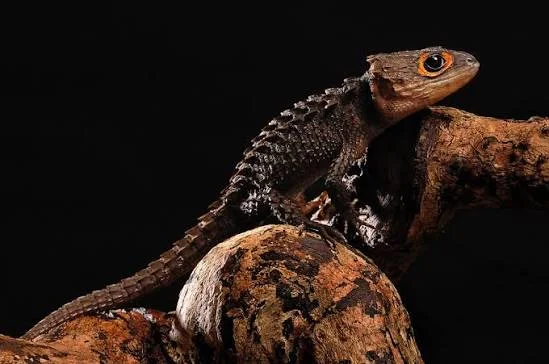
The Red-Eyed Crocodile Skink is one of the most unusual-looking reptiles you can keep. Its heavily textured scales, dark body, and striking red-orange skin around the eyes give it a miniature prehistoric appearance.
 However, this fascinating skink is not a typical reptile that enjoys being handled regularly.
It is a shy, secretive species that usually does best when its owner focuses on creating a natural, humid environment rather than trying to interact with it constantly.
For the right keeper, a Red-Eyed Crocodile Skink can be an incredible display animal. It is especially interesting for reptile enthusiasts who enjoy observing natural behaviors, feeding responses, and nighttime activity.
However, its specialized humidity, temperature, enclosure, and husbandry needs mean it requires more preparation than many beginner reptiles.
Red-Eyed Crocodile Skink Overview
The Red-Eyed Crocodile Skink (Tribolonotus gracilis) is a terrestrial tropical skink native to New Guinea.
In captivity, it needs a cool-to-moderately warm temperature gradient, high humidity, good ventilation, suitable substrate, multiple hiding places, clean water, and a diet based mainly on appropriately sized insects and other invertebrates.
Before buying one, remember that this species is generally better suited to observation than frequent handling.
Quick Table
| Feature | Details |
| Scientific Name | Tribolonotus gracilis |
| Common Name | Red-Eyed Crocodile Skink |
| Other Name | New Guinea Crocodile Skink |
| Adult Size | Usually around 7–9 inches |
| Lifespan | Around 8–10 years or longer with excellent care |
| Origin | New Guinea |
| Activity | Mostly crepuscular and nocturnal |
| Temperament | Shy, secretive, easily stressed |
| Diet | Insects and other small invertebrates |
| Humidity | Generally around 70–90% |
| Temperature | Mild tropical gradient; avoid overheating |
| UVB | Low-level UVB is generally recommended |
| Lifestyle | Terrestrial |
| Handling | Minimal and gentle |
| Housing | Best kept individually unless managed by an experienced keeper |
| Difficulty | Intermediate |
| Best For | Experienced or well-prepared reptile keepers |
What Is a Red-Eyed Crocodile Skink?
The Red-Eyed Crocodile Skink is a small terrestrial lizard belonging to the family Scincidae. Its scientific name is Tribolonotus gracilis. It gets its common name from its crocodile-like appearance.
The body has pronounced ridges and armored-looking scales, while the area around the eyes can develop a distinctive reddish-orange color. Although it looks tough, this skink is actually quite secretive.
When frightened, it may freeze, hide, or remain completely still. Some individuals can also display a defensive behavior often described as playing dead.
Because of this, frequent handling can be stressful rather than enjoyable for the animal.
The related search terms red-eyed armored skink, red-eyed alligator skink, croc skink, and crocodile skink may appear online, but Red-Eyed Crocodile Skink is the most useful common name for identifying Tribolonotus gracilis.
Red-Eyed Crocodile Skink Origin and Natural Habitat
The Red-Eyed Crocodile Skink is native to New Guinea, where it lives in warm, humid tropical environments. Instead of spending most of its time high in trees, this species is primarily terrestrial.
It is associated with the forest floor and areas where moisture is consistently available.
Its natural surroundings can include:
- Damp leaf litter
- Fallen branches
- Decaying vegetation
- Mossy surfaces
- Forest-floor debris
- Areas near streams
- Naturally shaded locations
- Moist soil and hiding spaces
This explains why simply placing a skink inside a dry reptile tank is not enough.
A successful enclosure should imitate the important characteristics of its natural environment: moisture, shade, cover, stable temperatures, and plenty of hiding places.
How Big Does a Red-Eyed Crocodile Get?
One of the most common questions from new keepers is: How big does a Red-Eyed Crocodile Skink get?
Most adults reach approximately 7–9 inches in total length, although some individuals may approach around 10 inches. Baby Red-Eyed Crocodile Skinks are considerably smaller and more delicate.
Their small size can make them look surprisingly different from adults.
Growth depends on several factors, including:
- Genetics
- Diet
- Feeding frequency
- Temperature
- Humidity
- General husbandry
- Overall health
A full-grown Red-Eyed Crocodile Skink should have enough space to move naturally, explore, hide, and thermoregulate without feeling exposed.
Red-Eyed Crocodile Lifespan
A healthy Red-Eyed Crocodile Skink can commonly live for approximately 8–10 years or longer in captivity when provided with appropriate husbandry.
Some captive individuals may live beyond this range, so lifespan should not be treated as an exact expiration date. Good care can make a major difference.
Consistent temperatures, suitable humidity, nutritious food, proper supplementation, clean water, low stress, and access to an experienced exotic-animal veterinarian all contribute to long-term health.
Because this is a commitment lasting many years, prospective owners should plan for adult care rather than buying one simply because it looks unusual.
Red-Eyed Crocodile Skink Diet and Food
The natural diet of this species consists mainly of small invertebrates. In captivity, a varied insect-based diet is usually the best foundation.
Suitable prey can include:
- Crickets
- Dubia roaches
- Mealworms
- Superworms
- Earthworms
- Black soldier fly larvae
- Silkworms
- Appropriately sized hornworms
- Other suitable captive feeder insects
Variety is important because feeding only one type of insect can create nutritional limitations.
Feeding Juvenile Red-Eyed Crocodile Skinks
Young skinks generally require more frequent feeding than adults because they are growing.
Offer appropriately sized prey and monitor the animal’s body condition rather than following an unnecessarily rigid number of insects. Small prey should be easy for the young skink to consume safely.
Feeding Adults
Adult Red-Eyed Crocodile Skinks can generally be fed every day or every other day depending on their size, activity, prey type, and body condition.
Watch the animal rather than automatically increasing food.
If your skink consistently leaves food untouched, appears overweight, or shows a noticeable change in appetite, investigate the enclosure conditions and consider speaking with a reptile veterinarian.
Calcium and Supplements
Feeder insects should generally be gut-loaded before feeding.
A suitable calcium supplement may also be used according to the animal’s UVB setup and your veterinarian’s or experienced reptile-care professional’s recommendations. Avoid excessive supplementation.
More vitamins are not automatically better.
Red-Eyed Crocodile Water and Hydration
Fresh water should always be available. A shallow water dish is useful because the skink can drink from it and the water can be replaced easily.
Change the water whenever it becomes dirty and check it daily. Because this species requires high humidity, keepers sometimes assume that a wet enclosure automatically provides enough hydration.
However, humidity and drinking water are not exactly the same thing.
Your skink should have access to both:
- Fresh drinking water
- Proper environmental humidity
- Moist but not stagnant substrate
- Good ventilation
Red-Eyed Crocodile Skink Enclosure and Tank Size
A proper Red-Eyed Crocodile Skink enclosure should provide enough floor space for movement while also allowing you to create a natural humid environment.
Different husbandry sources recommend different minimum enclosure dimensions, so there is not one universally accepted tank size.
For one adult, a generously sized terrestrial enclosure around 30 × 18 × 18 inches or larger is a practical target, with more space being preferable when available.
The important thing is not just the number on the measuring tape.
The enclosure should allow room for:
- Multiple hides
- Moist substrate
- Plants or artificial foliage
- A water dish
- Branches and natural clutter
- A temperature gradient
- Safe ventilation
- Feeding space
A larger enclosure can also make it easier to create different microclimates.
Red-Eyed Crocodile Skink Substrate
Substrate plays an important role because these skinks naturally live around damp forest-floor material.
Suitable options may include:
- Coconut fiber
- Organic soil mixes suitable for reptiles
- Sphagnum moss
- Leaf litter
- Reptile-safe bark products
- Bioactive substrate mixtures
A combination of materials can produce a more natural environment. However, avoid substrates containing pesticides, fertilizers, artificial fragrances, or other chemicals.
The substrate should remain appropriately moist without becoming permanently waterlogged.
Humidity for a Red-Eyed Crocodile Skink
High humidity is one of the most important parts of Red-Eyed Crocodile Skink care. A commonly used target is approximately 70–90% humidity, with natural fluctuations throughout the day.
However, keeping the enclosure at a high humidity percentage is not enough by itself. There must also be adequate ventilation.
Poor ventilation combined with constantly stagnant, wet conditions can encourage bacterial and fungal problems.
A good enclosure should provide:
- Moist substrate
- Regular misting
- A humid hide
- Proper airflow
- A clean water source
- Areas that are moist rather than completely saturated
Use a digital hygrometer instead of guessing humidity by looking at the glass.
Temperature and Heating
Red-Eyed Crocodile Skinks are not animals that need an extremely hot basking environment.
They generally do best with a mild temperature gradient, allowing the animal to move between slightly warmer and cooler areas.
A practical setup can include:
- Warmer daytime area in the upper 70s to low 80s°F
- Cooler area around the low-to-mid 70s°F
- Slight nighttime cooling when appropriate
- No prolonged excessive heat
Always measure temperatures with reliable digital thermometers. Avoid placing the enclosure in direct sunlight because a glass enclosure can heat up dangerously fast. Heat stress can be particularly dangerous for species adapted to relatively cool, humid forest environments.
Does a Red-Eyed Crocodile Skink Need UVB?
Although the Red-Eyed Crocodile Skink is primarily active during darker periods, providing appropriate low-level UVB is generally recommended by many modern reptile-keeping practices.
UVB should be correctly positioned so the animal can benefit from it without being forced to remain under the light. The setup should also include shaded areas.
This is especially important because the skink needs control over how much exposure it receives. Never assume that a very strong UVB lamp is better.
Correct distance, lamp strength, enclosure design, and replacement schedule all matter.
Hides and Enclosure Décor
A Red-Eyed Crocodile Skink should never be forced to live in an open enclosure with nowhere to disappear.
Multiple hiding areas help the animal feel secure.
Useful décor includes:
- Cork bark
- Hollow logs
- Leaf litter
- Artificial plants
- Live reptile-safe plants
- Moss
- Low branches
- Natural-looking shelters
Try to create several hiding places rather than only one.
For example, one hide can be closer to the warmer area while another remains in a cooler, more humid section. This allows the skink to make choices.
Red-Eyed Crocodile Skink Behavior and Temperament
The species has a fascinating but very different personality from highly interactive reptiles.
A Red-Eyed Crocodile Skink is generally:
- Shy
- Secretive
- Quiet
- Easily startled
- Mostly active around dusk and nighttime
- Better suited to observation than handling
Do not expect your skink to greet you at the front of the enclosure. It may spend much of the day hiding. That does not automatically mean something is wrong.
However, suddenly hiding much more than usual, refusing food, losing weight, or becoming unusually inactive can indicate a husbandry or health problem.
Can You Handle a Red-Eyed Crocodile Skink?
Yes, a Red-Eyed Crocodile Skink can be handled when necessary, but frequent handling is generally not recommended. This is not the ideal species for someone who wants a reptile they can hold every day.
When handling is necessary:
- Approach slowly.
- Avoid grabbing from above.
- Support the entire body.
- Keep handling sessions short.
- Stay close to the ground.
- Stop if the animal becomes highly stressed.
Never chase the skink around the enclosure just to pick it up. For routine health checks, enclosure maintenance, or veterinary care, gentle handling may be necessary.
Is a Red-Eyed Crocodile Skink a Good Pet?
A Red-Eyed Crocodile Skink can be an excellent pet for the right person. It is particularly suitable for someone who enjoys observing reptiles rather than constantly interacting with them.
Pros
- Unique prehistoric appearance
- Fascinating natural behavior
- Relatively small adult size
- Interesting tropical display animal
- Great species for experienced reptile enthusiasts
- Can be rewarding when its enclosure is carefully designed
Cons
- Shy and stress-prone
- Not ideal for frequent handling
- Requires high humidity
- Needs careful temperature management
- Specialized enclosure setup
- Can hide for long periods
- Finding a reptile veterinarian may require planning
Bottom line: It can be a good pet, but it is not necessarily a good beginner reptile.
Red-Eyed Crocodile Skink Cleaning Routine
A clean enclosure is essential for preventing unpleasant odors and reducing health risks.
Daily Tasks
- Check the water dish.
- Remove visible feces.
- Remove uneaten prey.
- Check temperature and humidity.
- Observe your skink’s behavior.
Weekly Tasks
- Inspect the substrate.
- Clean dirty décor.
- Check hides.
- Wipe down contaminated surfaces.
- Inspect the water area carefully.
Deep Cleaning
The exact schedule depends on whether you use a traditional or bioactive enclosure. A traditional enclosure usually requires more regular substrate replacement.
A properly established bioactive enclosure can reduce some cleaning work, but it still requires maintenance. Bioactive does not mean maintenance-free.
Fun Activities and Enrichment
Because this is a shy animal, enrichment should focus on encouraging natural behaviors rather than forcing interaction.
Try:
- Rearranging safe natural décor occasionally
- Adding leaf litter
- Providing new hiding structures
- Offering appropriately varied feeder insects
- Creating moist and slightly drier microclimates
- Adding reptile-safe plants
- Providing shallow areas where the skink can explore safely
You can also scatter a few suitable feeder insects around the enclosure to encourage natural hunting behavior, provided the prey is safe and does not remain loose long enough to stress or injure the skink.
Common Health Problems
Good husbandry can reduce many preventable problems, but reptiles can still become ill.
Potential concerns include:
- Dehydration
- Metabolic bone disease
- Respiratory infections
- Parasites
- Digestive problems
- Retained shed
- Injuries
- Poor nutrition
- Stress-related problems
Warning signs include:
- Sudden appetite loss
- Weight loss
- Difficulty breathing
- Swollen eyes
- Unusual discharge
- Weakness
- Abnormal posture
- Persistent lethargy
- Major changes in droppings
- Difficulty moving normally
If you notice these signs, contact a veterinarian experienced with reptiles or exotic animals. Do not try to treat a serious illness using random home remedies.
Red-Eyed Crocodile Skink Shedding
Like other lizards, Red-Eyed Crocodile Skinks periodically shed their skin. During shedding, you may notice changes in appearance or behavior.
Maintaining appropriate humidity is important because excessively dry conditions can contribute to shedding problems. Never pull off attached skin.
Instead, correct the enclosure conditions and allow the animal to complete the process naturally. If retained shed repeatedly affects toes, eyes, or other sensitive areas, seek veterinary advice.
How to Choose a Healthy Red-Eyed Crocodile Skink
If you are looking for a red-eyed crocodile skink for sale, do not make your decision based on appearance alone.
Before buying, look for an animal that:
- Has clear eyes
- Has a healthy-looking body condition
- Moves normally
- Has no obvious wounds
- Has clean skin
- Shows normal breathing
- Is alert when disturbed
- Comes from a responsible source
Ask the seller about:
- Feeding history
- Age
- Captive-bred or wild origin
- Current enclosure condition
- Recent shedding
- Health history
- Any previous veterinary treatment
A responsible seller should be willing to answer reasonable questions.
Red-Eyed Crocodile Skink Price and Buying Cost
The Red-Eyed Crocodile Skink price can vary considerably.
Factors include:
- Captive-bred versus wild-caught status
- Age
- Availability
- Seller reputation
- Geographic location
- Shipping requirements
- Season
- Health and condition
The purchase price is only one part of the total cost.
You also need to budget for:
- Enclosure
- Lighting
- UVB
- Thermometers
- Hygrometer
- Heating equipment if required
- Substrate
- Hides
- Décor
- Water dish
- Food
- Supplements
- Veterinary care
Calculate the total setup cost before searching for a red-eyed crocodile skink for sale.
Where Can I Buy a Red-Eyed Crocodile Skink?
If you search for where can I buy a Red-Eyed Crocodile Skink, prioritize reputable breeders and responsible specialty reptile sellers.
Captive-bred animals are often preferable because their history may be easier to verify, and responsible breeding can reduce pressure on wild populations.
Before purchasing, check local laws and regulations. Also make sure an exotic or reptile veterinarian is reasonably accessible.
A beautiful animal is not a good purchase if you cannot provide the care it needs.
Can Red-Eyed Crocodile Skinks Live Together?
Cohabitation should be approached carefully. For most keepers, housing one animal individually is the simpler and safer choice.
Keeping multiple skinks together can create problems involving:
- Territorial behavior
- Competition for hides
- Competition for food
- Stress
- Injuries
- Breeding-related issues
Experienced keepers may have different approaches, but beginners should not assume that two skinks will automatically live peacefully together.
A larger enclosure does not eliminate social risks.
Male and Female Red-Eyed Crocodile Skink Differences
Sexual differences can be subtle compared with some other reptile species. Depending on the individual, experienced keepers may use body characteristics and reproductive anatomy to help determine sex.
However, visual sexing can be unreliable for inexperienced owners.
If accurate sex identification is important, ask an experienced breeder or qualified reptile professional rather than relying on an internet photo comparison alone.
Breeding Red-Eyed Crocodile Skinks
Breeding this species is best left to experienced keepers. Successful breeding requires more than simply placing a male and female together.
Important considerations include:
- Correct adult health
- Proper nutrition
- Suitable environmental conditions
- Appropriate nesting areas
- Egg management
- Hatchling care
- Veterinary planning
Females can lay a relatively small number of eggs, making the species interesting from a breeding perspective.
However, breeding should never be attempted without understanding the care requirements for both adults and offspring.
Red-Eyed Crocodile Skink Daily Care Checklist
Use this simple checklist to keep your routine organized.
Every Day
- Check temperature
- Check humidity
- Replace dirty water
- Remove waste
- Check for leftover insects
- Observe behavior
- Confirm hides are secure
Several Times Per Week
- Provide appropriately sized feeder insects
- Check body condition
- Inspect skin and eyes
- Check substrate moisture
- Inspect plants and décor
Regularly
- Clean contaminated surfaces
- Maintain the substrate
- Inspect UVB equipment
- Replace equipment when required
- Schedule veterinary care when needed
FAQs
1. Are Red-Eyed Crocodile Skinks nocturnal?
They are generally most active around dusk and during nighttime hours. Individual activity patterns can vary, so you may occasionally see one moving around during daylight.
2. How big does a Red-Eyed Crocodile Skink get?
Most adults reach roughly 7–9 inches in total length, although some may approach 10 inches.
3. How long do Red-Eyed Crocodile Skinks live?
A well-cared-for individual commonly lives around 8–10 years or longer, depending on health and husbandry.
4. Are Red-Eyed Crocodile Skinks good for beginners?
They are usually better for intermediate keepers. Their humidity, temperature, enclosure, and behavioral needs require careful attention.
5. Do Red-Eyed Crocodile Skinks like being handled?
Most are shy and do not naturally seek frequent handling. They are better considered display and observation reptiles.
6. What do Red-Eyed Crocodile Skinks eat?
They mainly eat insects and other small invertebrates. Crickets, roaches, worms, larvae, and other appropriately sized feeder insects can be used as part of a varied diet.
7. What humidity does a Red-Eyed Crocodile Skink need?
A commonly used humidity range is approximately 70–90%, although the enclosure should still have good ventilation and should not remain stagnant or waterlogged.
8. Does a Red-Eyed Crocodile Skink need UVB?
Low-level UVB is generally recommended as part of a well-designed enclosure. It should be correctly positioned and paired with shaded areas.
9. Why is my Red-Eyed Crocodile Skink always hiding?
Hiding is normal for this naturally secretive species. However, a sudden increase in hiding combined with appetite loss, weight loss, weakness, or abnormal behavior should be investigated.
10. Can a Red-Eyed Crocodile Skink swim?
They are primarily terrestrial rather than aquatic. They may encounter water in their natural habitat, but they should not be provided with deep water where they could become exhausted or trapped.
11. What is the best substrate for a Red-Eyed Crocodile Skink?
Moisture-retaining reptile-safe substrates such as suitable organic soil, coconut fiber, moss, and leaf litter can work well when properly maintained and ventilated.
12. How often should an adult Red-Eyed Crocodile Skink eat?
Adults can often be offered appropriately sized prey every day or every other day, depending on body condition, prey size, activity, and individual needs.
Expert Care Note
The biggest mistake with this species is focusing only on humidity. A high humidity reading does not automatically mean the enclosure is healthy.
A good Red-Eyed Crocodile Skink habitat should balance humidity, ventilation, temperature, substrate moisture, hiding areas, hygiene, lighting, and access to fresh water.
Equally important, observe the animal’s behavior. A skink that consistently hides is not necessarily unhappy, because hiding is part of its natural behavior.
However, sudden behavioral changes can provide an early warning that something in the enclosure or the animal’s health needs attention.
When in doubt, consult a veterinarian experienced with reptiles rather than relying on a single care chart.
Responsible Ownership
Owning an unusual reptile comes with responsibility.
Before purchasing a Red-Eyed Crocodile Skink, make sure you can provide:
- A properly prepared enclosure
- Stable environmental conditions
- Appropriate food
- Clean water
- Suitable lighting
- Regular maintenance
- Veterinary access
- Long-term financial commitment
If you are considering a baby Red-Eyed Crocodile Skink, remember that its small size does not mean it requires a small amount of care.
Young animals can be particularly sensitive to poor husbandry, inappropriate prey size, dehydration, and unstable environmental conditions.
Responsible ownership means preparing the enclosure before bringing the animal home.
Final Thoughts
The Red-Eyed Crocodile Skink is an extraordinary reptile with a prehistoric appearance and fascinating natural behavior.
Its unusual armored body, colorful eye region, secretive personality, and tropical habitat requirements make it a memorable species for a dedicated reptile keeper.
However, this is not the best choice if your main goal is to have a reptile that enjoys frequent handling. Instead, think of the Red-Eyed Crocodile Skink as a living rainforest display animal.
When its enclosure is designed around its natural needs, watching it explore, hunt, hide, and become active after dark can be incredibly rewarding.
With the right humidity, temperatures, diet, enclosure, lighting, hygiene, and low-stress approach, this small New Guinea skink can thrive in captivity for many years.
The key is simple: build the habitat for the animal, not just the tank for the keeper.
I’ve created helpful guides in the Birds category on Petstdigo, featuring posts in Care, Cleaning, and Fun Activities. These guides share practical tips on grooming, skin and coat health, bathing routines, nutrition, playtime ideas, and calming solutions to keep your pets happy and healthy. Explore these pages for easy-to-follow advice and insights to support your pet’s overall well-being.