
The Senegal Parrot is a small, intelligent African parrot known for its playful personality, beautiful green, yellow, orange, and gray coloring, and strong bond with its favorite people. Although it is smaller than many popular parrots, this species still needs daily attention, mental stimulation, exercise, a nutritious diet, and a safe environment.
 With proper care, a Senegal Parrot can be a companion for decades, making it important to understand its needs before bringing one home. Veterinary references commonly place its average lifespan around 25–30 years, with some well-kept birds living considerably longer.
This complete Senegal Parrot care guide covers everything a current or future owner needs to know, including its origin, habitat, size, lifespan, diet, cage setup, personality, behavior, talking ability, sounds, exercise, cleaning, grooming, training, fun activities, health, cost, social needs, and beginner mistakes.
It also answers common questions such as whether Senegal Parrots make good pets, whether they can be left alone, how much sleep they need, and why some individuals become attached to one person.
What Is a Senegal Parrot?
The Senegal Parrot, scientifically known as Poicephalus senegalus, is a small-to-medium parrot belonging to the Poicephalus genus. It is native to a broad region of West Africa and is one of the better-known members of its group. The species has three recognized subspecies and is naturally adapted to a variety of wooded and semi-open environments.
Unlike some enormous parrots that require very large spaces, this species has a compact, stocky body. However, its smaller size should not be confused with low care requirements. Senegal parrots are intelligent, active, social animals that need opportunities to climb, chew, forage, explore, and interact. They can become affectionate companion birds, particularly when they are well-socialized.
At the same time, individual personalities vary considerably. Some birds enjoy sitting on a person’s shoulder, while others prefer playing independently and interacting on their own terms.
Quick Senegal Parrot Facts
| Feature | Details |
| Scientific name | Poicephalus senegalus |
| Common name | Senegal Parrot |
| Native region | West Africa |
| Adult size | About 9 inches / 23 cm |
| Average weight | About 125–170 g |
| Typical lifespan | Around 25–30 years |
| Potential lifespan | Some may reach 40–50 years |
| Personality | Intelligent, playful, social, affectionate |
| Diet | Balanced formulated diet plus fresh foods |
| Talking | Some individuals learn words and sounds |
| Noise | Generally quieter than many larger parrots |
| Activity | Active and curious |
| Best for | Prepared beginners and experienced bird owners |
Senegal Parrot Origin and Natural Habitat
The Senegal Parrot is native to West Africa, although its natural range extends beyond Senegal itself. In the wild, these birds inhabit areas where trees, food sources, and suitable nesting locations are available. Their natural environment includes wooded areas, savanna-like landscapes, and regions influenced by seasonal changes.
Wild birds feed on a variety of seeds, fruits, berries, vegetation, blossoms, and other available foods. Understanding the natural lifestyle of the species helps explain why enrichment is so important in captivity. A wild parrot does not spend its entire day sitting in one place.
It searches for food, climbs, flies, investigates objects, communicates with other birds, and moves through its environment. Therefore, a good Senegal Parrot habitat at home should provide more than food and water. It should encourage natural behaviors through climbing, chewing, foraging, exercise, and exploration.
Senegal Parrot Size and Appearance
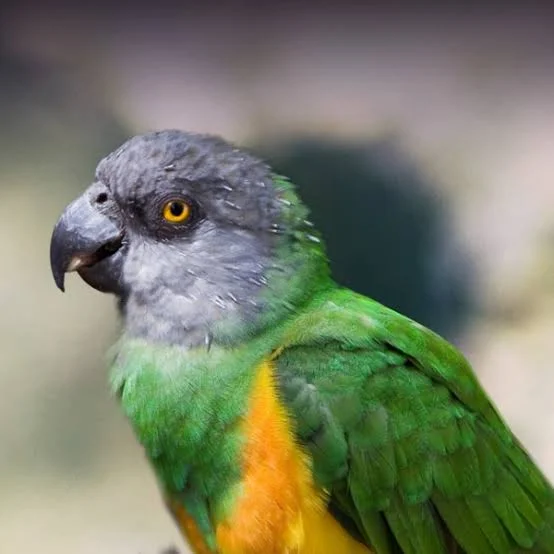
The Senegal Parrot size is approximately 9 inches, or 23 cm, from head to tail. Adult weight commonly falls between 125 and 170 grams, although individual birds can naturally differ. Its compact body is combined with a relatively broad head and short tail.
Typical Senegal Parrot colors include:
- Dark gray or charcoal-colored head
- Green back and wings
- Green throat
- Yellow-orange chest and lower body
- Orange areas around the thighs and rump
- Dark gray or blackish beak
- Bright yellow to yellow-orange eyes in adults
One of its most recognizable features is the green V-shaped area that extends down the chest.
You may also encounter unusual color mutations, including birds marketed as a blue Senegal Parrot. However, unusual coloring should never be more important than health, temperament, socialization, veterinary records, and responsible breeding.
Senegal Parrot Lifespan and Life Expectancy
One of the biggest commitments involved in keeping this species is its long lifespan. The average Senegal Parrot lifespan is often reported at around 25–30 years, while some well-cared-for birds may live substantially longer.
VCA notes that well-kept birds may reach up to approximately 50 years. If you are searching for Senegal bird life expectancy, Senegal parrot life expectancy, or asking how long does a Senegal Parrot live, remember that there is no guaranteed number.
Several factors can influence longevity:
- Genetics
- Balanced nutrition
- Healthy body weight
- Regular exercise
- Clean housing
- Mental stimulation
- Safe household environment
- Stress management
- Preventive veterinary care
- Prompt treatment when illness occurs
Because of this long commitment, getting a Senegal Parrot should be a carefully considered decision rather than an impulse purchase.
Senegal Parrot Personality and Behavior
The Senegal Parrot personality is one of the main reasons people love this species. These birds are often intelligent, playful, confident, curious, and strongly bonded to their preferred humans.
Many enjoy spending time with their owners, while others are more independent. Veterinary and avian-care references describe them as intelligent and playful birds that can form close relationships with people. However, a friendly parrot is not necessarily a bird that wants constant touching.
Watch body language carefully. A relaxed bird may willingly step onto your hand, while a frightened or irritated bird may move away, stiffen its body, lunge, or attempt to bite. Respecting these signals is one of the easiest ways to build trust.
Do Senegal Parrots Bond With One Person?
Yes, many can develop a particularly strong attachment to one person. This can be wonderful, but it may also create problems if the bird becomes overly possessive. Therefore, gradual positive interaction with different trusted people can help prevent extreme dependence on a single individual. Socialization should be gentle rather than forced.
Is a Senegal Parrot a Good Pet?
Yes, a Senegal Parrot can be an excellent pet for the right owner.
It offers many qualities people want in a companion bird:
- Intelligent and trainable
- Relatively compact
- Playful
- Social
- Often affectionate
- Usually quieter than many larger parrots
- Capable of learning sounds and words
- Long-lived
On the other hand, it is not a low-maintenance animal.
Pros
- Strong potential for human bonding
- Interesting personality
- Manageable size
- Enjoys interactive toys
- Can learn basic tricks
- Can mimic sounds
- Does not usually have the extremely loud voice of some large parrots
Cons
- Needs daily interaction
- Can become nippy
- May become possessive
- Requires regular cleaning
- Needs mental stimulation
- Has a very long commitment
- Requires specialized veterinary care
- Individual birds can behave very differently
Lafeber describes Senegal parrots as affectionate and playful but also notes that they can become nippy, particularly when their needs or boundaries are not respected.
Senegal Parrot Cage Size and Setup
A spacious cage is essential. VCA lists approximately 3 ft × 3 ft × 4 ft as a minimum cage size for a Senegal Parrot, while providing more space is preferable when possible.
The best cage for a Senegal Parrot should allow comfortable movement, climbing, playing, and wing stretching.
Senegal Parrot Cage Setup
Include:
- Multiple natural perches
- Food and water bowls
- Chewable toys
- Foraging toys
- Climbing toys
- Ladders
- Swings
- Shredding materials
- Safe foot toys
- A variety of perch diameters
Horizontal cage bars can be particularly useful because Poicephalus parrots enjoy climbing. Avoid filling every inch with toys. Your bird still needs open areas to move around.
Also, inspect rope toys frequently. Long or frayed fibers can become caught around toes or other body parts, so damaged rope should be replaced immediately.
Senegal Parrot Diet and Feeding Schedule
A balanced Senegal Parrot diet is one of the most important parts of long-term care. Wild Senegal parrots naturally consume a wide variety of seeds, fruits, nuts, berries, vegetation, and other plant foods. However, a captive bird should not simply be fed a bowl of seeds. Commercial seed mixes can be high in fat and may encourage selective eating, which can result in nutritional deficiencies.
VCA recommends that a nutritionally complete pelleted diet form approximately 60–70% of the diet for most birds, with fresh vegetables, fruits, and greens making up an important additional portion.
What Can Senegal Parrots Eat?
Suitable fresh foods can include:
- Carrots
- Broccoli
- Bell peppers
- Sweet potato
- Pumpkin
- Peas
- Green beans
- Leafy greens
- Berries
- Mango
- Papaya
- Melon
- Pear
- Apple without seeds
Wash fresh produce thoroughly and cut it into appropriately sized pieces. Fruit should be offered in moderation because it contains natural sugars. Fresh vegetables and nutritionally complete foods should remain more important than sweet treats.
Foods to Avoid
Never intentionally feed:
- Avocado
- Chocolate
- Alcohol
- Caffeinated drinks
- Onions
- Apple seeds
- Highly salty foods
- Very sugary foods
- Greasy processed foods
Fresh water should always be available, and food and water dishes should be cleaned every day.
Changing a Seed-Based Diet
If your bird has eaten mostly seeds for years, do not suddenly remove everything and assume it will immediately eat pellets. Diet conversion may take days, weeks, or even longer. VCA recommends gradual transitions and monitoring the bird’s weight during the process.
An avian veterinarian should be consulted if a bird refuses the new diet or loses significant weight. This is an important example of why how to care for a Senegal Parrot should always include individualized veterinary advice rather than a one-size-fits-all feeding plan.
Senegal Parrot Talking Ability and Sounds
Can Senegal Parrots talk? Yes, some can.
The Senegal Parrot talking ability varies greatly. Some individuals learn several words or phrases, while others are better at whistles, clicks, household noises, or contact calls.
Their voices are generally considered softer than those of many larger parrots. However, “quiet” does not mean silent.
Common Senegal Parrot sounds can include:
- Whistling
- Chirping
- Clicking
- Contact calls
- Short squeaks
- Mimicked household sounds
- Louder calls when excited or seeking attention
Never buy one simply because you expect it to become a talking bird. Speech is an individual ability, not a guarantee.
How Much Attention Does a Senegal Parrot Need?
A Senegal Parrot is a social animal and should receive meaningful interaction every day.
A good routine can include:
- Morning conversation
- Training sessions
- Supervised out-of-cage exercise
- Foraging activities
- Playtime
- Gentle handling
- Independent toy time
If you are away for long periods every day, enrichment becomes even more important.
Can Senegal Parrots Be Left Alone?
They can tolerate periods of alone time, but they should not be isolated for most of the day on a regular basis. Before leaving, provide safe enrichment such as foraging toys and shreddable materials. When you return, give the bird quality interaction rather than simply opening the cage door and walking away.
If a bird becomes unusually withdrawn, destructive, aggressive, or vocal, consider whether boredom, stress, lack of sleep, or another underlying problem could be contributing.
Senegal Parrot Sleep Schedule
Sleep is often overlooked. A Senegal Parrot generally benefits from a consistent nighttime routine and a quiet, dark sleeping environment. Many companion parrots do well with roughly 10–12 hours of uninterrupted sleep, although individual needs can vary.
A practical routine might involve:
- Quiet time in the evening
- Reduced household activity
- Consistent bedtime
- Dark sleeping area
- Minimal disturbance during the night
Poor sleep can contribute to irritability, excessive vocalization, and behavioral changes.
Senegal Parrot Training and Biting
Training should be based on positive reinforcement.
Start with simple behaviors:
- Taking a treat calmly
- Stepping onto a perch
- Stepping onto your hand
- Returning to the cage
- Target training
- Learning its name
- Simple tricks
Do Senegal Parrots Bite?
They can. A bite does not automatically mean your bird is aggressive. Biting may happen because of fear, overstimulation, territorial behavior, hormonal behavior, pain, frustration, or simply because the bird has learned that biting makes an unwanted interaction stop.
How to Stop Biting
Instead of punishing the bird:
- Watch body language.
- Stop interactions before the bird becomes overwhelmed.
- Reward calm behavior.
- Avoid forcing physical contact.
- Keep training sessions short.
- Give the bird choices.
- Make sure sleep and enrichment needs are met.
- Ask an avian veterinarian about sudden behavioral changes.
Punishment can damage trust and may make the underlying problem worse.
Senegal Parrot Exercise and Fun Activities
A healthy Senegal Parrot exercise routine should include movement as well as mental stimulation.
Try:
Foraging Games
Hide small amounts of appropriate food inside safe foraging toys or paper-based puzzles.
Shredding Games
Provide safe, untreated materials that the bird can destroy.
Training Games
Teach simple tricks such as turning around, targeting, waving, or stepping up.
Climbing
Use ladders, natural perches, and safe climbing structures.
Toy Rotation
Rotate toys instead of leaving the same collection untouched for months.
Senegal parrots are enthusiastic chewers, so durable bird-safe toys are especially useful. Lafeber notes that these birds enjoy chewing wood and interacting with rope and other toys, while also emphasizing the need to monitor rope for dangerous fraying.
Senegal Parrot Cleaning and Grooming
Cleanliness should be part of the normal Senegal Parrot care routine rather than something done only when the cage looks dirty.
Daily
- Replace drinking water.
- Wash food bowls.
- Remove fresh food leftovers.
- Replace dirty cage paper.
- Spot-clean droppings.
- Check toys for damage.
Weekly
- Wash cage trays.
- Clean perches.
- Wipe cage bars.
- Wash suitable toys.
- Inspect the entire cage for damaged parts.
Birds have sensitive respiratory systems, so avoid smoke, aerosols, strong fragrances, and harsh fumes around them.
Bathing
Many Senegal parrots enjoy bathing or gentle misting. Offer a shallow bath or use clean, lukewarm water for a gentle mist. Never force a frightened bird into water. After bathing, allow the bird to dry naturally in a warm, draft-free room.
Senegal Parrot Health Problems
Potential health concerns in Senegal and other Poicephalus parrots include nutritional disorders, obesity, respiratory disease, fungal infections such as Aspergillosis, and other avian illnesses.
Lafeber also identifies bornavirus-related disease as a condition owners should be aware of.
Watch for:
- Sudden weight loss
- Reduced appetite
- Difficulty breathing
- Persistent vomiting or regurgitation
- Unusual droppings
- Weakness
- Excessive sleeping
- Loss of balance
- Feather damage
- Sudden behavioral changes
- Major changes in vocalization
Birds often hide signs of illness, so waiting for obvious symptoms can be risky.
Expert Care & Safety Notes
Every bird is an individual. A diet or routine that works for one Senegal Parrot may not be appropriate for another because age, weight, health, activity level, and medical history can differ.
For this reason:
- Schedule regular examinations with an avian veterinarian.
- Have a new bird examined after bringing it home.
- Make diet changes gradually.
- Monitor weight during major dietary changes.
- Do not give supplements unless a veterinarian recommends them.
- Treat breathing problems, severe weakness, poisoning, trauma, or other emergencies as urgent veterinary concerns.
- Use this guide for general education, not as a substitute for diagnosis or treatment.
VCA recommends routine veterinary examinations for Senegal parrots and notes that an avian veterinarian is particularly familiar with the diseases, nutrition, and specialized needs of pet birds.
Senegal Parrot Male vs Female
Searching for Senegal Parrot male vs female can be confusing because the species is not reliably sexed simply by external appearance. Some aviculturists suggest that females may have a longer green V-shaped chest marking, but this is not a dependable method for identifying sex.
If the sex of your bird matters, ask an avian veterinarian or qualified professional about reliable sexing methods.
Senegal Parrot Breeding
Senegal parrots can breed in captivity, but responsible breeding requires planning. VCA reports sexual maturity at approximately 1–3 years, depending on the individual, with typical clutches of 2–3 eggs and incubation of approximately 27–28 days. Breeding birds need appropriate nutrition, housing, nesting conditions, genetics, veterinary oversight, and responsible placement for offspring.
For an ordinary companion owner, breeding is not necessary. A single Senegal Parrot can live a fulfilling life without producing babies.
Senegal Parrot Price and Monthly Cost
The Senegal Parrot price can vary widely depending on location, breeder, age, socialization, mutation, health records, and availability.
However, the purchase price is only the beginning.
Budget for:
- Bird purchase or adoption fee
- Large cage
- Perches
- Toys
- Food
- Fresh produce
- Cleaning supplies
- Carrier
- Routine veterinary care
- Emergency veterinary expenses
Therefore, when searching for a Senegal Parrot for sale, do not choose a bird based only on the lowest price. A responsible seller should be able to discuss the bird’s history, diet, socialization, health, and weaning status.
VCA recommends having a newly acquired bird examined by an avian veterinarian after purchase. Adoption from a reputable bird rescue can also be an excellent option.
Senegal Parrot Care for Beginners
A prepared beginner can potentially do very well with this species.
Before bringing one home, make sure you can provide:
- A suitably large cage
- A balanced diet
- Fresh food
- Daily interaction
- Out-of-cage exercise
- Safe toys
- Regular cleaning
- Consistent sleep
- An avian veterinarian
- Emergency funds
- Long-term commitment
The biggest beginner mistake is assuming that a small parrot has small needs. Its body is compact, but its intelligence and social requirements are substantial.
Senegal Parrot Daily Care Routine
| Task | Frequency | Why It Matters |
| Fresh water | Daily | Hydration and hygiene |
| Food bowls | Daily | Prevent contamination |
| Fresh vegetables | Daily | Variety and nutrition |
| Cage spot cleaning | Daily | Better hygiene |
| Interaction | Daily | Social and emotional health |
| Exercise | Daily | Fitness and enrichment |
| Training | Daily or regularly | Mental stimulation |
| Toy inspection | Regularly | Prevent injuries |
| Deep cage cleaning | Weekly | Overall hygiene |
| Weight monitoring | Regularly | Helps detect changes |
| Avian veterinary care | Routine | Preventive health |
Frequently Asked Questions
1. How long does a Senegal Parrot live?
A Senegal Parrot commonly lives around 25–30 years, and some well-kept birds may live considerably longer. VCA reports that some can reach approximately 50 years with excellent care.
2. Are Senegal Parrots good pets?
Yes. They can be affectionate, intelligent, playful, and relatively quiet, but they require daily attention and long-term care.
3. What is the scientific name for the Senegal Parrot?
The scientific name is Poicephalus senegalus.
4. What can Senegal Parrots eat?
A balanced formulated diet should form the nutritional foundation, supplemented with suitable vegetables, greens, limited fruit, and appropriate healthy treats.
5. Do Senegal Parrots bond with one person?
Many can develop a particularly strong attachment to one person. Positive socialization with several trusted people can help create a more adaptable companion.
6. How many hours should a Senegal Parrot sleep?
Many companion parrots benefit from approximately 10–12 hours of uninterrupted nighttime sleep. A consistent, quiet, dark sleeping environment is important.
7. Do Senegal Parrots bite?
They can bite when frightened, overstimulated, frustrated, territorial, or uncomfortable. Understanding body language and using positive training can help reduce biting.
8. Are Senegal Parrots loud?
They can make vocalizations, but they are generally quieter than many larger parrot species. Individual birds can still have loud periods.
9. What cage size does a Senegal Parrot need?
VCA lists approximately 3 ft × 3 ft × 4 ft as a minimum cage size. A larger cage is preferable whenever possible.
10. How much does a Senegal Parrot cost?
The purchase price varies by location, breeder, age, socialization, and other factors. Owners should also budget for the cage, food, toys, routine veterinary care, and emergencies.
Final Thoughts
The Senegal Parrot is a remarkable companion bird for someone prepared to meet its physical, mental, and social needs. Its compact size, attractive appearance, playful personality, relatively softer voice, and ability to form strong human bonds make it an appealing pet. However, this is not a bird that should spend most of its life sitting quietly in a cage.
Good Senegal Parrot care means providing a balanced diet, spacious housing, exercise, enrichment, safe toys, training, social interaction, hygiene, quality sleep, and regular avian-veterinary care. Because its life can span several decades, prospective owners should think beyond the excitement of bringing home a baby Senegal Parrot.
Consider the time, money, attention, and commitment required throughout the bird’s entire life. When those needs are met consistently, a Senegal Parrot can become an intelligent, entertaining, affectionate, and deeply rewarding companion.
I’ve created helpful guides in the Birds category on Petstdigo, featuring posts in Care, Cleaning, and Fun Activities. These guides share practical tips on grooming, skin and coat health, bathing routines, nutrition, playtime ideas, and calming solutions to keep your pets happy and healthy. Explore these pages for easy-to-follow advice and insights to support your pet’s overall well-being.